







How Much Electricity Does a Small Desalination Plant Use?
How Much Electricity Does a Small Desalination Plant Use?
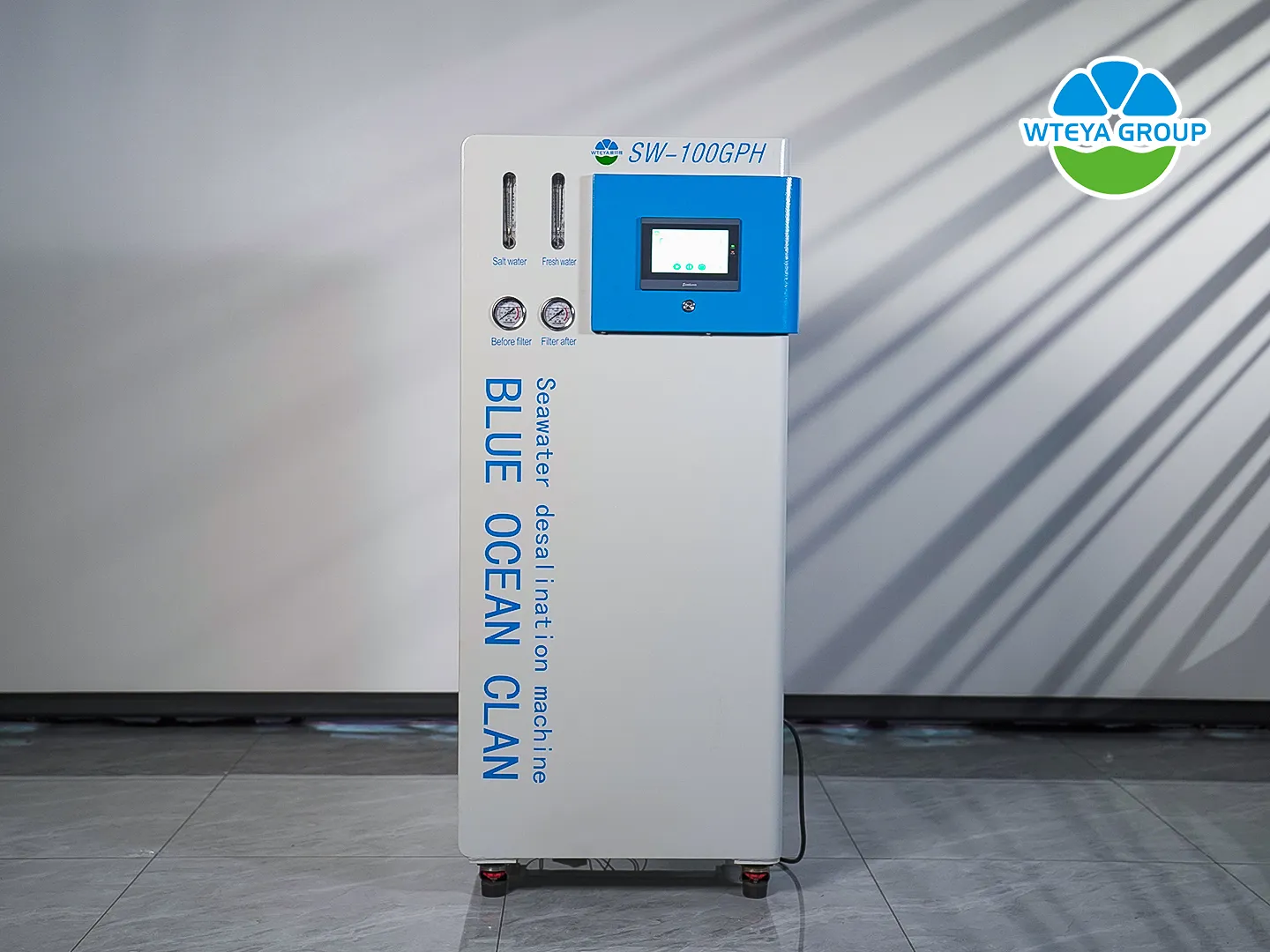
A small RO desalination plant consumes about 3–4 kWh per cubic meter of fresh water, energy recovery included. For a unit producing 10–20 tonnes per day, that means roughly 30–80 kWh per day, or about 900–2,400 kWh per month. The figure is low because reverse osmosis separates water rather than boiling it — but it only holds when the energy recovery device is working and the membrane is clean.
⚡ Where the 3–4 kWh per Cubic Meter Comes From
Seawater at 35,000 mg/L requires a feed pressure of roughly 55–70 bar to push water through a reverse osmosis membrane. The theoretical minimum work of separation at 50% recovery is close to 1.06 kWh per cubic meter, but real pumps, valves and membranes add losses on top of that. Without energy recovery, a small plant typically draws 5–7 kWh per cubic meter.
An energy recovery device takes the pressurized brine leaving the membrane and transfers its pressure back to the incoming feed. That single component removes most of the gap and brings specific energy down to 3–4 kWh per cubic meter. On a 10 t/day machine, the difference between 6 kWh and 3.5 kWh per cubic meter is about 25 kWh every day — nearly 9,000 kWh a year.
📊 Daily Consumption by Plant Capacity
The table below is the quickest way to size a power supply, a generator or a solar-battery system. Figures assume a seawater feed, a working energy recovery device and a plant running at its rated output.
- 10 tonnes per day: 3–4 kWh/m³, about 30–40 kWh per day.
- 15 tonnes per day: 3–4 kWh/m³, about 45–60 kWh per day.
- 20 tonnes per day: 3–4 kWh/m³, about 60–80 kWh per day.
Multiply the daily figure by the local tariff to get the running cost. At 0.15 USD per kWh, a 20 t/day plant spends roughly 9–12 USD per day on electricity, or 270–360 USD per month. That is the number to compare against trucked water, bottled water or a rainwater tank.
🔧 Four Things That Push Consumption Up
Field data from small plants rarely matches the datasheet, and the reasons are predictable.
- Energy recovery offline. A blocked or bypassed recovery device is the single largest cause of high power bills; consumption jumps back toward 5–7 kWh/m³.
- Cold feed water. Membrane flux falls as temperature drops, so the pump must work harder. Every 10 °C of cooling typically adds 3–5% to specific energy.
- High salinity. A feed at 42,000–45,000 mg/L needs more pressure than a standard 35,000 mg/L source, and the difference shows up directly on the meter.
- Frequent start-stop and fouled membranes. A sea water tank smaller than 500 litres causes short cycling; a membrane that has lost flux demands higher pressure for the same output. Both waste energy silently.
🔌 What Power Supply the Plant Needs
Small desalination equipment is usually built for single-phase power so that it can run from a ordinary building supply, a generator or an inverter.
- Standard units: AC 220 V single phase, 50 Hz, input current 16 A or more, acceptable voltage range 200–240 V.
- 60 Hz versions: input current 25 A or more, wired directly from the distribution breaker.
- Never connect three-phase power to a single-phase machine — it destroys the electrical system and is excluded from warranty.
- A generator or voltage stabilizer is acceptable where the grid is weak, provided the unit is rated for the starting current of the high-pressure pump.
💡 How to Keep It at 3–4 kWh per Cubic Meter
Three habits protect the efficiency of a small plant over its service life.
- Feed the plant steadily. A sea water tank of 500 litres or more decouples the intake from the membrane train and eliminates most start-stop losses.
- Dose antiscalant and clean on schedule. Citric acid and sodium hydroxide cleaning restores flux; waiting until output drops by a third costs far more in electricity than the cleaning itself.
- Watch pressure and flow together. Rising feed pressure at constant flow is the earliest sign of scaling, and the cheapest moment to act.
A well-maintained 10–20 t/day plant will hold its 3–4 kWh per cubic meter for years. The same plant with a dead energy recovery device and a fouled membrane can quietly consume twice that — which is why the power bill, not the datasheet, is the honest efficiency test.
❓ Related FAQs
- How Much Water Does a Portable Seawater Desalination Machine Produce Per Day?
- How to Choose a Portable Seawater Desalination Machine
- How Long Does a Portable Seawater Desalination Machine Last?
- Portable Desalination Machine Maintenance Schedule and Tips
- What Determines the Price of a Portable Desalination Machine?
Become a WTEYA authorized dealer for small desalination equipment. Exclusive territories, competitive pricing and full factory support, including training for your service team.
📲 WhatsApp: +86-1800 2840 855
✉ Email: info@wteya.com
🌐 Website: www.wteyaa.com
Previous: Are Handheld Seawater Desalination Devices Really Useful?
Next: No More