







Portable Desalination Machine Maintenance Schedule and Tips
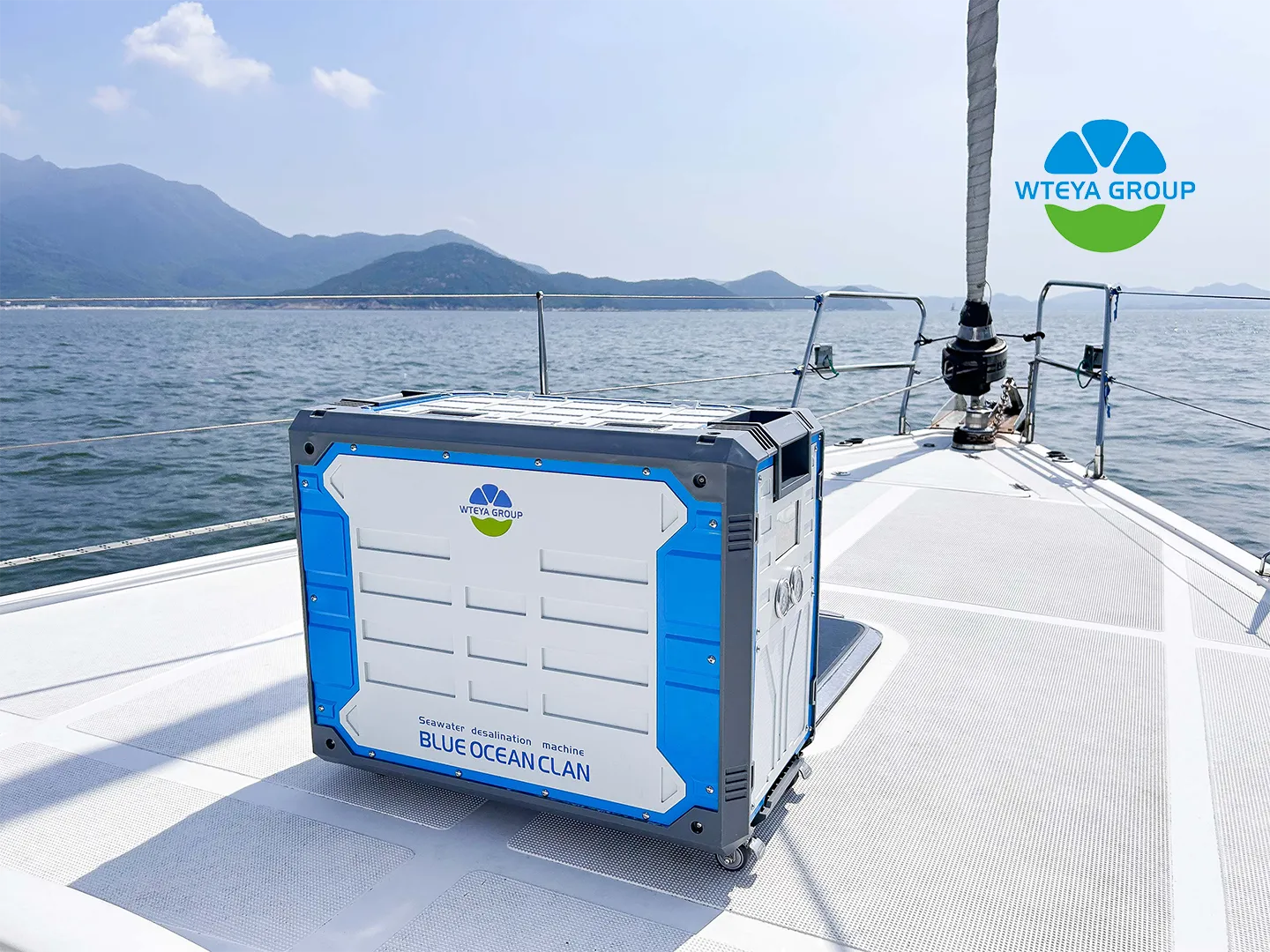
Portable Desalination Machine Maintenance Schedule and Tips
A portable desalination machine stays reliable for years when four routines are kept on schedule: flush and clean the pre-filters often, protect the RO membrane from fouling, change the plunger pump oil on time, and replace the UV lamp before it fades. Neglect any one of them and output falls, water quality drifts, and repairs get expensive. The schedule below follows the manufacturer's manual and covers a typical seawater-duty unit.
Maintenance Schedule at a Glance
- First-stage filter cleaning — every 5 to 60 operating hours, depending on how clean the source seawater is.
- Second-stage filter cleaning — every 15 to 30 days.
- RO membrane replacement — after roughly 3,600 operating hours, or about 180 to 360 days of service.
- UV lamp replacement — after about 3,000 operating hours.
- Plunger pump oil change — every 500 operating hours, approximately 130 ml of CKD220 gear oil or GL-5 SAE 85W-90.
These intervals are a baseline, not a fixed law. A unit drawing from clear open sea will run far longer between filter cleanings than one working in a harbour, estuary or shallow reef area where sand and organic matter are constantly suspended.
Routine Checks That Prevent Most Failures
Most breakdowns on portable units trace back to a cheap component that was not cleaned. When the feed water turns turbid, shorten the first-stage cleaning interval immediately. Sand and silt that pass the pre-filter end up in the high-pressure pump and on the membrane surface, and both are far more costly to repair than a filter element is to rinse.
Before every start-up, confirm the pump has oil in it. A new unit is shipped dry, and running the plunger pump without oil will destroy it within minutes. Check the oil sight glass, look for leaks at the seals, and verify that the pressure gauge responds smoothly as the unit comes up to operating pressure.
Keep a simple log. Record operating hours, product flow, product conductivity and any cleaning performed. When something changes, the log tells you whether the cause is a fouled pre-filter, a drifting membrane or a worn pump seal, and it turns guesswork into a five-minute diagnosis.
Membrane Care: When to Clean and When to Replace
The RO membrane is the most valuable part of the machine, and it responds well to early intervention. Clean it when any one of three conditions appears: every tonne of pure water produced, a decline in product flow of more than 15%, or a rise in salt passage of about 5%.
Use the correct chemistry for the foulant. Acid cleaning with citric acid at pH 2 to 3 removes carbonate and metal hydroxide scale. Alkaline cleaning with sodium hydroxide at pH 10 to 11 removes organic film and biological growth. Flush with clean product water afterwards and measure performance again; if flow and quality do not recover, repeat once before considering replacement.
A membrane that is cleaned on this basis typically lasts three to five years. One that is allowed to run until production collapses usually does not, because irreversible compaction and deep fouling cannot be washed out.
Storage and Seasonal Shutdown
For a shutdown longer than three days, protect the membrane rather than simply switching off. Circulate a 1% to 1.5% sodium metabisulphite preservation solution for 10 to 15 minutes, then seal the connections so the membrane stays wet. Replace the preservation solution every 30 days. Never let a membrane dry out with seawater residue inside it.
In cold conditions, drain the pipework and pump housing after shutdown. Trapped water that freezes will crack pump bodies and membrane housings, and that damage is not covered by any maintenance routine because it happens while the machine is idle.
When preparing the unit for a new season, work in the order pre-treatment, then membrane, then UV. If product quality is off, the fault is almost always upstream, and checking in that sequence avoids replacing a healthy membrane.
Related FAQs
How Much Water Does a Portable Seawater Desalination Machine Produce Per Day?
How to Install a Portable Seawater Desalination Machine?
What Determines the Price of a Portable Desalination Machine?
How Long Does a Portable Seawater Desalination Machine Last?
Can a Portable Desalination Machine Be Used for Camping?
📲 WhatsApp: +86-1802 5185 143
📧 Email: sales@wteya.com
🌐 Website: www.wteyaa.com

Previous: Can a Portable Desalination Machine Be Used for Camping?
Next: No More