







Is a Portable Seawater Desalination Machine Suitable for Yachts?
Is a Portable Seawater Desalination Machine Suitable for Yachts?
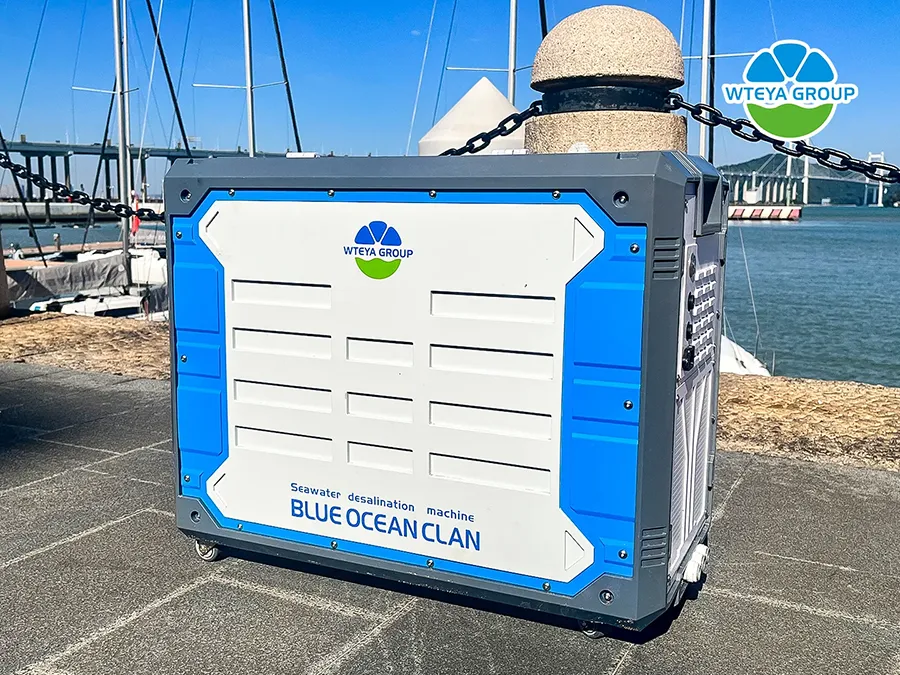
Yes — a portable seawater desalination machine is one of the most practical additions to any yacht that spends time away from shore water. A compact unit such as the SW-4021 measures 610 × 320 × 497 mm, weighs about 40 kg and produces roughly 1.2 tonnes of fresh water per day, which is enough drinking and domestic water for a crew of five to eight people. Instead of rationing tank water or hunting for a marina tap, the yacht simply converts seawater into fresh water on demand.
Why Yachts and Portable Desalination Machines Suit Each Other
A yacht already carries the two things a desalination machine needs: seawater and a DC electrical system. There is no need for a separate generator, a large plant room or a permanent shore connection. The machine can be started when the tanks run low, run for the hours needed, and then be shut down — matching water production to actual consumption rather than carrying weeks of stored water.
The result is freedom of itinerary. Coastal anchorages, offshore passages and remote islands all become viable when fresh water no longer has to be planned around. Every tonne of water produced on board replaces a tonne that would otherwise have to be carried or bought, which is a meaningful gain in both range and comfort.
Key Specifications That Matter On Board
- Power supply: 24V DC operation from the vessel's battery bank, with an optional 220V supply — no dedicated generator required.
- Footprint: 610 × 320 × 497 mm and roughly 40 kg, small enough for an engine room locker or a deck housing.
- Output: around 300 GPD (about 1.2 tonnes per day) at a quality suitable for drinking and domestic use.
- Automation: PLC control performs an automatic flush at start-up and then produces water unattended.
- Materials: 316L stainless steel and marine-grade engineering plastics resist salt-water corrosion.
- Maintenance: modular filters, membrane and UV lamp, all replaceable without specialist tools.
Installation and Maintenance On Board
Installation is straightforward on most vessels. The feed pump is mounted low in the seawater tank or sea chest and connected with a horizontal centrifugal pump; the brine discharge line is routed back overboard, well clear of the intake. Because the machine is tolerant of motion and requires only periodic cartridge changes, it fits the pattern of normal yacht maintenance rather than demanding a specialist water-treatment engineer.
Practical routines keep the system healthy: rinse the first-stage filter regularly (about every 5 to 60 hours of running), replace the second-stage cartridge every 15 to 30 days, and change the pump oil every 500 hours. The RO membrane itself typically lasts three to five years — around 3,600 running hours — and the UV lamp more than 3,000 hours. With scheduled maintenance the machine frame, piping and control system are designed to serve for more than ten years. For long lay-ups the membrane should be sealed with a protective solution and refreshed every 30 days.
Related FAQs
· How Much Water Does a Portable Seawater Desalination Machine Produce Per Day?
· Is a Portable Seawater Desalination Machine Suitable for Fishing Boats?
· Can You Drink Water from a Portable Seawater Desalination Machine Directly?
· How to Install a Portable Seawater Desalination Machine?
📲 WhatsApp: +86-1802 5185 143
📧 Email: sales@wteya.com
🌐 Website: www.wteyaa.com

Previous: What Determines the Price of a Portable Desalination Machine?
Next: No More