







How Much Water Does a Small Desalination Plant Produce Per Day?
How Much Water Does a Small Desalination Plant Produce Per Day?
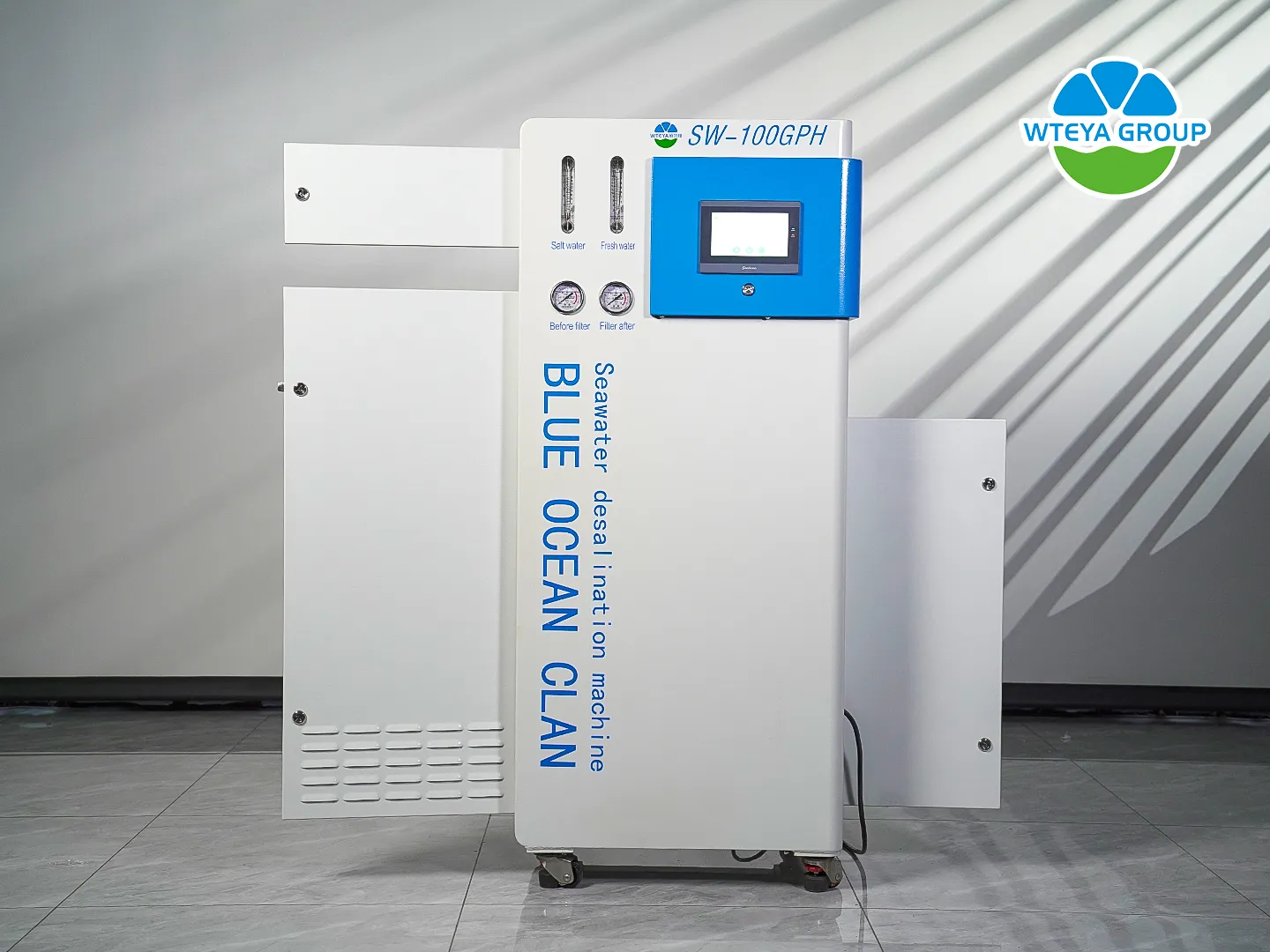
A small desalination plant built around 4040 membranes produces 10 to 20 tonnes of fresh water per day, depending on how many membrane elements are installed and how the system is configured. That is roughly 2,600 to 5,300 US gallons per day, enough for a village, a resort, a construction camp or a small factory that has no reliable municipal supply.
The output figure is not a single fixed number, and treating it as one is the most common source of disappointment in the field. The same skid can deliver 20 tonnes per day in warm seawater with clean membranes and only 12 tonnes per day in cold, silty water with a fouled element. This article breaks the number down from a single membrane to a complete plant, then translates it into people served and the tank and power arrangements the plant needs.
⚙️ What a Single 4040 Membrane Produces
A 4040 membrane element measures 4 inches in diameter and 40 inches in length, approximately 100 mm by 1,016 mm. In seawater service at standard test conditions, one element permeates about 2,000 to 2,500 US gallons per day, which converts to roughly 7 to 9 tonnes per day.
A single element is therefore already a useful water source for a household cluster or a small work site. Most small plants, however, use several elements in parallel on a common high-pressure pump and manifold, because the pump, frame and control cabinet are the fixed costs of the skid. Adding a second or third element raises output almost proportionally at a modest increment in price.
📊 Output by System Configuration
In practice the skid is quoted by total daily output rather than by element count, and the two configurations that matter most are the single-element unit and the multi-element plant.
- Single 4040 element: about 7 to 9 tonnes per day, typically used for a single household, a small clinic building, a guard post or a boat refill station.
- Two to three elements in parallel: about 10 to 20 tonnes per day, the standard configuration for a village, a resort, a farm or a construction camp.
- Larger arrays: above 20 tonnes per day, the plant usually moves to 8040 elements or a containerised frame, because the number of 4040 elements and the associated pipework becomes impractical.
Recovery also matters when comparing quotes. A small seawater plant typically recovers 30 to 40 percent of the feed as permeate, so a unit rated at 20 tonnes per day of fresh water takes in roughly 50 to 65 tonnes per day of seawater and discharges the rest as brine. Anyone sizing a feed pump or an intake line should work from the feed figure, not the product figure.
👥 How Many People the Output Serves
Converting tonnes into people is straightforward once a per-capita figure is agreed. Assuming 50 to 100 litres per person per day for drinking, cooking, washing and basic sanitation, the plant covers the following populations.
- 10 tonnes per day: roughly 100 to 200 people.
- 15 tonnes per day: roughly 150 to 300 people.
- 20 tonnes per day: roughly 200 to 400 people.
The lower end of each range applies where water is also used for laundry, vehicle washing or garden irrigation. Hotels and resorts should use the higher per-capita figure, because guest consumption plus kitchen, laundry and pool makeup can easily double a domestic benchmark. It is better to oversize by one step than to run the plant flat out for eighteen hours a day, since continuous operation at maximum output accelerates membrane fouling.
🌡️ Four Factors That Move the Number
A plant that produced 18 tonnes on the commissioning day may produce 13 tonnes a year later. The reasons are predictable and all four can be managed.
- Feed temperature. Membrane flux rises with temperature; warm seawater pushes output toward the upper limit, while cold water reduces it noticeably. A 10 °C drop in feed temperature can cost 10 to 15 percent of output.
- Salinity. Higher salinity requires higher feed pressure for the same flux. A source at 42,000 mg/L will not reach the output of a standard 35,000 mg/L seawater source without more pressure and more energy.
- Feed pressure and pump condition. A worn high-pressure pump or a partially closed valve shows up as lost output long before it shows up as a fault alarm.
- Membrane condition. Scaling, biofouling and compaction all reduce flux. Cleaning with citric acid for mineral scale and sodium hydroxide for organic and biological fouling, following the element manufacturer's procedure, restores most of the loss.
🔧 What the Plant Needs Around It
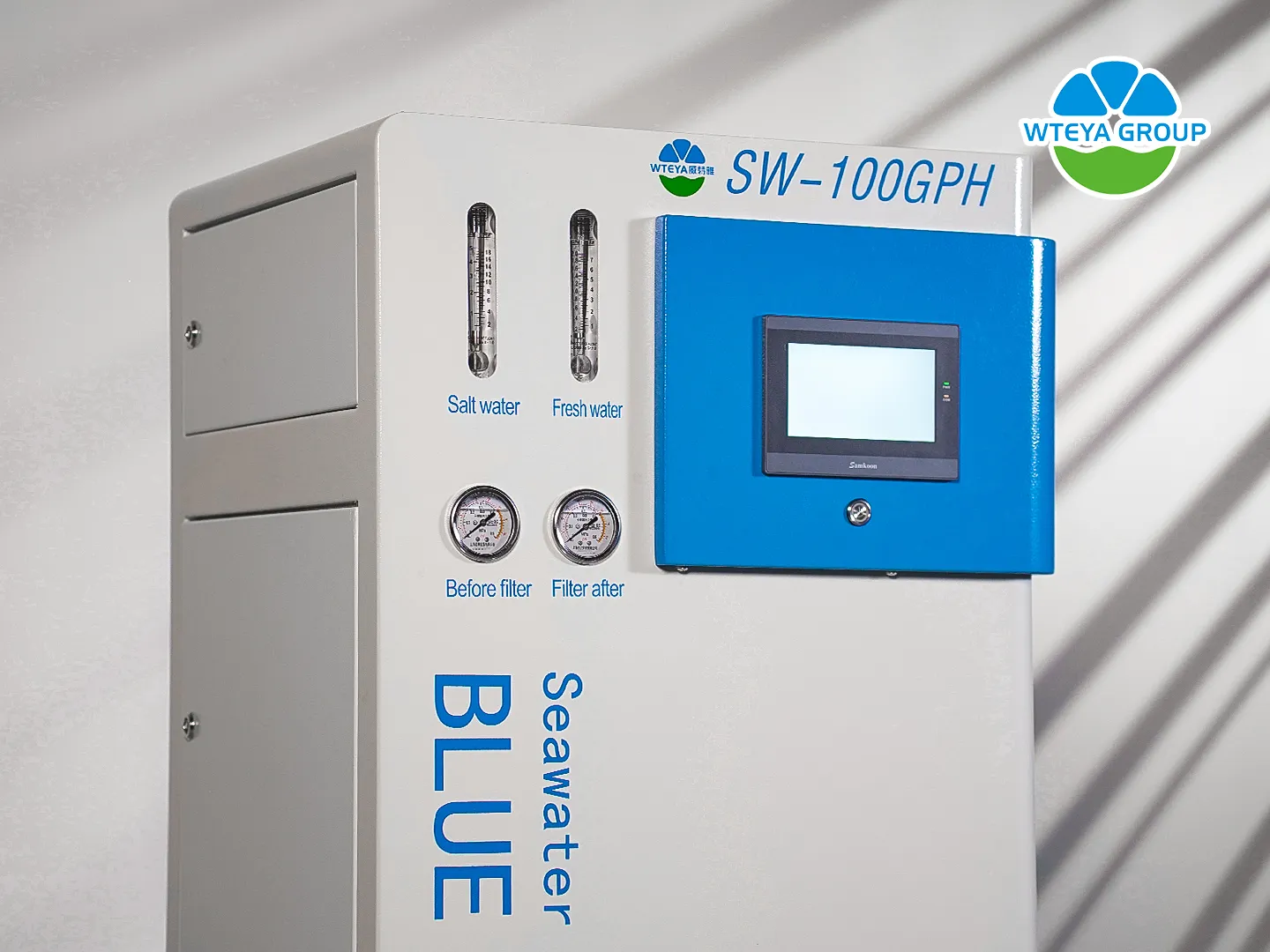
Output depends as much on the balance of plant as on the membrane array. Two items are routinely underestimated.
Seawater storage. A feed tank of at least 500 litres is recommended, sized by the customer and installed ahead of the intake. It decouples the plant from waves, tide and intermittent intake, prevents the short cycling that damages the high-pressure pump, and gives the pretreatment a chance to settle coarse solids.
Fresh water storage and power. The product tank is fitted with a level switch so the plant stops automatically when the tank is full, which avoids wasting power and protects the membrane from idle running. Standard small units run on AC 220 V single phase, 50 Hz, with an input current of at least 16 A; a three-phase supply must never be connected to a single-phase machine. Where the grid is weak, a generator or stabiliser rated for the pump starting current is acceptable.
A plant specified this way will hold its rated output for years. One installed without a feed tank, running on a marginal supply and cleaned only after output has collapsed, will lose a third of its capacity and blame the membrane.
❓ Related FAQs
- How Much Water Does a Portable Seawater Desalination Machine Produce Per Day?
- How Much Electricity Does a Small Desalination Plant Use?
- How to Choose a Portable Seawater Desalination Machine
- How Long Does a Portable Seawater Desalination Machine Last?
- Portable Desalination Machine Maintenance Schedule and Tips
Become a WTEYA authorized dealer for small desalination equipment. Exclusive territories, competitive pricing and full factory support, including training for your service team.
📲 WhatsApp: +86-1800 2840 855
✉ Email: info@wteya.com
🌐 Website: www.wteyaa.com
Previous: How Much Electricity Does a Small Desalination Plant Use?
Next: No More