







Reverse Osmosis Desalination: The Complete Guide
Reverse Osmosis Desalination: The Complete Guide
Reverse osmosis is the technology behind the majority of the world's new desalination capacity, and for good reason. It removes salt without boiling water, so the energy bill is dominated by pumping rather than thermal duty. A well-configured seawater RO plant produces drinking water at 3 to 4 kWh per cubic metre and delivers water at less than 200 ppm TDS, meeting WHO drinking water guidelines. This guide covers how the process works, what the key performance figures are, which build format suits which site, and what the water actually costs to produce.
💧 What Reverse Osmosis Desalination Actually Does
Osmosis is nature's tendency to equalise concentration: put seawater and fresh water either side of a semi-permeable membrane and fresh water will migrate towards the brine. Reverse osmosis inverts that flow by applying external pressure far above the natural osmotic pressure of seawater, which is roughly 2.5 MPa. Water molecules are forced through the membrane while dissolved salts, bacteria and most heavy metals are rejected and carried away in a concentrated brine stream.
The result is a single process that simultaneously desalts, disinfects and removes a large share of trace contaminants. A seawater RO membrane typically achieves 99.5% salt rejection, and system recovery is normally held between 40% and 50%, meaning roughly half the feed seawater becomes product water and the remainder leaves as brine at about 50% to 60% of the feed flow rate.
⚙️ Inside the Plant: Six Stages from Intake to Tap
A desalination plant is a train of six stages, each protecting the next.
- Intake. Seawater is drawn through a screened intake that keeps shellfish, weed and large debris out of the process.
- Pretreatment. Multimedia filtration through graded sand and anthracite removes silt, suspended solids and colloids. The target is a silt density index below 5, because membrane fouling is the single biggest driver of operating cost.
- High-pressure pumping. The filtered seawater is pressurised to 5.5 to 7.0 MPa, comfortably above the osmotic pressure of the feed, to drive permeation.
- RO desalination. Pressurised feed passes through the membrane elements. Permeate is collected as product water; rejected salts leave as brine.
- Energy recovery. Brine still leaves the membrane array at high pressure. An energy recovery device transfers that pressure to incoming feed, cutting overall plant energy demand by about 30%. Plants built without energy recovery typically consume 5 to 7 kWh/m³ instead of 3 to 4.
- Remineralisation. RO permeate is slightly acidic and mineral-poor, so it is conditioned and dosed with calcium and magnesium to stabilise pH and bring the finished water to below 200 ppm TDS.
📊 The Numbers That Define a Modern RO Plant
When comparing quotations for desalination equipment, a small set of figures determines both performance and lifetime cost. Salt rejection should be at least 99.5%. Product water quality should be below 200 ppm TDS. Specific energy consumption should be stated as 3 to 4 kWh/m³ including intake, pretreatment, high-pressure pumping and post-treatment — and the quotation should show that an energy recovery device is included, not optional. Recovery ratio should sit in the 40% to 50% band for seawater, and the design should be based on measured feed salinity, turbidity and temperature rather than a generic assumption.
🏗️ Three Build Formats: Integrated, Containerized and Skid-Mounted
The process is identical across formats; what changes is how the plant is packaged and how quickly it can be on site.
- Integrated plants mount intake, pretreatment, RO membranes, energy recovery and post-treatment on a single steel platform. They are assembled and function-tested at the factory, so site work is limited to connecting intake, power and outlet piping. Footprint for a 10 m³/h unit is roughly 30 to 50 m². Best for coastal towns, industrial parks and power plants with prepared ground.
- Containerized plants fit the complete system inside a standard 20 or 40 foot container, which doubles as the equipment room with weatherproofing, corrosion protection and insulation. They can be lifted, shipped and relocated as a single unit, need almost no civil works, and occupy about 15 to 30 m². Ideal for islands, emergency supply, temporary camps and remote coastal sites.
- Skid-mounted plants separate the process into intake, filtration, high-pressure pump, membrane and remineralisation skids. Each skid can be manufactured, shipped and serviced independently, and capacity can be expanded later by adding skids. Footprint is larger, around 50 to 80 m², which suits phased projects and irregular sites where road access limits component size.
🎯 Matching Capacity to Real Demand
Capacity selection starts with daily demand, not with the largest available model. Estimate consumption from population at 100 to 200 litres per person per day, or from industrial process demand, then divide by running hours — normally 20 to 24 — to obtain the required hourly output. Two standard sizes cover most coastal requirements: a 5 m³/h plant producing about 120 tonnes per day, suited to island communities, resorts and small towns, and a 10 m³/h plant producing about 240 tonnes per day, suited to larger coastal towns, industrial parks and power stations. Demand above 240 tonnes per day is usually met with multiple parallel units rather than one oversized machine, which also gives redundancy during maintenance.
A design margin of 10% to 20% over average demand is advisable to cover peak draw and service intervals. Sizing to instantaneous peak flow instead of daily average is the most common and most expensive mistake in small desalination projects; a product water storage tank smooths peaks far more cheaply than excess membrane capacity.
💰 What Desalinated Water Costs
Total operating cost for a well-configured seawater RO plant typically falls between 4 and 8 yuan per cubic metre, roughly USD 0.55 to 1.10 per m³. Electricity is the dominant item, accounting for about 60% of the total, at an estimated 2.4 to 3.2 yuan per tonne when consumption is 3 to 4 kWh/m³ and power costs 0.6 to 0.8 yuan per kWh. Chemicals for antiscalant, reducing agent, biocide and remineralisation add 0.3 to 0.5 yuan. Membrane replacement, amortised over a 2 to 5 year service life, contributes 0.5 to 1.0 yuan. Cartridge filters and filter media add 0.1 to 0.2 yuan, and labour plus scheduled maintenance a further 0.3 to 0.8 yuan.
Capital cost for the two standard sizes, including installation and commissioning but excluding civil works, generally falls in the range of 400,000 to 800,000 yuan for a 5 m³/h plant and 700,000 to 1,300,000 yuan for a 10 m³/h plant. Where desalinated water replaces purchased fresh water at around 12 yuan per tonne, a 10 m³/h plant running 350 days a year can save in the region of 500,000 yuan annually, giving a payback period of roughly 2 to 3 years. Sites that recover waste heat for feed preheating, or that operate with variable-frequency control during low-demand hours, shorten that further.
🏆 Why Choose WTEYA
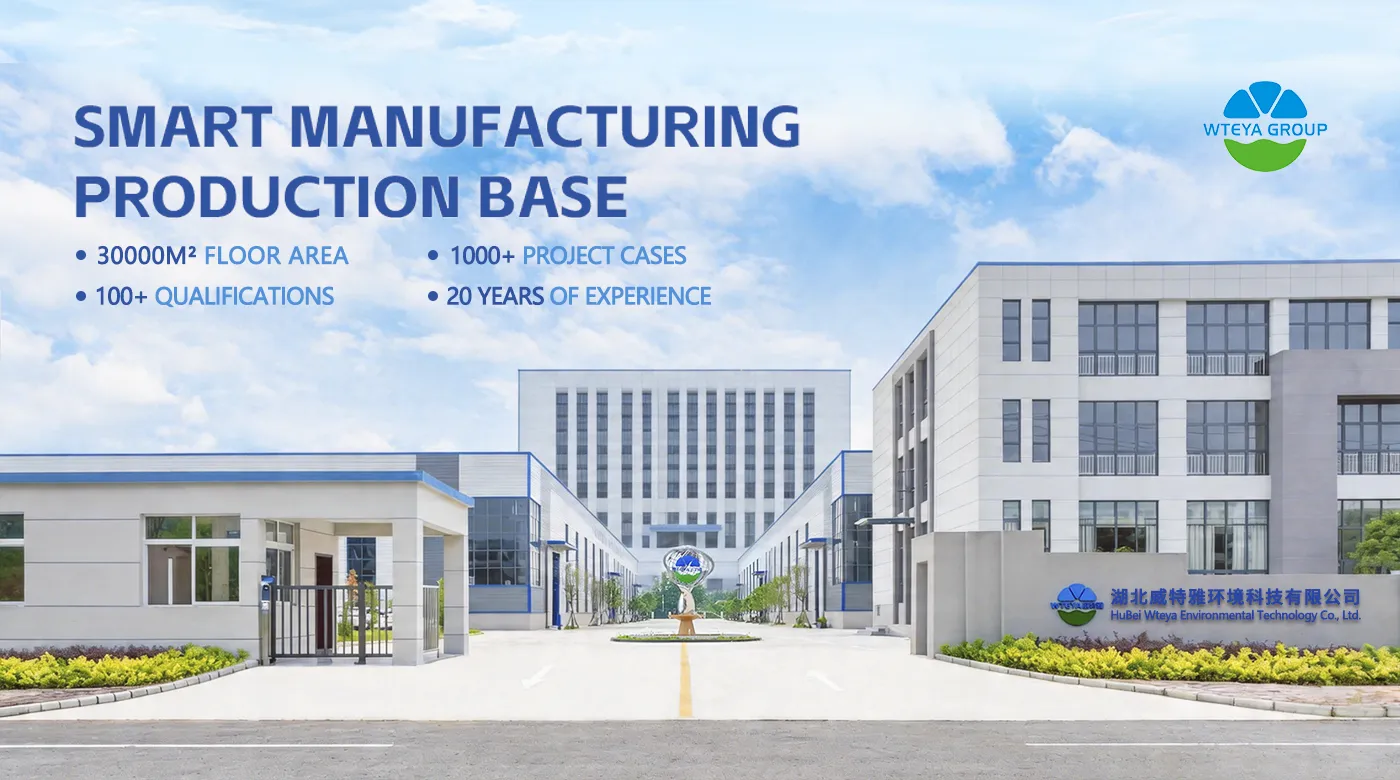
WTEYA has spent nearly 20 years in water treatment, and designs desalination plants around measured site data rather than catalogue assumptions. Engineering starts with an actual water analysis — salinity, turbidity, temperature, silt and algae loading — because those variables decide pretreatment configuration, membrane count and operating pressure. Deliveries cover integrated, containerized and skid-mounted builds with a stated 99.5% rejection rate and 3 to 4 kWh/m³ energy demand, and typical project lead times run 1 to 3 months from confirmation. Support continues past commissioning, with operator training, membrane replacement programmes and scheduled maintenance available across the equipment lifetime.
🤝 Become a WTEYA Authorized Dealer
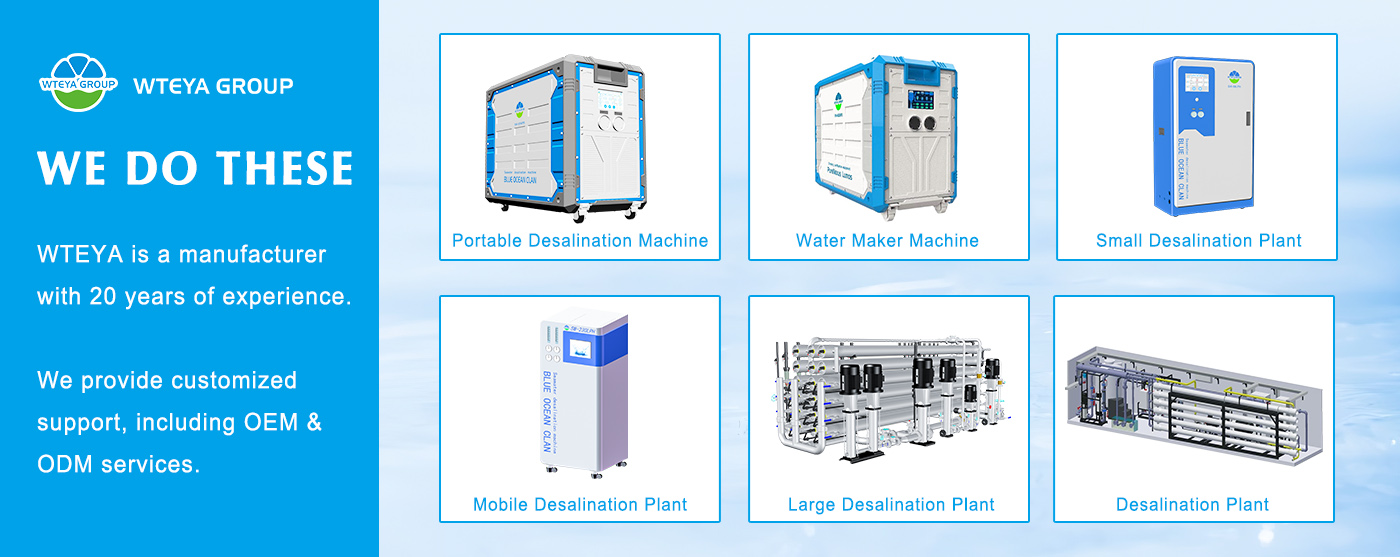
Desalination demand is rising fastest exactly where fresh water is scarcest — islands, arid coastlines and industrial zones with no reliable municipal supply. WTEYA partner dealers sell into that demand with a complete product portfolio spanning portable units, small and large desalination plants, brackish water systems and containerized plants, backed by factory technical support.
Dealers receive exclusive territory protection, competitive factory pricing, product and application training — no prior desalination experience is required, since the factory supports system sizing and commissioning — plus marketing materials, quotation support and a portal of reference projects. Applications are assessed on company background, target region and intended market segment.
To apply, contact our export team with your company information and target region, and we will follow up with a partnership proposal, price list and resource pack.
📲 WhatsApp: +86-1802 5185 143
📧 Email: sales@wteya.com
🌐 Website: www.wteyaa.com
Previous: Desalination Pretreatment: Why It Matters for RO Systems
Next: No More