







Desalination for Resorts: Sizing for Peak Season Demand

Desalination for Resorts: Sizing for Peak Season Demand
A resort desalination plant is never sized on the annual average. It is sized on the busiest week of the year, when every room is occupied, the restaurants run two seatings, the pools are refilled daily and the gardens still need irrigation. Get that peak wrong and the property either runs out of water in high season or pays for capacity it never uses.
This guide walks through the four numbers that decide plant size — guest water balance, operating hours, recovery rate and storage buffer — and shows how they translate into a workable desalination specification.
🏝️ Why Resort Demand Peaks Differently
Domestic demand is fairly flat. Resort demand is not. Occupancy can move from 45% in low season to above 90% in peak season, and a single property may serve two guests per room plus day visitors, banquet events and staff quarters.
Water use per guest is also higher than in a normal household because it includes laundry, pool make-up, kitchen operations and landscape irrigation. A realistic planning range is 300 to 500 litres per guest per day for a full-service coastal resort, and up to 800 litres where large lawns, spas and multiple pools are involved.
On top of that, seawater quality varies seasonally. Algal blooms, storm run-off and higher turbidity after heavy rain all raise pretreatment load exactly when the plant is running flat out, which is why design margins matter more here than in municipal plants.
📊 Step 1: Build a Peak-Day Water Balance
Start with the largest day, not the average day. Add up every draw-off point and apply peak occupancy to each one.
Guest rooms — rooms × peak occupancy × guests per room × per-guest use. A 200-room property at 90% occupancy, two guests per room and 400 litres per guest comes to about 144 m³ per day.
Food and beverage — roughly 15 to 25 litres per cover across restaurants, bars and banqueting, plus kitchen cleaning.
Laundry — hotel laundries consume 15 to 20 litres per kilogram of linen. A property processing 800 kg on a peak day needs 12 to 16 m³ for laundry alone.
Pools and landscaping — pool make-up typically runs at 2% to 5% of pool volume per day for evaporation and backwash, and irrigation on a coastal site can add 20 to 40 m³ in dry weather.
For the 200-room example the peak-day total lands near 190 to 210 m³. That is the figure the desalination plant must be able to deliver, day after day, with no municipal back-up.
⚙️ Step 2: Turn Demand into Plant Capacity
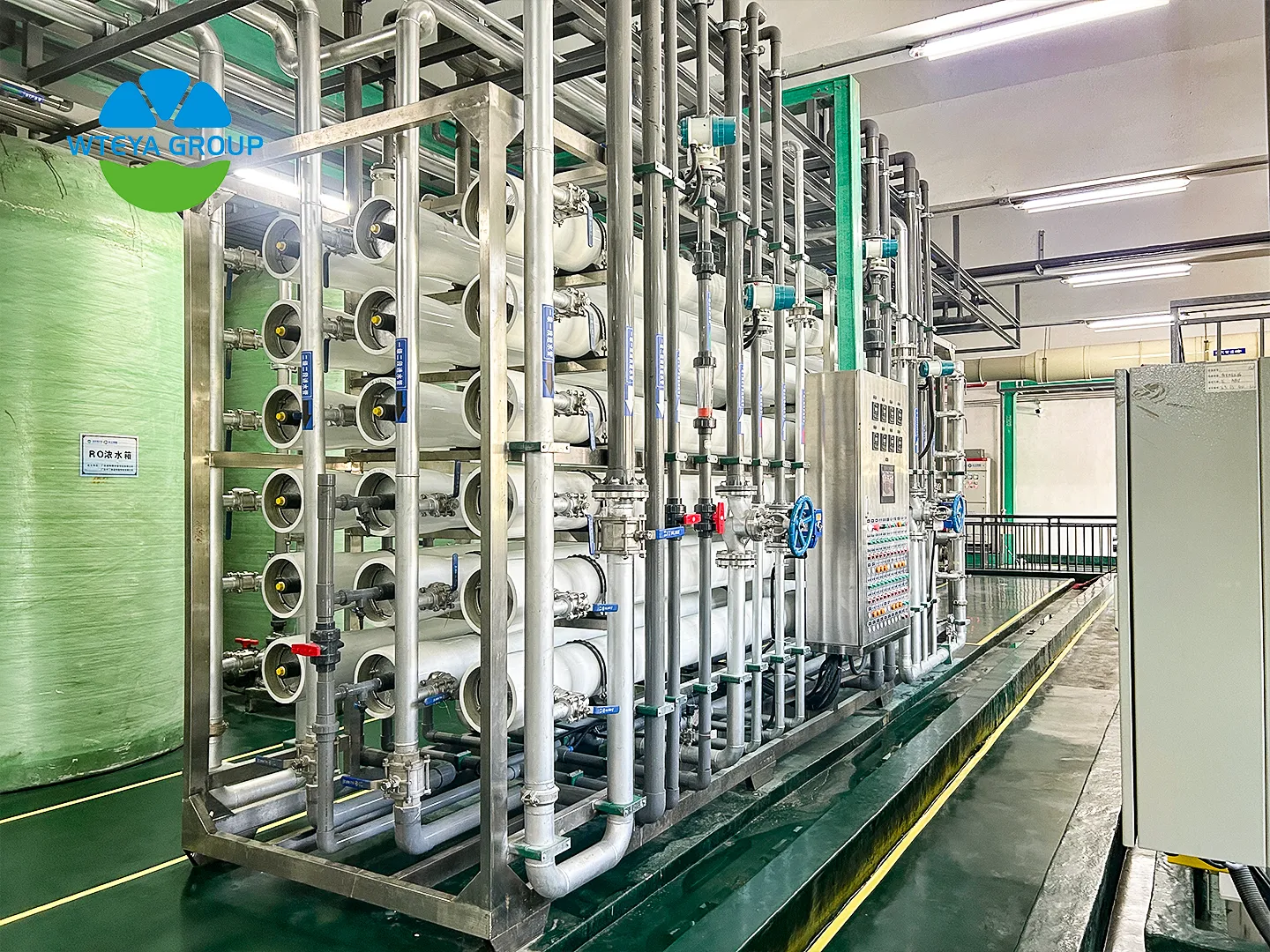
Desalination capacity is rated in cubic metres per hour, so the peak-day volume has to be divided by realistic operating hours. Most resort plants run 20 to 24 hours per day, with a short stop for flushing or backwash.
Using 22 operating hours and a 200 m³ peak day, the required output is about 9.1 m³/h. Add a design margin of 15% to 25% for temperature, membrane ageing and fouling, and a 10 m³/h unit is the sensible selection.
Seawater reverse osmosis recovers only 35% to 45% of the feed as product, so the intake and pretreatment train must be sized on roughly 22 to 29 m³/h of seawater. Where beach wells are used, that also sets the well pump duty and the sand filter area.
Product quality should be specified at the point of use, not only at the membrane outlet. A typical target for resort supply is below 500 mg/L total dissolved solids, with remineralisation and disinfection before the water reaches kitchens and guest rooms.
💧 Step 3: Storage, Buffer and Redundancy
A desalination plant is happiest running at a steady rate, while a resort draws water in bursts. The gap is closed with storage, not with oversized membranes.
Plan for one to two days of product water storage — 200 to 400 m³ in the example above. That buffer covers a membrane cleaning cycle, a pump service or a short intake shutdown without guests noticing.
For a property that cannot accept any interruption, split capacity across two trains or keep one unit as standby. An energy recovery device is worth specifying at the same time: it typically brings seawater RO energy demand down from 3 to 5 kWh/m³ to about 2.5 to 3.5 kWh/m³, which matters on an island grid or a diesel generator.
🔧 Equipment Choice for Resort Sites
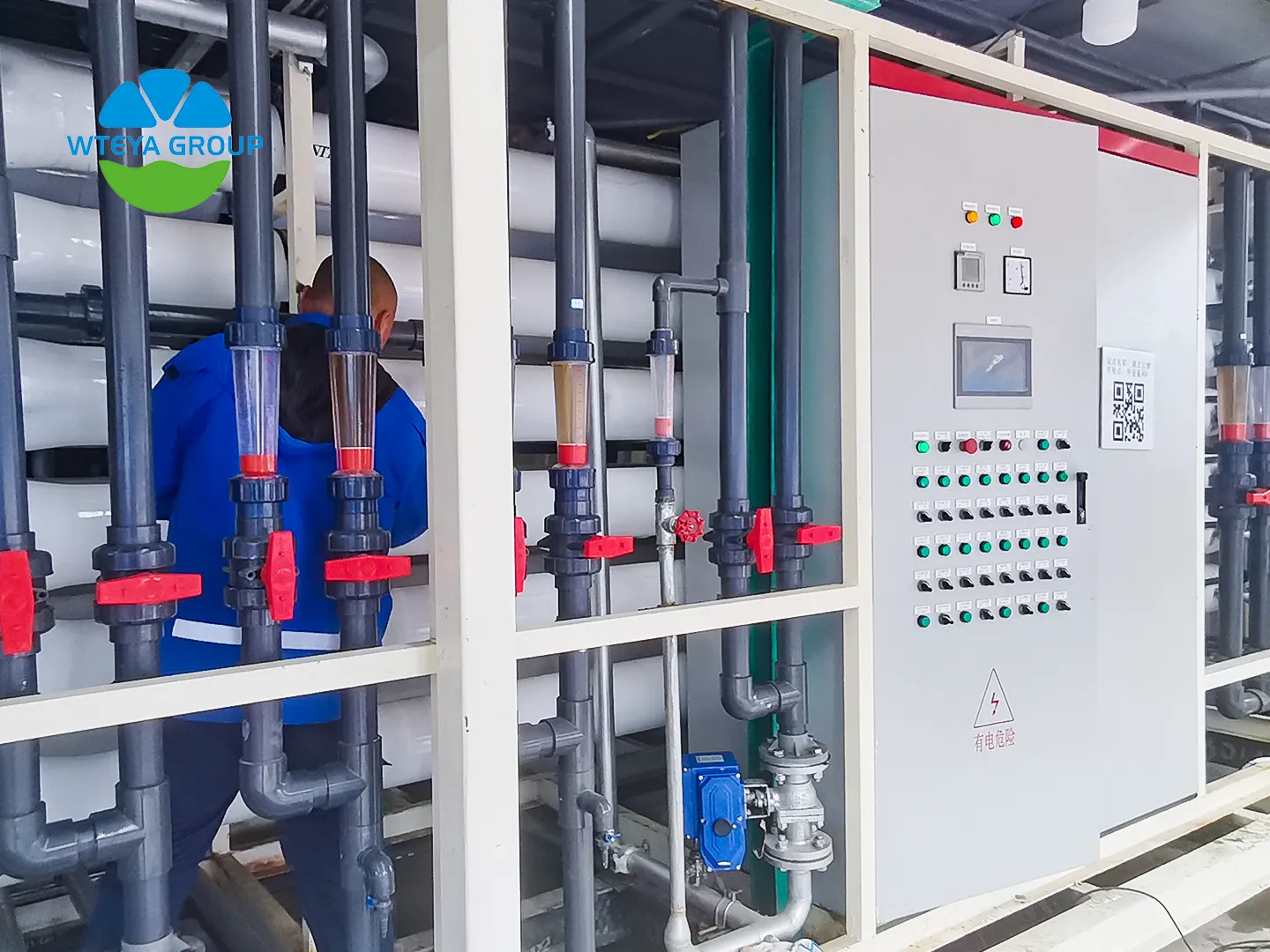
Resort plants usually sit close to guests, so footprint and noise carry as much weight as efficiency. Containerized units of 20 or 40 feet fit 15 to 30 m² of plant area, arrive pre-piped and pre-wired, and can be commissioned in four to eight weeks on site.
Look for acoustic enclosure and low-speed pumps to keep sound pressure below 75 dB at one metre, plus a clean-in-place skid, 5-micron cartridge filtration and corrosion protection suited to salt-laden coastal air.
Remote monitoring is not a luxury in a resort: the engineering team is usually small and shared with HVAC and pool plant. Flow, pressure, conductivity and recovery should be visible on a screen the duty technician already checks.
🏆 Why Choose WTEYA
WTEYA has supplied desalination and evaporation equipment since 2009, with in-house fabrication, assembly and testing rather than outsourced production. Systems are configured around the site — feed water analysis, available power, footprint and operating pattern — instead of being forced into a fixed catalogue size.
For resort and hospitality projects we supply containerized and skid-mounted seawater RO plants, complete with pretreatment, energy recovery, product storage and post-treatment. OEM and ODM cooperation is available for developers, EPC contractors and hotel groups that want their own specification and branding.
❓ Frequently Asked Questions
How much water does a resort need per guest per day?
Plan on 300 to 500 litres per guest per day for a full-service coastal resort once laundry, pools and irrigation are included, and up to 800 litres for large spa or landscape-heavy properties. Always calculate on peak occupancy rather than the annual average.
Can a desalination plant handle seasonal occupancy swings?
Yes, if it is designed for it. Variable-frequency high-pressure pumps, modular trains and one to two days of product storage let the plant run at part load in low season and at full rate during peak weeks without frequent stops and starts.
Is desalinated water suitable for pools, kitchens and guest rooms?
Yes. Seawater RO removes more than 99% of dissolved salts, and with remineralisation plus disinfection the water meets drinking-water targets and is well suited to pools, laundry and kitchen use. Post-treatment is specified per site, not left to chance.
🤝 Build Your Resort Water Supply with WTEYA
Send us your room count, peak occupancy and daily water balance, and our engineers will return a preliminary plant configuration and capacity calculation.
Become a WTEYA authorized dealer. Exclusive territories, competitive pricing and full factory support — including technical training, sizing tools and marketing material — for partners serving hospitality and island projects.
📲 WhatsApp: +86-1802 5185 143
📧 Email: sales@wteya.com
🌐 Website: www.wteyaa.com

Previous: Water Purifier vs Desalination: What's the Difference?
Next: No More