







Emergency Desalination for Disaster Relief
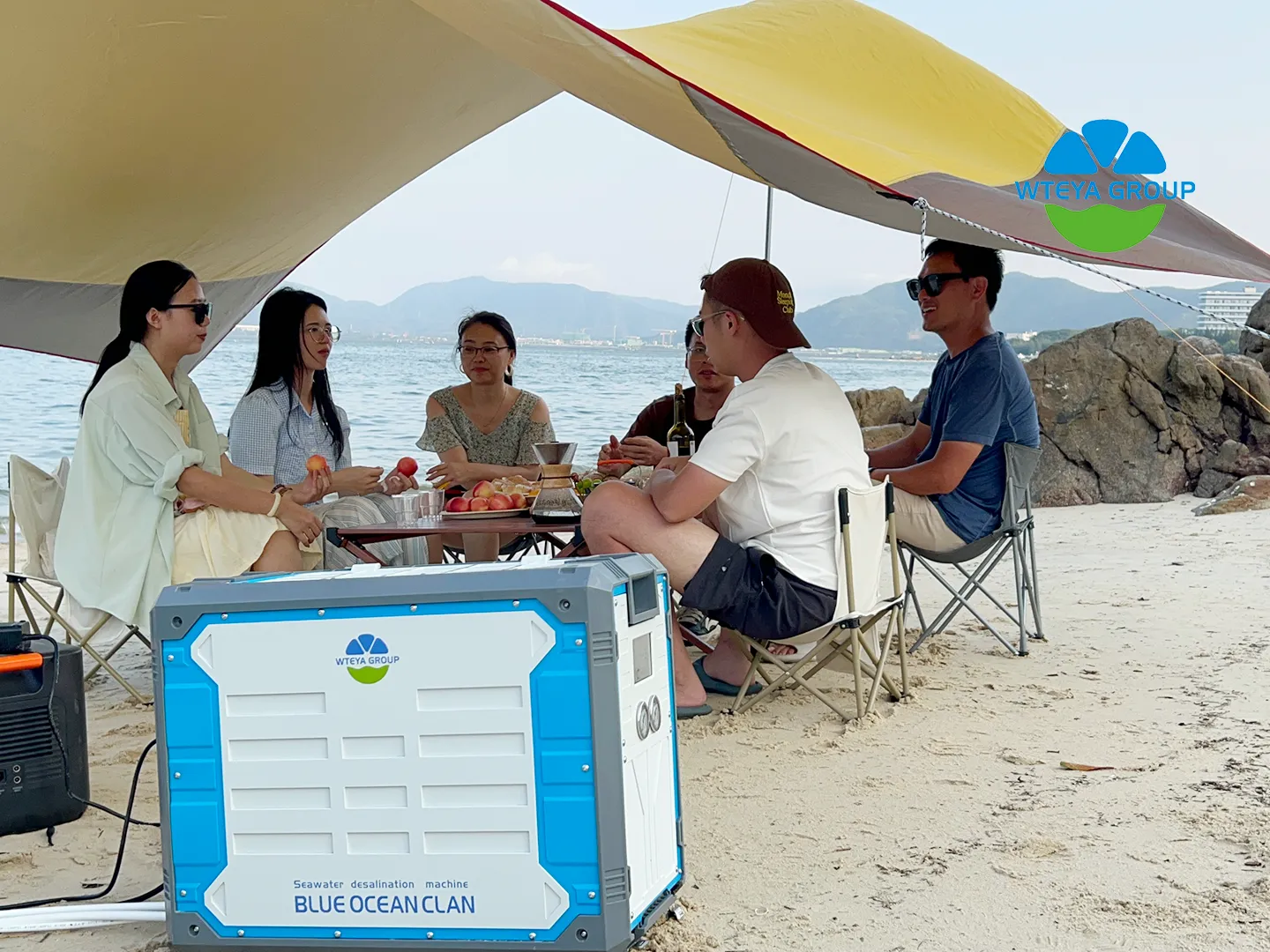
Emergency Desalination for Disaster Relief
When a typhoon, tsunami, earthquake, or prolonged drought destroys municipal water infrastructure, fresh drinking water becomes the most urgent survival need. Emergency desalination systems turn seawater into safe drinking water within hours of arrival, without depending on damaged pipelines or power grids. This guide explains how portable desalination supports disaster relief, what capacity is needed, and how water quality is guaranteed in the field.
Why Desalination Works in Emergencies
Coastal disaster zones have one abundant resource: seawater. A portable seawater desalination machine can be flown, trucked, or carried into the affected area and started quickly, producing clean drinking water on site. Unlike bottled-water airlifts, desalination removes the logistics dependency, keeps producing day after day, and scales from a small community shelter to a full relief camp by adding units.
Portable Models: Capacity and Power
WTEYA portable desalination units use the 4021 RO membrane element (4 inches in diameter and 21 inches long), with a standard output of roughly 250 to 500 gallons per day, equivalent to 1 to 2 tons of fresh water daily. Two standard models are available: 0.5 to 1 ton per day for shelters, small teams, and household emergency use, and 1 to 2 tons per day for larger camps, field hospitals, and relief bases. One to two tons per day covers drinking and basic domestic water for approximately 6 to 15 people, and multiple units can be paralleled for larger populations.
Actual output depends on conditions: every 1°C drop in seawater temperature reduces RO output by roughly 2% to 3%, and cold northern waters can cut production by 30% to 40% in winter. Selecting a model with 20% to 30% capacity margin protects supply in cold weather and high-salinity water.
Water Quality You Can Trust in the Field
The RO membrane removes more than 99% of dissolved salts, bringing seawater from roughly 35,000 ppm down below 1,000 ppm TDS. A built-in UV sterilizer (254 nm) disinfects the product water without chemical residue. Product water meets drinking water standards: total coliforms and E. coli not detected, total bacteria count below 100 CFU/mL, TDS below 1,000 mg/L, pH 6.5 to 8.5, and turbidity below 1.0 NTU.
Deployment Scenarios
Emergency desalination supports disaster relief and humanitarian response after typhoons, tsunamis, and earthquakes; island drought emergencies where rain-fed catchments run dry; temporary field operations for military, rescue, and offshore units; and remote coastal construction and mining sites that need a dependable independent water source. Because the equipment is compact and skid-mounted, it deploys on beaches, piers, relief ships, and vehicles.
Why Choose WTEYA for Emergency Water Supply
WTEYA has nearly 20 years of experience in water treatment, with product water quality verified to drinking standards and factory-commissioned systems ready for immediate shipment. Units operate with simple one-start controls and low power draw, and WTEYA provides training, filter kits, and spare parts to keep relief units running through extended operations.
Become a WTEYA authorized dealer for emergency desalination equipment. Exclusive territories, competitive pricing, and full factory support are available for qualified partners.
📱 WhatsApp: +86-1800 2840 855
✉ Email: info@wteya.com
🌐 Website: www.wteyaa.com