






Desalination and the Environment: Impacts and Mitigation
Desalination and the Environment: Impacts and Mitigation
🌊 The Brine Stream: Volume, Salinity and Temperature
For every cubic metre of fresh water a seawater reverse osmosis plant produces, roughly one cubic metre of concentrate returns to the sea. At a recovery rate of 40 to 50 percent, the brine leaves the membrane array at about twice the salinity of the feed, typically 70,000 to 85,000 mg/L total dissolved solids, and 5 to 10 °C warmer than the surrounding water because of pumping energy and compression.
That denser, warmer plume is the single most studied impact of desalination. If it is discharged through a short outfall on a shallow, low-energy coastline, it can settle on the seabed and create a persistent layer where benthic communities struggle. If it is discharged through a well-designed diffuser into a tidally active channel, the same volume may be undetectable within a hundred metres.
The chemical load matters as much as the salt. Antiscalants, coagulants, residual disinfectant and cleaning chemicals all leave with the brine. Modern plants reduce this by switching to biodegradable antiscalants, minimising chlorine through intermittent dosing, and neutralising cleaning solutions before discharge rather than sending them to sea.
🐟 Intake Effects: Impingement and Entrainment
An open seawater intake draws in more than water. Fish and larger invertebrates are trapped against the screens, a problem called impingement, while eggs, larvae and plankton pass through the mesh and are killed in the plant, which is entrainment. For large coastal plants these losses were historically significant enough to require mitigation in environmental permits.
The design response is straightforward and well proven. Approach velocity at the intake screen is kept below 0.15 m/s, which allows most mobile species to swim away. Where geology permits, subsurface intakes such as slant wells or seabed filtration galleries are preferred, because the seabed itself acts as a filter and entrainment falls close to zero. Where an open intake is unavoidable, wedge-wire screens with low opening ratios, air-burst cleaning and seasonal shutdowns during spawning periods are used together.
⚡ Energy Use and the Carbon Footprint
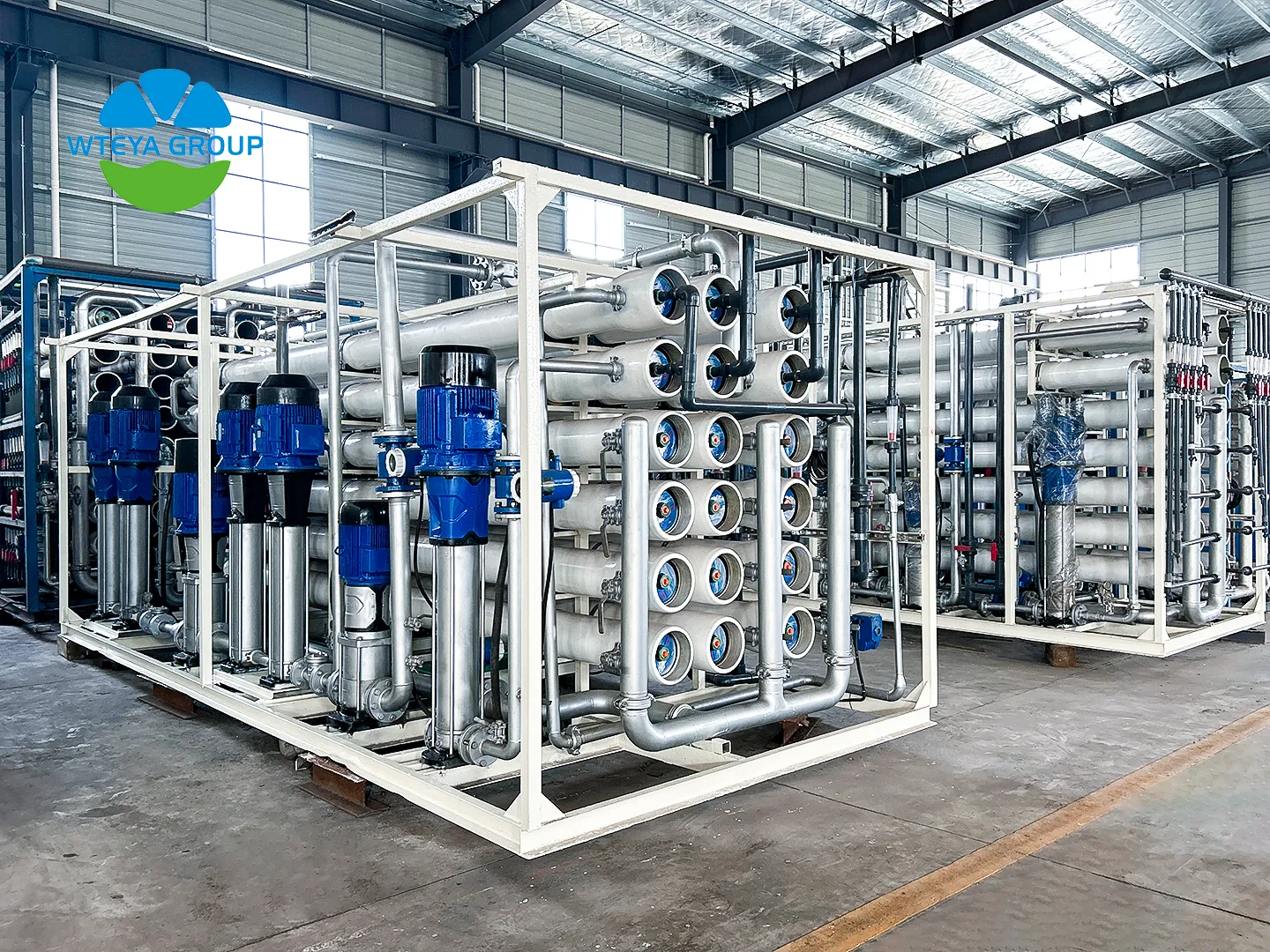
Desalination is energy intensive, and that energy is the largest indirect environmental impact. A conventional seawater RO plant consumes 3 to 5 kWh per cubic metre of permeate. Roughly half of that is recovered when an energy recovery device transfers pressure from the reject stream back to the feed, which is why modern trains with pressure exchangers land at 2.5 to 3.5 kWh per cubic metre.
Beyond the hydraulic design, the carbon intensity depends on how the electricity is generated. Plants paired with solar
🛠️ Mitigation That Works in Practice
Environmental performance is decided at the design stage, not by a monitoring report after commissioning. Five measures carry most of the benefit.
- Diffuser design. A multiport or rosette diffuser with exit velocities of 3 to 5 m/s breaks the brine into high-velocity jets that entrain ambient water immediately, achieving dilution of 1:50 to 1:100 within 50 to 100 metres.
- Site selection. Discharging into an exposed, energetic shoreline with strong tidal exchange avoids the stratification that traps brine in sheltered bays.
- Co-discharge. Blending brine with power station cooling water or treated wastewater lowers both salinity and temperature before the plume forms.
- Chemical minimisation. Low-dose antiscalant control, membrane-friendly pretreatment and Cleaning-In-Place solution recovery reduce the chemical fraction of the discharge.
- Recovery optimisation. Pushing recovery too high raises brine concentration and scaling risk; the right setpoint balances fresh water yield against discharge impact.
Monitoring should confirm the design assumptions. Salinity at the edge of the mixing zone is normally required to stay within 5 percent of ambient, with temperature within 1 to 2 °C, and these limits are verified by conductivity loggers, current meters and periodic benthic surveys rather than by modelling alone.
📋 Regulation, Monitoring and Reporting
Most jurisdictions now treat desalination discharge as an industrial effluent with specific conditions: permitted volume, salinity increment, temperature increment, chemical limits, and a defined mixing zone. The permit application normally requires baseline ecological surveys, brine dispersion modelling, and a commitment to monitoring seagrass, coral or soft-bottom communities depending on the habitat.
Good operators go further than the permit. Real-time conductivity and temperature logging at the diffuser and at the mixing-zone boundary, annual sediment sampling for metals, and transparent reporting of intake mortality all reduce regulatory risk and shorten the approval path for future expansions. For inland brackish water plants, the equivalent discipline is zero liquid discharge or beneficial reuse of the concentrate, because there is no sea to dilute it.
🌍 Choosing a Lower-Impact Configuration
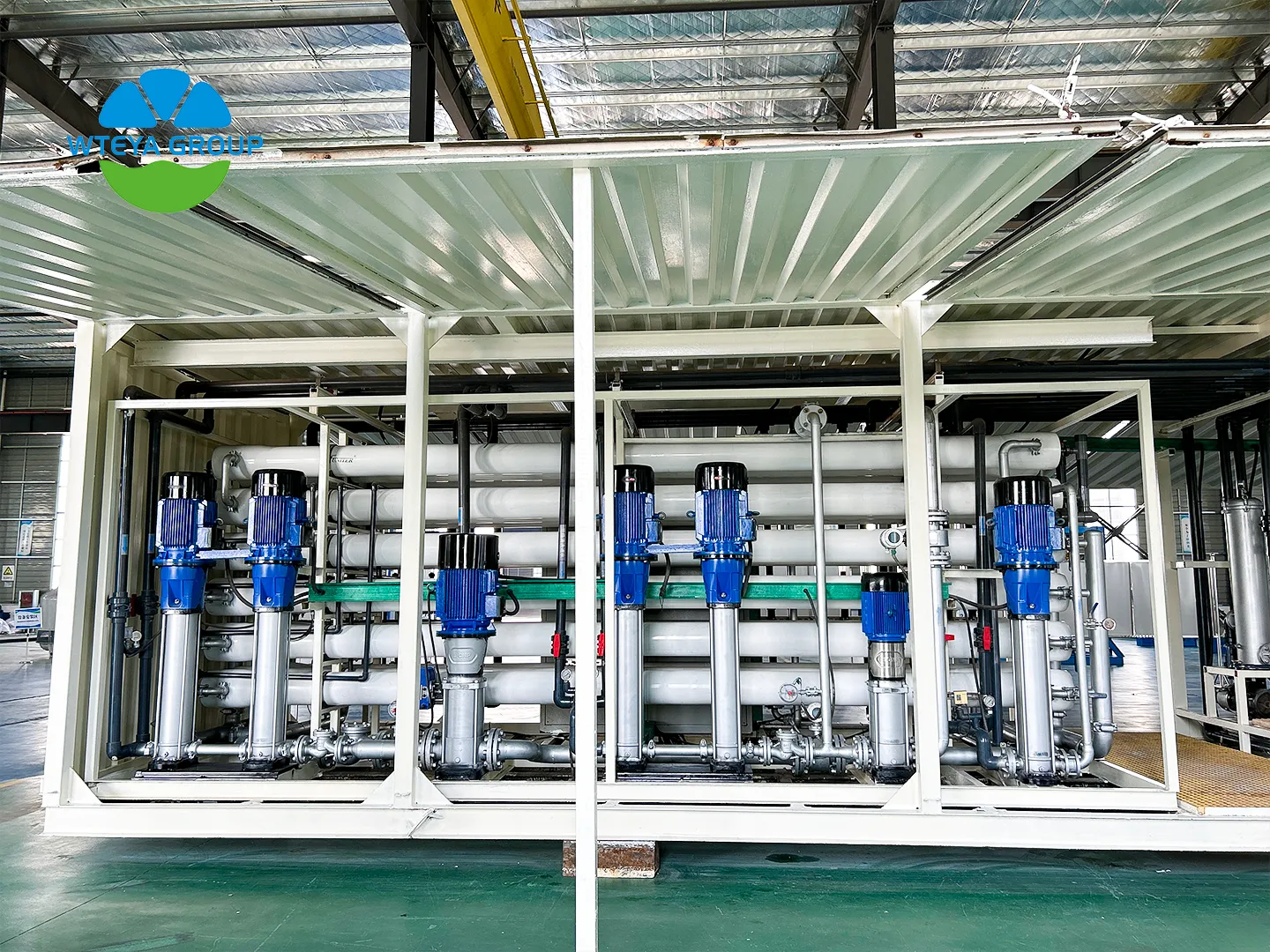
The same fresh water demand can be met with very different footprints. A large open-intake plant with a short outfall has one profile; a containerised unit with a subsurface intake, energy recovery, a roofline solar array and a diffused outfall has another. For coastal communities, resorts, islands and offshore facilities, the second profile is often achievable at a comparable capital cost, because modular systems avoid the civil works that dominate large plant budgets.
Where brine can be put to work, the impact becomes an input. Concentrate has been reused in aquaculture, in salt recovery, and in irrigation trials with salt-tolerant crops. These routes are site specific, but they are worth evaluating at the feasibility stage, before the discharge route is fixed.
🏆 Why Choose WTEYA
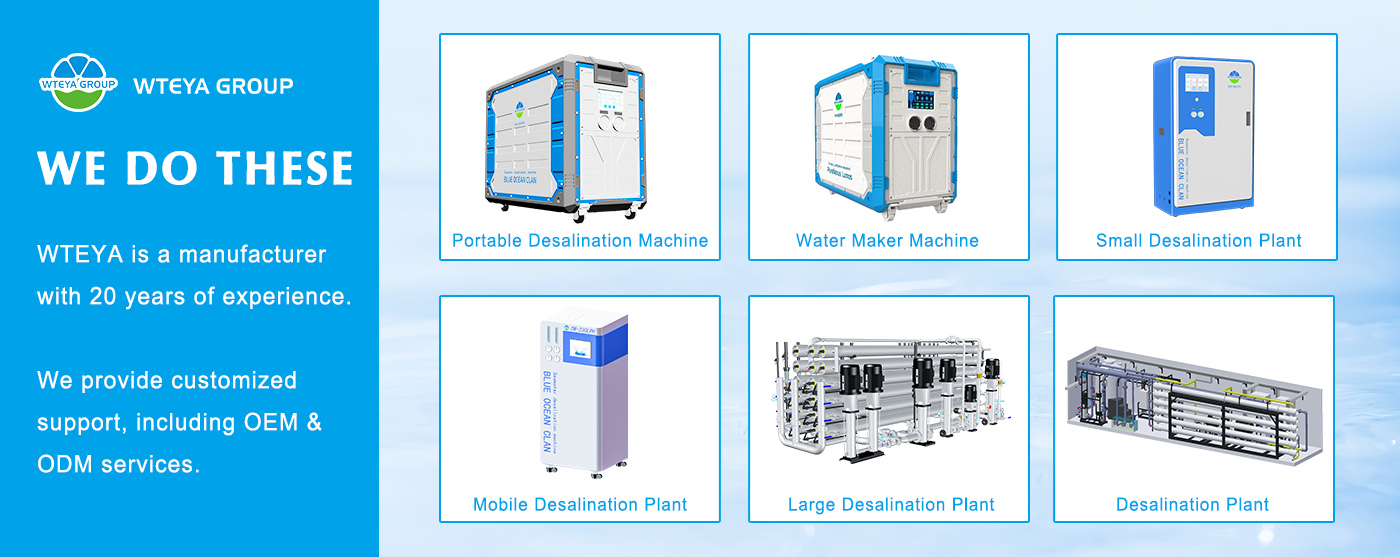
WTEYA has been building desalination and water treatment systems for nearly 20 years, with more than 2,000 customers, a 30,000 m² manufacturing base and a product range that covers portable units, 4040 systems, containerised plants and full seawater desalination trains. Systems are configured with energy recovery as standard on larger capacities, and every project starts from the water analysis, the site conditions and the discharge requirements rather than from a catalogue number.
For partners, this matters commercially. Our engineering team supports system sizing, layout drawings and documentation packages, and we offer full OEM & ODM services with delivery times of 30 to 60 days for standard skid-mounted equipment.
🤝 Become a WTEYA Authorized Dealer
Desalination demand is growing fastest in exactly the places where local technical support is thinnest: islands, coastal villages, resorts, mining camps and offshore facilities. WTEYA is expanding its dealer network in these markets and offers exclusive territories, competitive factory pricing and full technical training for partners without prior water treatment experience.
Dealers receive a product portfolio covering portable and containerised desalination, brackish water RO, and seawater treatment systems, together with marketing material, sizing tools and direct access to our engineering team for project quotations. Applications are reviewed on a rolling basis: send your company profile and target region, and we will respond with territory availability and a price list.
❓ Frequently Asked Questions
Does desalination harm marine life?
The main risks are brine discharge, intake impingement and entrainment. With a diffused outfall, low approach velocity screens or subsurface intakes, and controlled chemical dosing, measured impacts stay within the mixing zone defined in the permit.
How much brine does a desalination plant produce?
At 40 to 50 percent recovery, a seawater RO plant produces roughly one cubic metre of brine for every cubic metre of fresh water. Higher recovery reduces brine volume but increases scaling risk and salinity.
Can desalination be powered by renewable energy?
Yes. Energy recovery already cuts consumption to 2.5 to 3.5 kWh per cubic metre, and solar or wind supply can cover a large share of that demand, particularly for modular and containerised plants in remote locations.
📲 WhatsApp: +86-1802 5185 143
📧 Email: sales@wteya.com
🌐 Website: www.wteyaa.com