







Desalination Water Quality: Standards and Testing
Desalination Water Quality: Standards and Testing
Desalinated seawater is not simply “salt-free water”. Its quality is defined by a set of measurable parameters — total dissolved solids, salt rejection, turbidity, pH, chloride, boron and microbiology — and every one of them has a standard behind it. A plant that hits its TDS target but ignores boron, or that passes commissioning and then drifts for two years, has not really delivered desalination quality.
This guide sets out the standards that matter, the six parameters engineers actually track, and the testing routine that proves a system is still performing. WTEYA reverse osmosis systems are specified against those numbers: 99.5% salt rejection and product TDS below 200 ppm, verified by continuous monitoring and independent laboratory checks.
🌊 Which Standards Apply to Desalinated Drinking Water?
There is no single global number for “good” desalinated water. Four layers of requirements normally apply, and the strictest one wins.
- WHO Guidelines for Drinking-water Quality — the reference used in most export projects: TDS below 1000 mg/L is acceptable, turbidity below 5 NTU, pH between 6.5 and 8.5.
- National drinking water rules — the US EPA secondary standard for TDS is 500 mg/L (aesthetic), the EU Drinking Water Directive sets its own parameter list, and Gulf and island states frequently add tighter chloride and boron limits.
- Industrial water specifications — boiler feed is judged in microsiemens per centimetre rather than milligrams per litre, and cooling or process water has its own scaling indices.
- Irrigation criteria — boron, chloride and sodium adsorption ratio decide whether the same water can be used on crops.
“Meeting standard” therefore means meeting the standard of the intended use. A system designed for drinking water is not automatically suitable for a boiler, and water that is excellent for irrigation may be over-specified for toilet flushing.
🧪 The Six Parameters That Decide Quality
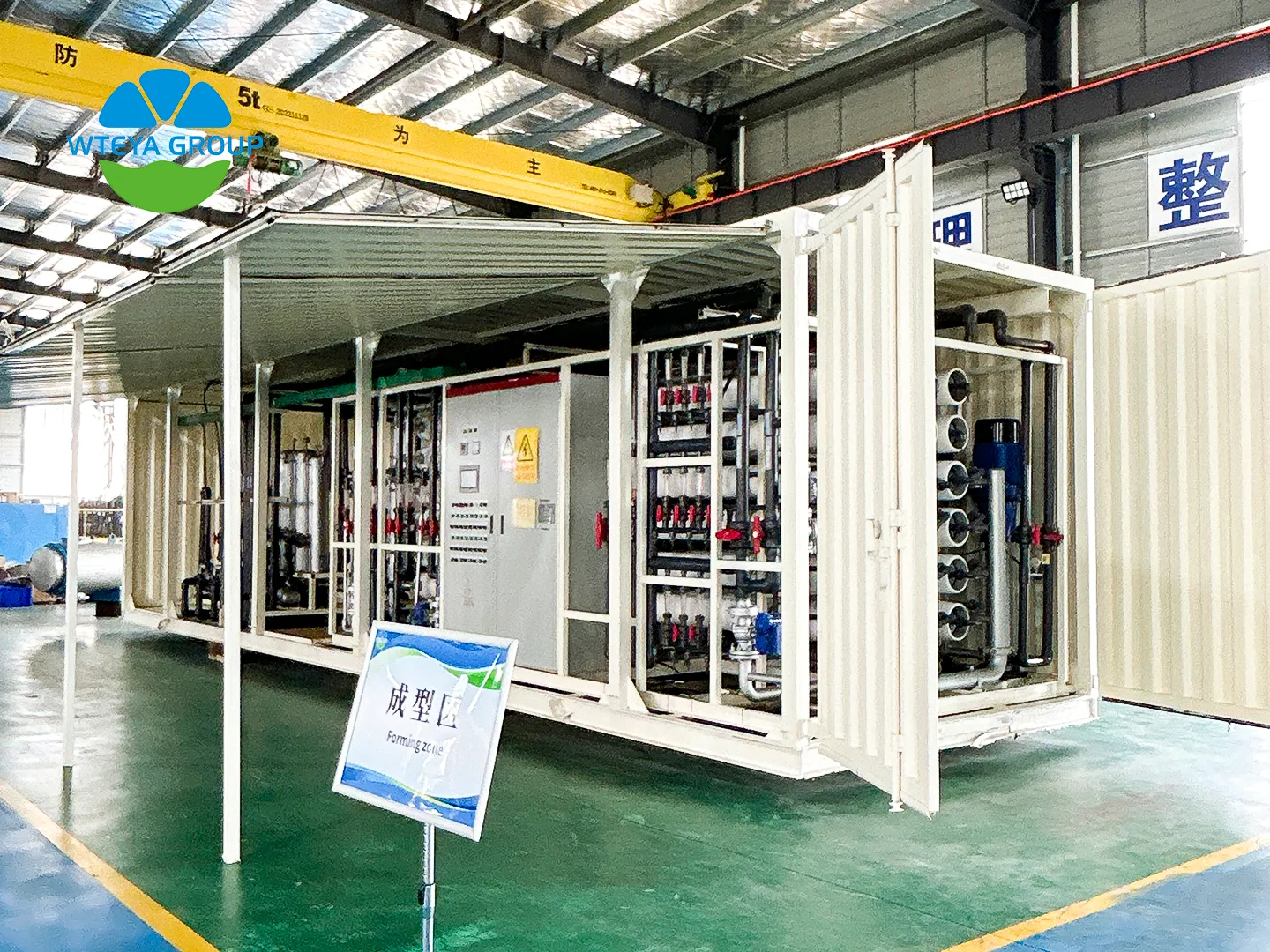
Total dissolved solids is the headline figure. A containerized seawater desalination plant typically delivers below 200 ppm, a small 4040 system below 500 mg/L, and a portable unit below 1000 mg/L — all inside the WHO acceptability limit, but at very different levels of purity.
Salt rejection describes the membrane, not the water. Seawater RO membranes run at 99.5%, and the 4040 membrane used in small systems at 99% or better. Rejection is the number that predicts how the product TDS will behave when feed salinity rises in summer or after a storm.
Turbidity should sit close to zero NTU against a 5 NTU limit. Low turbidity is also the first sign that pretreatment is working: a gradual rise usually means cartridge filters or media filters are passing solids.
pH is adjusted to 7.0–8.5 after remineralization. Raw RO permeate is slightly acidic and aggressive to pipework, so calcium and magnesium are dosed back and pH corrected before the water enters the network.
Chloride and sulfate are held at or below 250 mg/L each. Both are aesthetic and corrosion parameters rather than health limits, and both are the first to breach if rejection falls.
Microbiology closes the loop. RO membranes reject the vast majority of bacteria and viruses, a 254 nm UV stage acts as the final barrier, and coliforms must not be detected in the finished water.
Boron deserves a separate line. Seawater carries roughly 4.5–5 mg/L of boron, the WHO guideline value is 2.4 mg/L, and sensitive crops tolerate far less. Where boron matters, a second RO pass or a boron-selective resin is added rather than accepted as unavoidable.
⚙️ How the Membrane Holds 99.5% Rejection
Rejection is not a property of the membrane alone. It is the result of four stages working together.
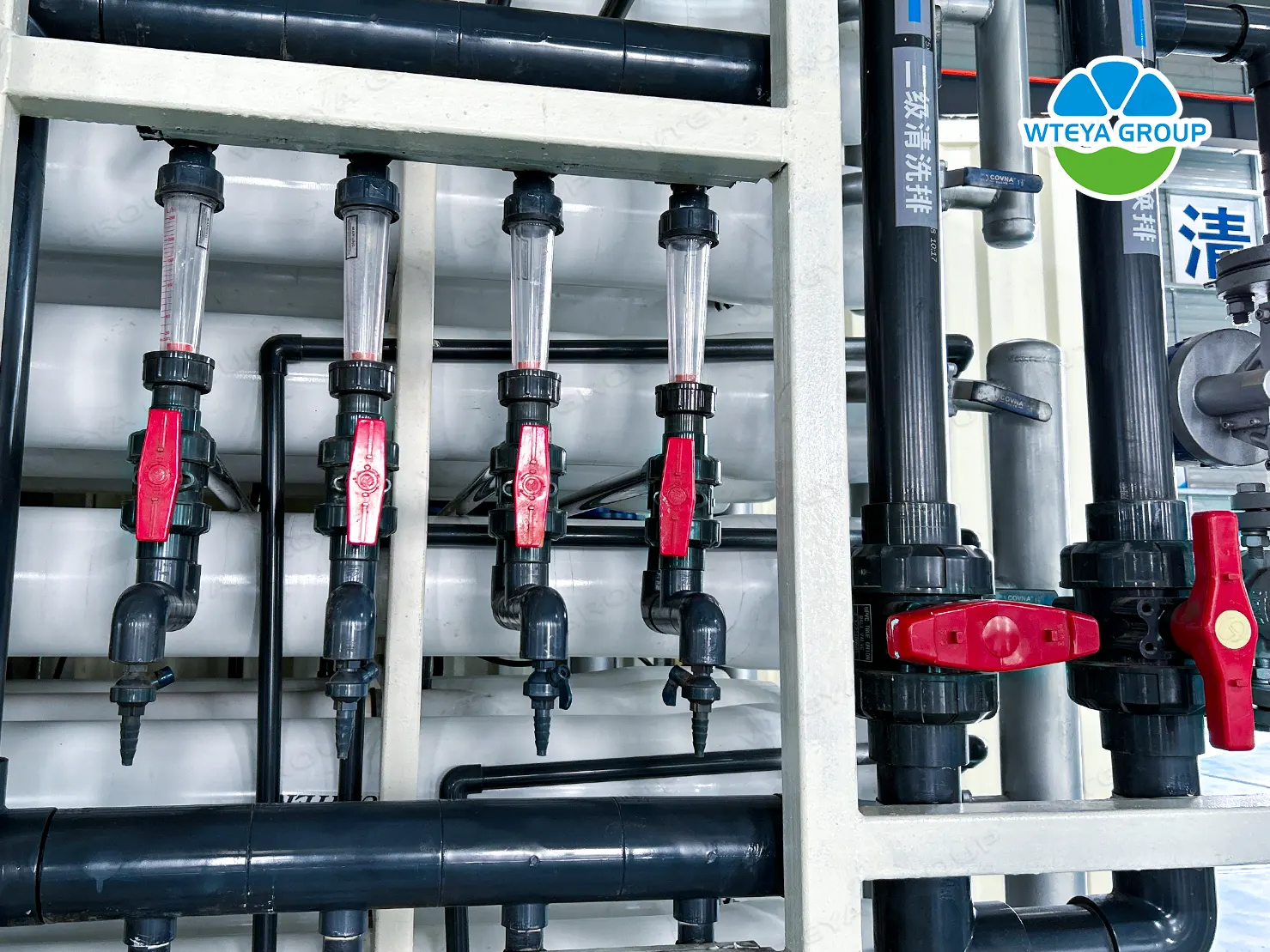
- Pretreatment — 10 micron and 5 micron cartridges plus media filtration hold SDI at or below 5 and free chlorine below 0.1 ppm, protecting the polyamide layer from oxidation and fouling.
- High-pressure pumping — seawater is pressurized to 5.5–7.0 MPa, above osmotic pressure, with recovery held at 40–50% to avoid scaling the concentrate side.
- Energy recovery — a pressure exchanger returns concentrate energy to the feed, bringing specific consumption down to 3–4 kWh/m³.
- Post-treatment — remineralization, pH correction and UV disinfection turn permeate into finished drinking water.
Membrane elements last two to five years when cleaning is done on evidence rather than on a calendar. Normalized data — not raw gauge readings — is what tells you whether a cleaning is due.
🔬 Testing: Continuous, Monthly and Annual
A quality guarantee is only as good as the testing behind it. WTEYA systems are handed over with a three-tier routine.
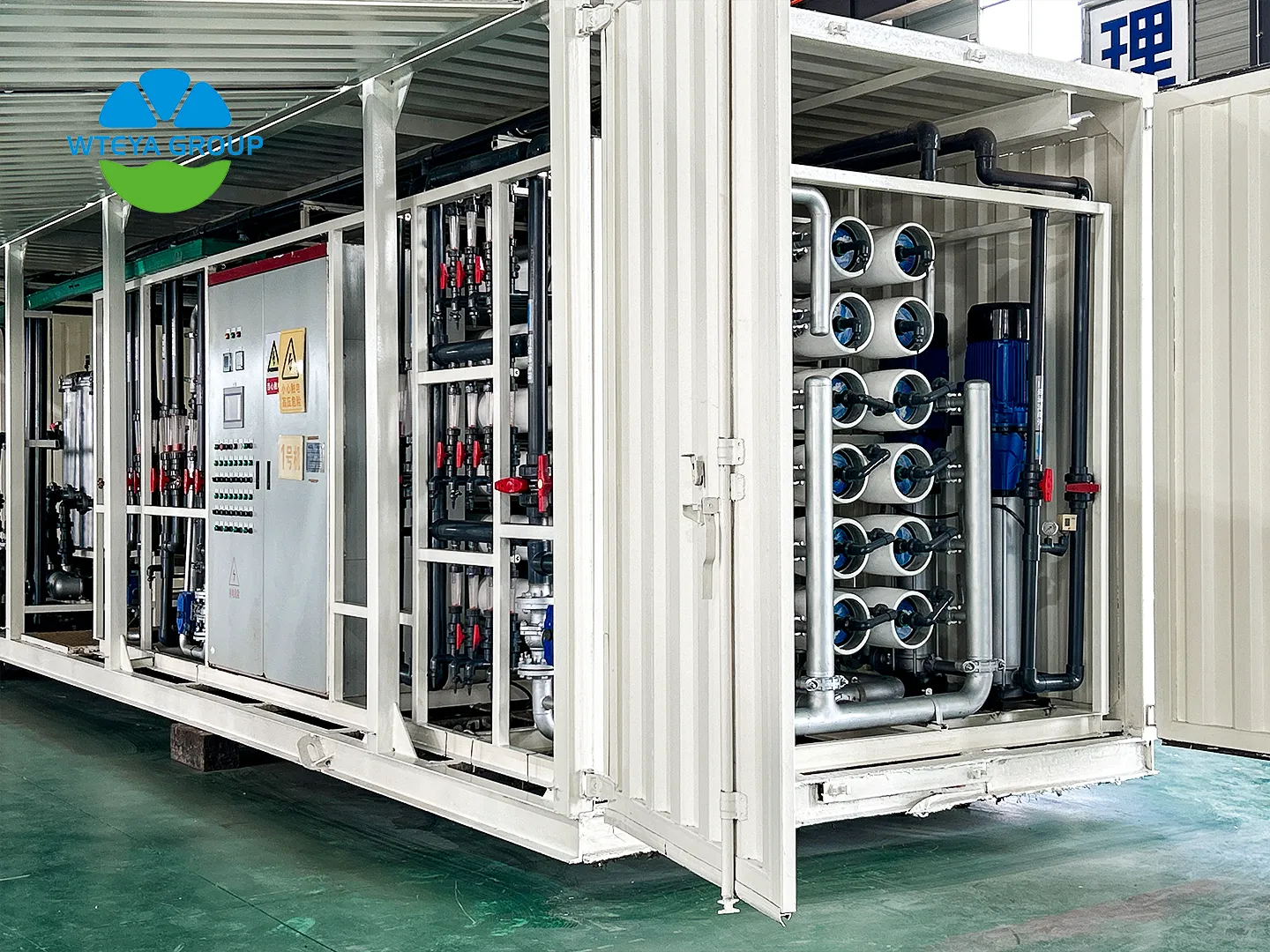
Continuous monitoring covers product conductivity and TDS, permeate and concentrate flow, feed and differential pressure, recovery ratio and ORP. Trending these values is what catches membrane breach within hours instead of months.
Daily checks compare normalized performance against the commissioning baseline. A sustained 10% rise in product conductivity, or a step change in differential pressure, is treated as an integrity alarm and investigated before the next shift.
Monthly laboratory testing covers TDS, pH, turbidity, chloride, sulfate, boron and microbiological indicators, sampled at the product header and at the storage tank outlet. Third-party sampling removes any doubt about who produced the number.
Annual verification repeats the full parameter panel required by the local authority and includes a membrane performance test. The records serve three purposes: regulatory reporting, warranty evidence, and the baseline for the following year.
🏝️ Matching Quality to the End Use
Drinking water needs the full package: TDS below 200 ppm for a plant, disinfection, and remineralization for taste and pipe protection.
Boiler feed goes further. Conductivity below 10 microsiemens per centimetre usually requires mixed-bed ion exchange or EDI downstream of the RO stage, because silica and residual salts concentrate in the boiler.
Irrigation is governed by boron, chloride and sodium adsorption ratio rather than by TDS alone. A plant that meets drinking water standards can still be unsuitable for citrus if boron is not addressed.
Process and utility water is specified case by case. Many industrial users need stable low turbidity and predictable conductivity, and accept a single-pass permeate without remineralization.
🏆 Why Choose WTEYA
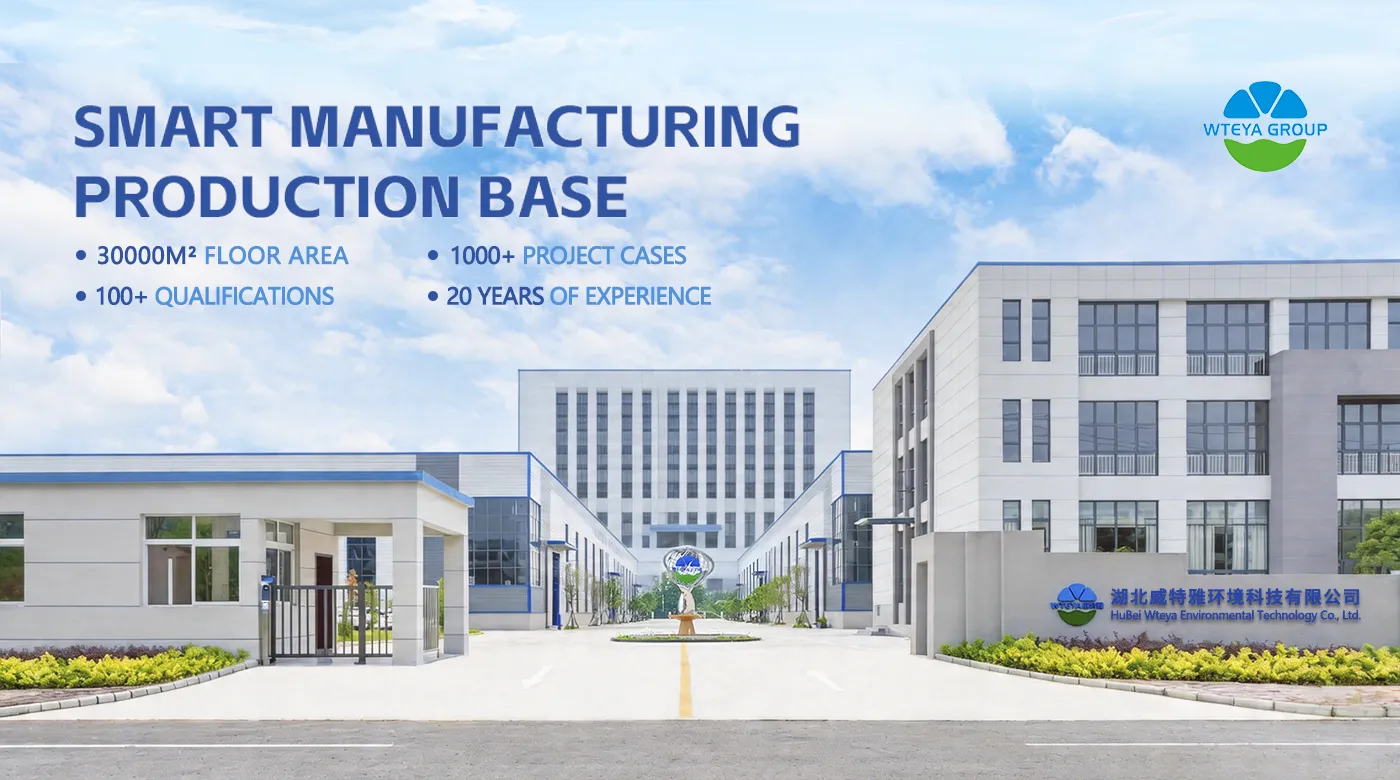
WTEYA has built water treatment and evaporation systems since 2009, with a 30,000 m² manufacturing base in Jingshan, 42 branches, more than 500 employees and over 2,000 customers across 30 provinces and export markets. The group holds close to 200 patents and reports equipment stability above 99%.
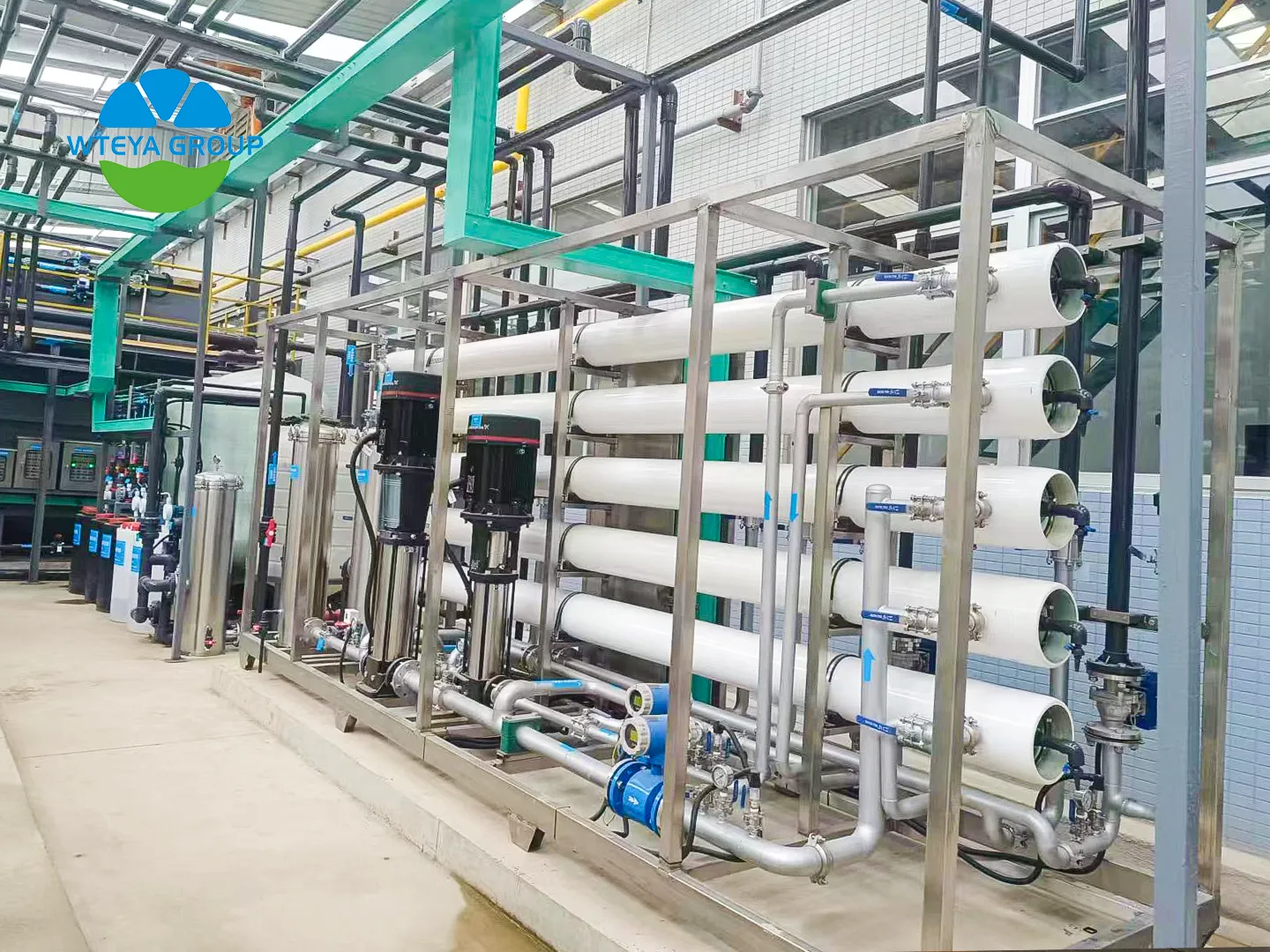
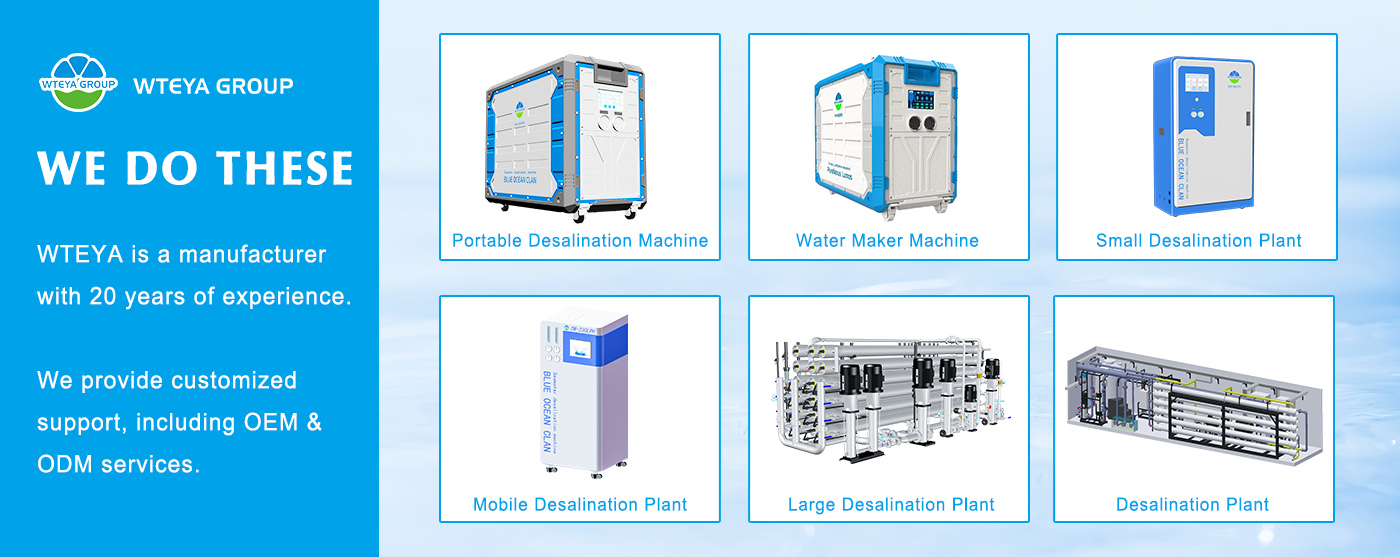
On the desalination side the portfolio covers portable units producing 300 GPD (about 1,135 litres per day from 1.35 kW), 4040 small systems, and containerized plants in the 5–10 t/h range, or 120–240 tonnes per day, with a build time of one to three months and a water cost of 4–8 CNY per tonne.
Every unit is wet-tested before shipment and delivered with a water quality report, a normalized baseline and a recommended testing schedule, so the numbers in this article are the numbers the customer can reproduce on site.
❓ Frequently Asked Questions
Is desalinated water safe to drink long term?
Yes, when it is produced to WHO guideline values and remineralized. RO removes salts and contaminants, and dosing calcium and magnesium back restores taste and protects distribution pipework.
What TDS should desalinated water have?
A seawater plant typically delivers below 200 ppm, a small 4040 system below 500 mg/L and a portable unit below 1000 mg/L. All three sit inside the WHO acceptability limit of 1000 mg/L.
How often should water quality be tested?
Continuously for conductivity, flow and pressure; monthly at an accredited laboratory for TDS, pH, turbidity, chloride, boron and microbiology; and annually against the full local parameter list.
🤝 Become a WTEYA Authorized Dealer
Become a WTEYA authorized dealer for desalination equipment. Exclusive territories, competitive pricing, and full factory support.
Partners receive product training, sizing tools, spare parts stock and joint project design from our engineering team, so a first desalination project can be quoted and delivered with confidence.
📲 WhatsApp: +86-1802 5185 143
📧 Email: sales@wteya.com
🌐 Website: www.wteyaa.com
Previous: Survival Desalination: Water Makers for Emergencies
Next: No More