






Containerized Desalination: Turnkey Water Supply for Remote Island Communities
Containerized Desalination: Turnkey Water Supply for Remote Island Communities
Remote island communities face a daily water crisis that mainland residents never think about. When your island depends on rainwater collection or expensive water delivery by boat, every dry spell threatens your livelihood. A single missed delivery leaves hotels without guests, farms without irrigation, and families without drinking water.
The Hidden Cost of Island Water Dependence
Shipping fresh water to remote islands costs $8–$15 per cubic meter. For a small resort consuming 50 cubic meters daily, that adds up to over $150,000 annually just for water transport. Rainwater systems fail during drought seasons. Groundwater wells on islands often produce brackish water with TDS levels above 5,000 ppm — far above the 500 ppm safe drinking standard.
Unlike mainland water infrastructure, island communities cannot simply connect to a municipal pipeline. They need self-sufficient, reliable water production that works regardless of weather or supply boats.
How Containerized Desalination Solves the Problem
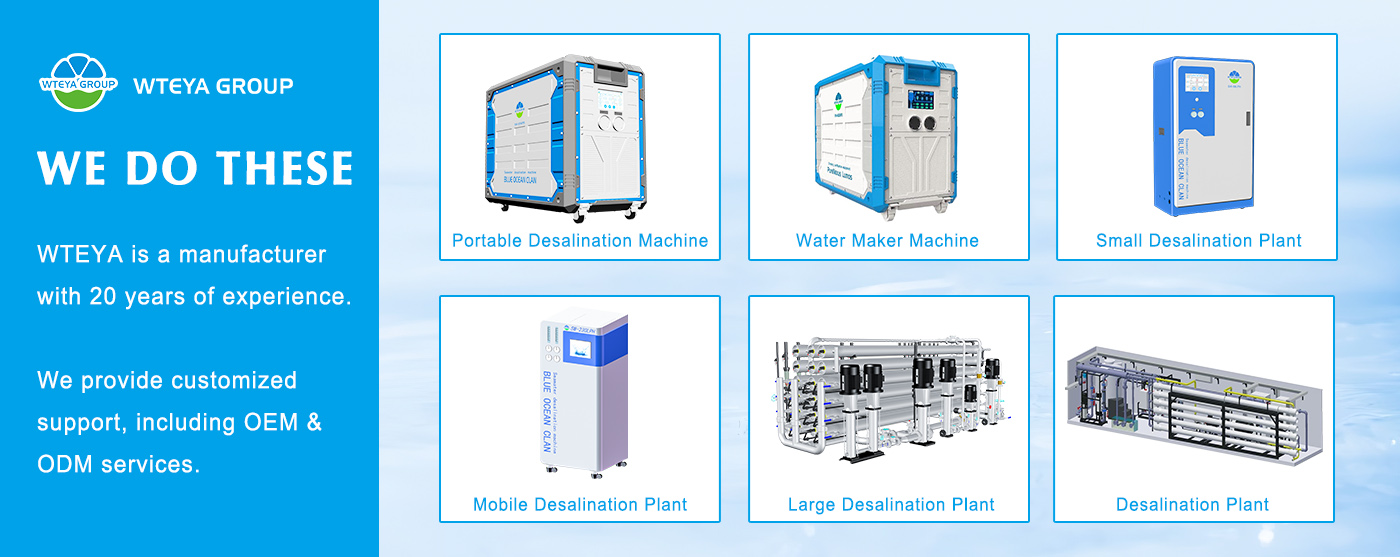
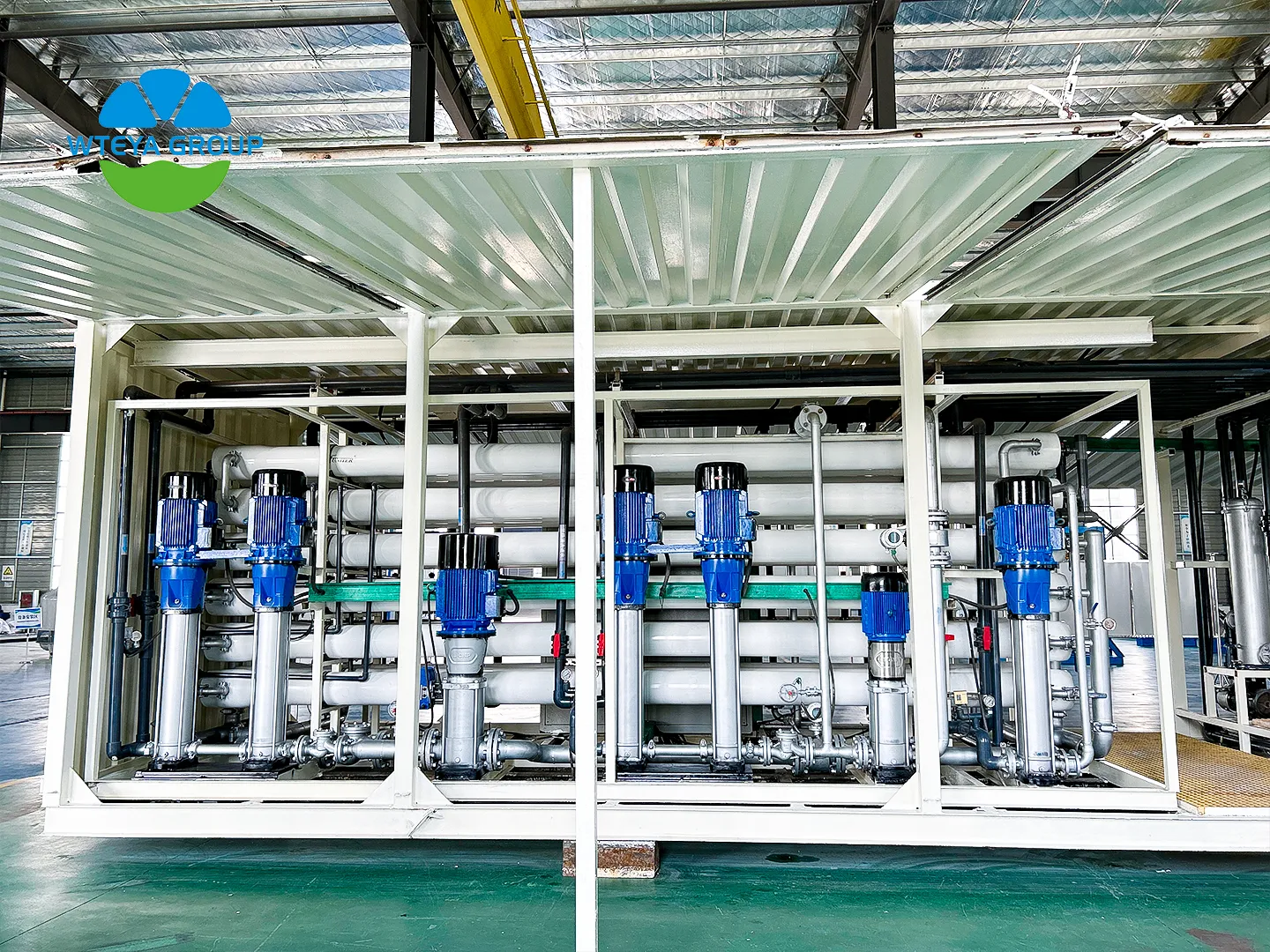
A containerized seawater desalination system transforms unlimited seawater into clean, drinkable fresh water. Housed in a standard shipping container, these systems arrive pre-assembled and ready to operate. WTEYA container units produce 1,000 to 50,000 liters per day — enough to supply entire island communities, resorts, or fishing operations.
The modular design means you scale capacity by adding containers rather than rebuilding infrastructure. Installation takes days, not months. Once connected to seawater intake and power, production begins immediately.
Why Container Systems Outperform Traditional Island Water Solutions
Eliminates delivery dependence: Your water source becomes the ocean surrounding your island. No more waiting for supply boats or paying emergency delivery premiums.
Consistent output regardless of weather: Rainwater collection stops when drought hits. Container desalination runs continuously, producing the same volume every day.
Compact footprint with full containment: The entire system fits inside a standard 20-foot or 40-foot container. No separate buildings, no complex civil works, minimal site preparation.
Plug-and-play deployment: WTEYA container systems ship with pre-installed RO membranes, pumps, control panels, and piping. Local technicians can complete commissioning with remote support.
Real Island Applications
Island resorts and eco-lodges replace costly water deliveries with on-site production, cutting operational costs by 60–80% within the first year.
Remote fishing communities gain reliable fresh water for processing, ice production, and domestic use — directly supporting catch quality and food safety.
Small island municipalities provide residents with municipal-grade drinking water without building pipelines from mainland sources.
Offshore research stations maintain self-sufficient operations during extended deployments without resupply dependence.
What to Consider When Choosing a System
Daily water demand determines unit size. A 1,000 L/day system serves 50–100 people. A 10,000 L/day unit supports small resorts or mixed-use communities. Power availability matters — WTEYA offers diesel-electric, grid-connected, and solar-hybrid configurations to match your island's infrastructure.
Seawater intake quality varies by location. WTEYA engineers assess salinity, temperature, and sediment levels to configure pre-treatment and membrane selection for your specific conditions.
Remote island communities no longer need to accept water insecurity as inevitable. Containerized desalination delivers mainland-grade water independence with island-appropriate simplicity.
📲 WhatsApp: +86-1800 2840 855
📧 Email: sales@wteya.com
🌐 Website: www.wteyaa.com