






Solar-Powered Desalination: Sustainable Water Supply for Eco-Resorts
Solar-Powered Desalination: Sustainable Water Supply for Eco-Resorts
Eco-resorts promise guests an escape into nature — pristine beaches, untouched landscapes, and the luxury of sustainability. Yet behind the scenes, one relentless challenge threatens that promise: fresh water. Remote coastal locations mean no municipal water lines. Bottled water deliveries rack up costs and carbon footprints. Groundwater, where available, is often brackish or saline. For resort owners committed to genuine environmental stewardship, traditional water supply methods undermine the very values they market to guests.
The Hidden Water Crisis at Coastal Eco-Resorts
An average eco-resort with 50 rooms consumes 15,000 to 25,000 liters of fresh water daily — for drinking, cooking, laundry, pools, and landscaping. On a remote island or undeveloped coastline, that water must arrive by truck or barge. A single water delivery can cost $200 to $500, and a resort might need deliveries three to five times per week. Over a year, water logistics alone can drain $30,000 to $100,000 from the operating budget — and that is before factoring in fuel emissions from diesel trucks and marine vessels. For a property marketed as carbon-neutral, those numbers are impossible to reconcile.
Solar Desalination: Water That Aligns With Your Brand
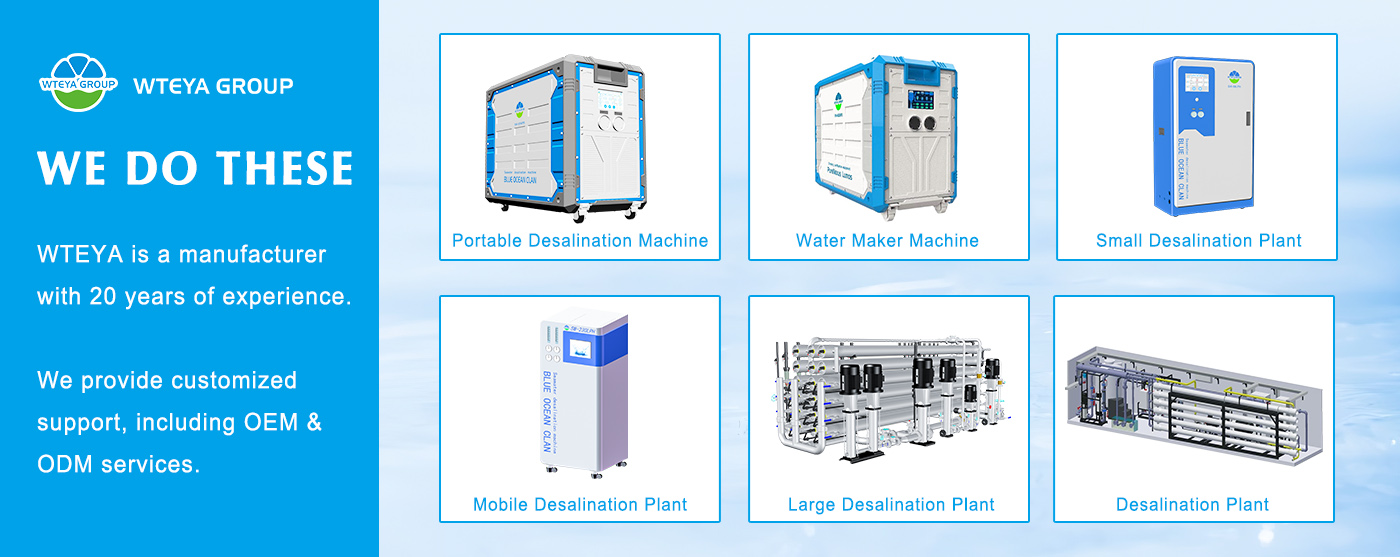
WTEYA solar seawater desalination systems turn the ocean into a sustainable freshwater source — powered entirely by the sun. Unlike conventional desalination plants that consume large amounts of grid electricity or diesel, a solar-powered RO system pairs photovoltaic panels with high-efficiency reverse osmosis membranes to produce fresh water at zero ongoing energy cost. The result is clean drinking water that matches the eco-resort brand promise: renewable, low-impact, and visibly sustainable. Guests can see the solar array and know their shower water came from the sea and the sun, not a diesel truck.
How Solar-Powered RO Desalination Works
The system draws seawater through a beach well or submerged intake, passes it through multimedia pre-filtration to remove sand and particulates, then pressurizes it through reverse osmosis membranes. The key difference is the power source: a solar PV array sized to the resort's daily water demand drives the high-pressure pump. Excess solar energy charges a battery bank, ensuring 24-hour water production even during cloudy periods or at night. The brine discharge is diluted and returned to the ocean at concentrations well within environmental safety limits. The entire system fits into a compact equipment room or containerized enclosure, requiring minimal on-site construction.
Key Benefits for Resort Operators
Zero Energy Bills. Once installed, a solar desalination system produces water at virtually no operating cost. Sunlight is free. Compare that to diesel-powered water delivery or grid-dependent desalination, where energy can account for 40% to 60% of total water cost.
Authentic Sustainability Story. Eco-conscious travelers increasingly scrutinize green claims. A visible solar desalination installation provides tangible proof of environmental commitment — a powerful marketing asset that sets your resort apart from competitors who simply buy carbon offsets.
Water Independence. No more negotiating with water suppliers, no more delivery delays during storm season, no more price hikes. Your resort controls its own water supply, scaled precisely to occupancy levels.
Low Maintenance Footprint. Modern RO membranes last 3 to 5 years with proper pre-filtration. Automated flushing and monitoring systems minimize the need for on-site technical staff. Routine maintenance consists primarily of filter cartridge replacement and periodic membrane cleaning.
Ideal Applications
WTEYA solar desalination systems serve a wide range of coastal hospitality operations. Beachfront eco-lodges on remote islands eliminate diesel water deliveries entirely. Boutique resorts in protected marine areas comply with strict environmental regulations while maintaining luxury service standards. Dive resorts and liveaboard operations produce fresh water for guests and equipment rinsing without generator noise. Coastal wellness retreats pair solar water with solar power for a fully off-grid experience. Safari lodges near saline lakes or coastal wetlands gain reliable fresh water without drilling or trucking.
For resort developers planning new properties, integrating solar desalination from the design phase eliminates the cost of laying municipal water lines and creates a built-in sustainability credential that attracts environmentally conscious investors and guests alike.
📲 WhatsApp: +86-1800 2840 855
📧 Email: sales@wteya.com
🌐 Website: www.wteyaa.com