






Containerized Desalination: Fresh Water Supply for Coastal Fish Farms
Containerized Desalination: Fresh Water Supply for Coastal Fish Farms
Coastal aquaculture is expanding faster than natural freshwater sources can sustain. Fish farms that once relied on wells, rivers, or municipal water are hitting hard limits — groundwater is turning brackish, surface water carries pathogens, and municipal connections simply don't reach remote shorelines. When water quality drops, so does stock health, growth rate, and profit margin.
The Water Crisis Quietly Reshaping Coastal Aquaculture
Fish and shrimp farms along coastlines face a paradox: they sit next to an ocean of water they cannot use. Saline intrusion into coastal aquifers makes well water increasingly unsuitable. Seasonal droughts shrink river flows. Hauling water by truck costs more than most operations can absorb over a full grow-out cycle.
Disease outbreaks trace back to poor water quality more often than farmers admit. Pathogens, fluctuating salinity, and suspended solids stress stock, slow growth, and increase feed conversion ratios. Every day without reliable freshwater is a day of lost yield.
A Turnkey Solution: Containerized Desalination
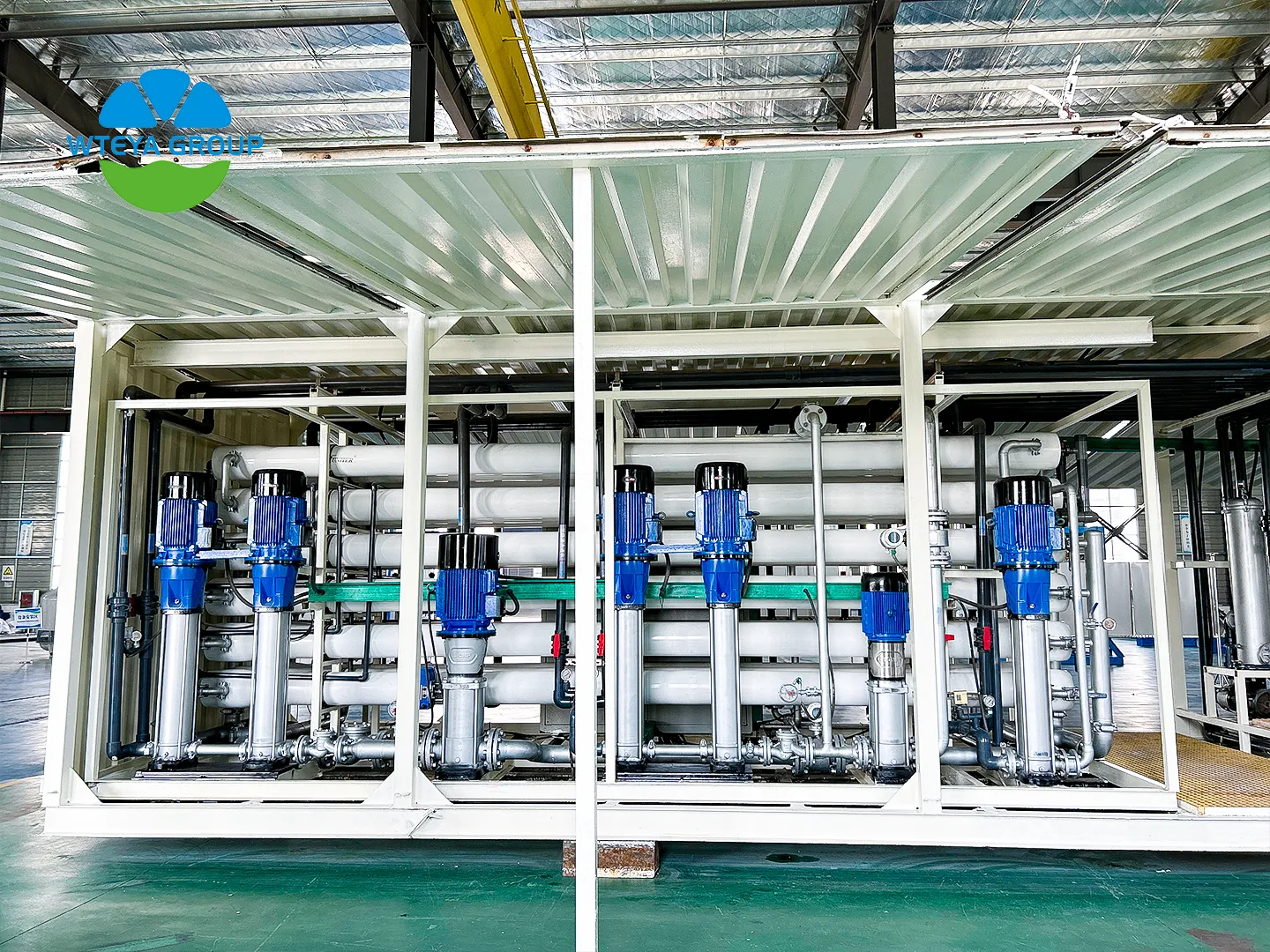
Containerized desalination systems change the equation. These self-contained units arrive pre-assembled in a standard shipping container — connect intake, power, and product water lines, and the system starts producing fresh water within hours.
Unlike permanent plant construction that takes months and requires civil works, a containerized RO system sits on a simple concrete pad or compacted gravel. For aquaculture operations, this means predictable freshwater delivery without waiting for permits, contractors, or grid infrastructure upgrades.
The technology is straightforward: seawater or brackish water passes through pretreatment filtration, then through reverse osmosis membranes that strip out salt, minerals, and pathogens. What emerges is consistently clean, low-TDS water ready for hatchery, nursery, or grow-out ponds.
Why Containerized Systems Fit Aquaculture
Scalable to Stocking Density. Systems range from compact units producing 5,000 liters per day to multi-container installations exceeding 100,000 L/day. Farmers match capacity to pond volume and stocking density, not to what the local well happens to yield.
Biosecurity Built In. Reverse osmosis removes bacteria, viruses, and parasites that pass through conventional sand filters. Hatcheries and nurseries — where stock is most vulnerable — benefit from pathogen-free water that reduces antibiotic dependency and improves survival rates.
Operates Off the Water Grid. Coastal fish farms located beyond municipal pipeline reach gain water independence. The system runs on grid power, generator, or hybrid solar — no dependence on unreliable groundwater or expensive water delivery contracts.
Predictable Water Chemistry. Consistent TDS, pH, and mineral content mean stable pond conditions. Shrimp farmers in particular know that fluctuating salinity triggers molting problems and mortality. A desalination system removes that variable entirely.
Applications Across the Aquaculture Sector
Shrimp Hatcheries and Nurseries. Post-larvae and juvenile shrimp demand pristine water. Even minor pathogen loads cause mass mortality. Containerized RO delivers sterilized seawater at controlled salinity for every stage from spawning to PL transfer.
Marine Fish Cage Operations. Onshore support facilities for offshore cage farms need reliable freshwater for feed preparation, equipment cleaning, and crew quarters. A containerized unit placed at the shore base solves all three.
Recirculating Aquaculture Systems (RAS). Land-based RAS facilities require makeup water to replace evaporation and discharge losses. Containerized desalination provides that makeup stream without tapping into municipal supplies or depleting groundwater.
Integrated Multi-Trophic Aquaculture (IMTA). Operations combining fish, shellfish, and seaweed benefit from controlled water inputs. Desalinated water allows precise salinity management across different trophic levels within the same farm.
Containerized desalination turns the coastal aquaculture water paradox into an advantage. Instead of competing for scarce freshwater, farms tap the one resource they have in abundance — the sea. WTEYA containerized seawater desalination systems are factory-tested, skid-mounted, and ready to deploy wherever coastline meets cultivation.
📲 WhatsApp: +86-1800 2867 926
📧 Email: sales@wteya.com
🌐 Website: www.wteyaa.com