







Brine Disposal for Small Desalination Plants: 5 Options
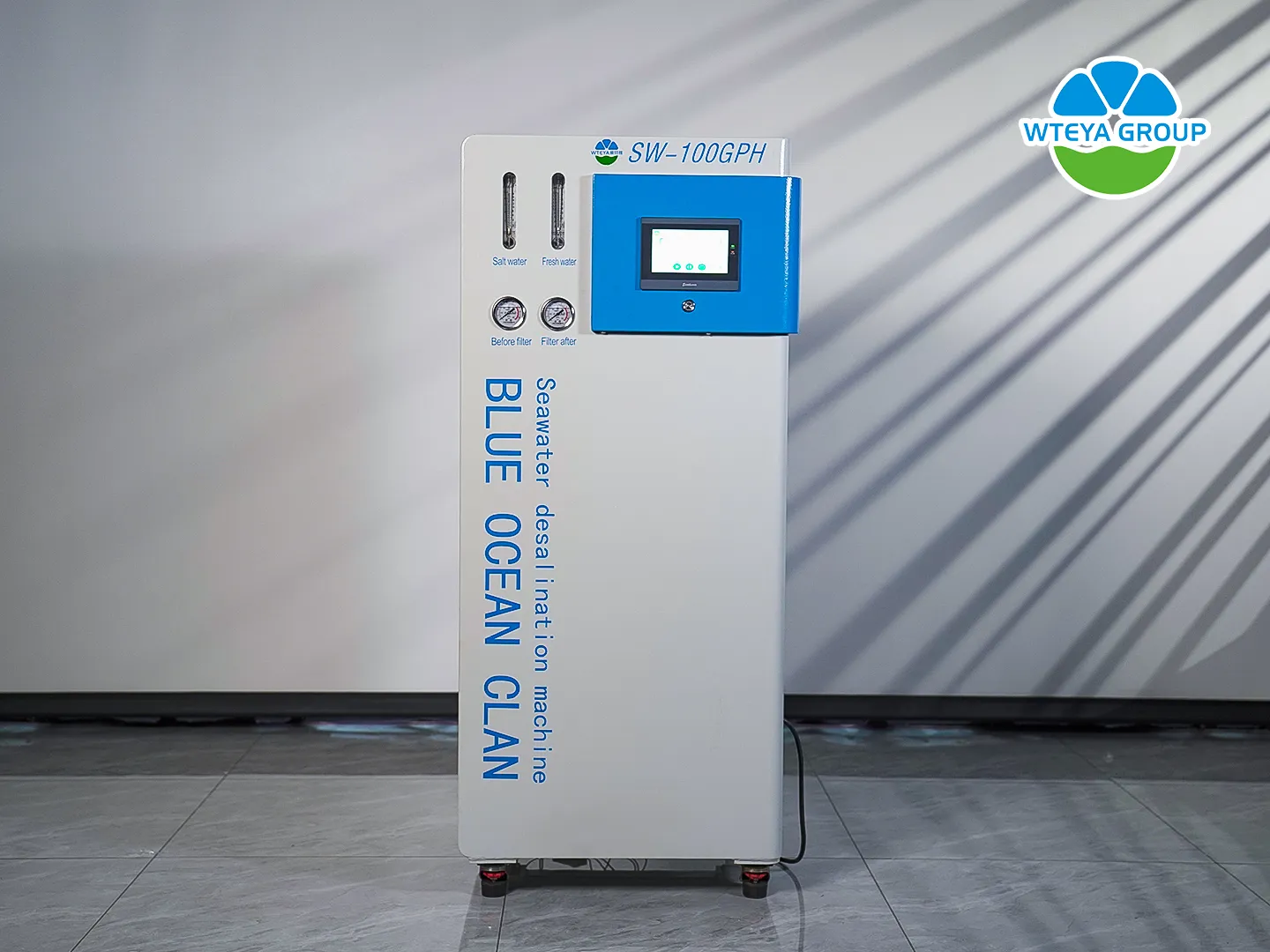
A small desalination plant solves the fresh water problem and creates a second one: what to do with the concentrate. A seawater RO system recovering 35–45% of the feed leaves 55–65% of the intake volume as brine, at a salinity roughly 1.5 to 2 times that of the source seawater — around 60,000–70,000 mg/L from a 35,000 mg/L feed.
That stream has to go somewhere legal, affordable and environmentally defensible. These are the five options that actually get used on islands, coastal sites and inland installations, with the conditions that decide between them.
🌊 1. Controlled Surface Discharge with a Diffuser
The most common route for coastal plants: the concentrate is returned to the sea through a diffuser that mixes it rapidly with ambient water. A well-designed outfall brings salinity back to within 1–2 units of background within tens of meters, which is what regulators normally require.
What decides approval is siting, not the pipe itself. The discharge point must avoid seagrass beds, coral, shellfish grounds and low-current pockets where dense brine can pool on the seabed. Discharge is usually continuous rather than batch, because a steady low flow dilutes better than periodic slugs. Where the plant uses antiscalant or chlorine, the chemical load — not the salt — often becomes the binding permit condition.
Cost: low capital, moderate permitting effort. Best fit: plants within a few hundred meters of open, high-energy water.
🕳️ 2. Deep Well Injection
Brine is pumped into a deep, confined saline aquifer or a depleted formation, isolated from any freshwater horizon by an impermeable layer. Nothing reaches the surface, so the visual and coastal impact is nil and the option works for inland sites with no water body nearby.
The constraints are geological and regulatory: a suitable receiving formation, a hydrogeological study, well construction to a standard that prevents upward migration, and long-term monitoring. Capital cost is high and the economics only close for larger flows — a 10–20 t/day plant rarely justifies a dedicated injection well unless one already exists.
☀️ 3. Evaporation Ponds
Solar ponds rely on the simplest possible mechanism: spread the brine thin, let the sun and wind evaporate the water, remove the salt. No energy input, no outfall, and the salt can sometimes be sold or returned to the sea as damp solid.
The limitation is area. Evaporation rates in warm coastal climates run at roughly 5–10 liters per square meter per day, so a plant producing several cubic meters of brine daily needs a pond area measured in hundreds to thousands of square meters, plus a liner to protect groundwater and capacity for the wet season when evaporation nearly stops. On a small island with scarce land this is usually the blocking factor.
♻️ 4. Thermal Concentration and Crystallization
A thermal stage — typically an evaporation and crystallization train — reduces the brine to a small volume of damp salt and clean distillate. This is the zero liquid discharge route: nothing is discharged, water recovery climbs, and the salt becomes a manageable solid.
It is also the most energy-intensive option. Adding an evaporator to a small RO plant can multiply total power demand several times over, which is difficult to justify on a 10–20 t/day installation unless discharge is prohibited outright or the site already has waste heat. Where ZLD is required, the usual approach is to concentrate the RO brine first and send only the small residual stream to the crystallizer.
🚿 5. Beneficial Reuse
Not every liter of concentrate has to be discarded. Brine is a usable resource in the right application:
• Toilet flushing and floor washing in industrial or public facilities, where salinity is irrelevant.
• Dust suppression on haul roads and construction sites, subject to local soil and groundwater rules.
• Salt-tolerant landscaping — halophytes and coastal species irrigated with diluted brine, provided soil salinity is monitored.
• Aquaculture dilution where a hatchery needs brackish water and the chemistry is compatible.
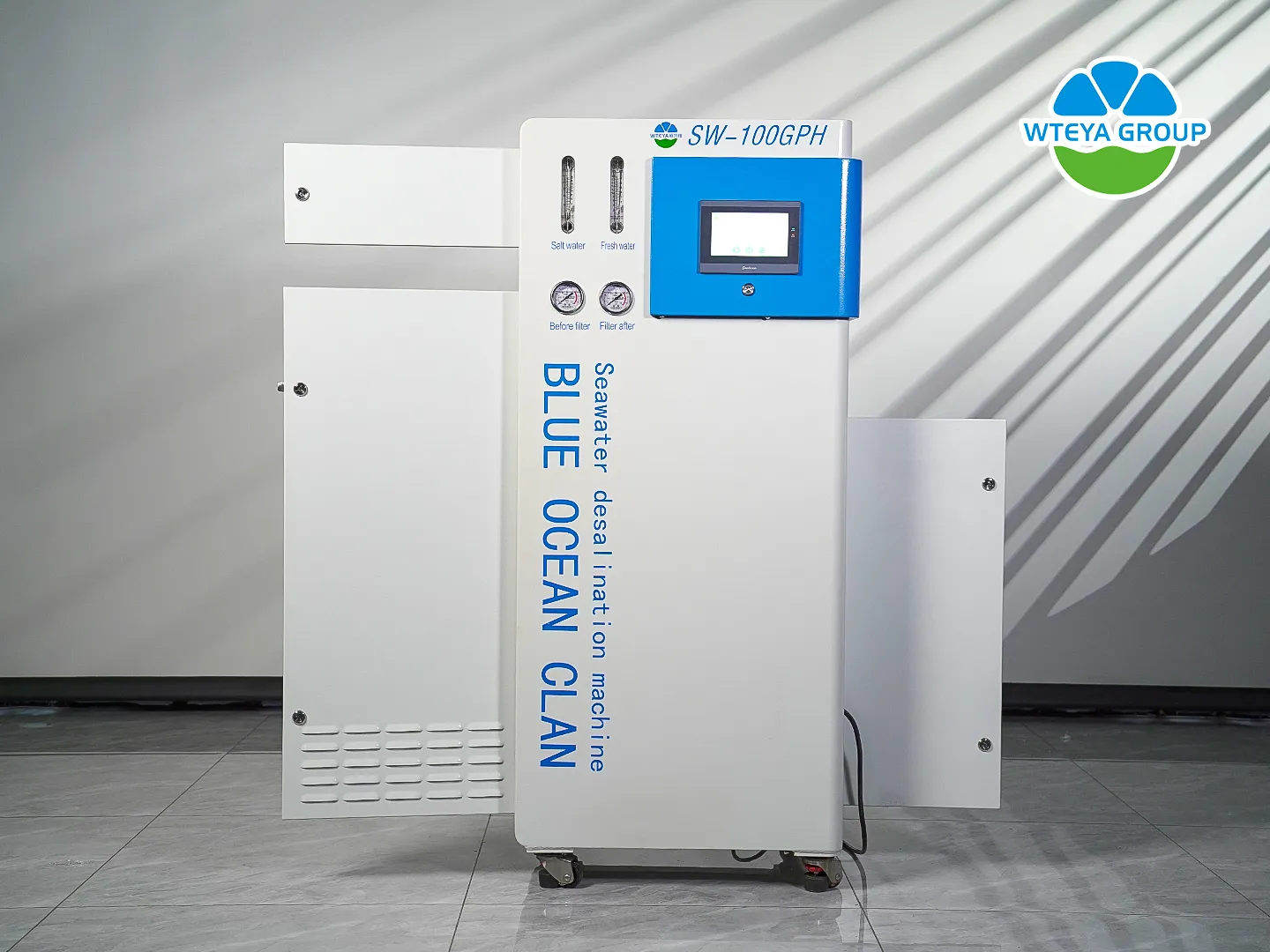
Reuse rarely absorbs the full brine flow, but it can cut the discharged volume meaningfully and is often the cheapest way to satisfy a permit condition. A portable desalination machine on a remote site, for example, can route concentrate to dust control instead of a shoreline outfall.
📋 How to Choose
Work through three questions in order. Is there open, high-energy water nearby? Surface discharge with a diffuser is the default. Is land available and cheap? Evaporation ponds remove the outfall entirely. Is discharge prohibited or is waste heat available? Thermal concentration becomes viable.
Two design decisions reduce the problem before it starts: keeping recovery at a level the membranes can sustain without excessive scaling, and using energy recovery so that the power penalty of higher recovery stays manageable. Both are built into our small desalination plant designs, and the concentrate strategy is agreed with the client at the quotation stage rather than after commissioning.
❓ Frequently Asked Questions
How much brine does a small desalination plant produce?
At 35–45% recovery, roughly 55–65% of the seawater intake leaves as concentrate — about 1.5–2 times the feed salinity.
Can brine simply be returned to the sea?
Yes, with a diffuser and a permit. Rapid mixing, a sited outfall away from sensitive habitat and controlled chemical use are the usual conditions.
Is zero liquid discharge realistic for a small plant?
It is technically feasible but energy-intensive; it is normally reserved for sites where discharge is prohibited or waste heat is already available.
Become a WTEYA authorized dealer for desalination equipment. Exclusive territories, competitive pricing, and full factory support — including brine management planning for every project.
📱 WhatsApp: +86-1800 2840 855
📧 Email: info@wteya.com
🌐 Website: www.wteyaa.com