






Brackish Water Desalination: Why Low-Salinity RO Beats Conventional Treatment

Brackish Water Desalination: Why Low-Salinity RO Beats Conventional Treatment
Industries and communities relying on brackish groundwater often face a frustrating cycle: treatment systems that work briefly, then fail under variable salinity. Wells that tasted acceptable last season suddenly produce water too salty for irrigation, process use, or even human consumption. The problem is not the water source itself — it is that conventional treatment methods were never designed for the inconsistent mineral load that defines brackish water.
The Hidden Cost of Wrong Treatment
Traditional water softeners and basic filtration systems address hardness minerals effectively but leave chlorides, sulfates, and total dissolved solids (TDS) largely untouched. For brackish sources where TDS ranges from 1,000 to 10,000 mg/L, this creates two expensive outcomes: equipment corrosion in industrial pipelines and rejected product batches in food and beverage processing. Facilities that rely on chemical dosing further add operational complexity, requiring trained staff and constant supply chain management for coagulants and anti-scalants.
Reverse Osmosis Engineered for Brackish Water
Brackish water reverse osmosis (RO) systems operate at moderate pressures — typically 15 to 25 bar — specifically tuned for the lower osmotic pressure of brackish feed water. Unlike seawater RO units that consume significantly more energy to overcome ocean-level salinity, a brackish RO system achieves high recovery rates while keeping power costs manageable. WTEYA's brackish water desalination systems use advanced composite polyamide membranes that reject over 97% of dissolved salts, delivering output water with TDS below 50 mg/L — suitable for drinking, irrigation, and industrial process requirements.
Key Advantages Over Conventional Methods
Consistent output quality regardless of seasonal variation. Brackish RO systems maintain permeate quality even when feed TDS fluctuates, unlike ion exchange systems that exhaust quickly during high-mineral periods.
Lower chemical dependency. RO purification relies on physical membrane separation rather than continuous chemical dosing, reducing both supply costs and environmental discharge concerns.
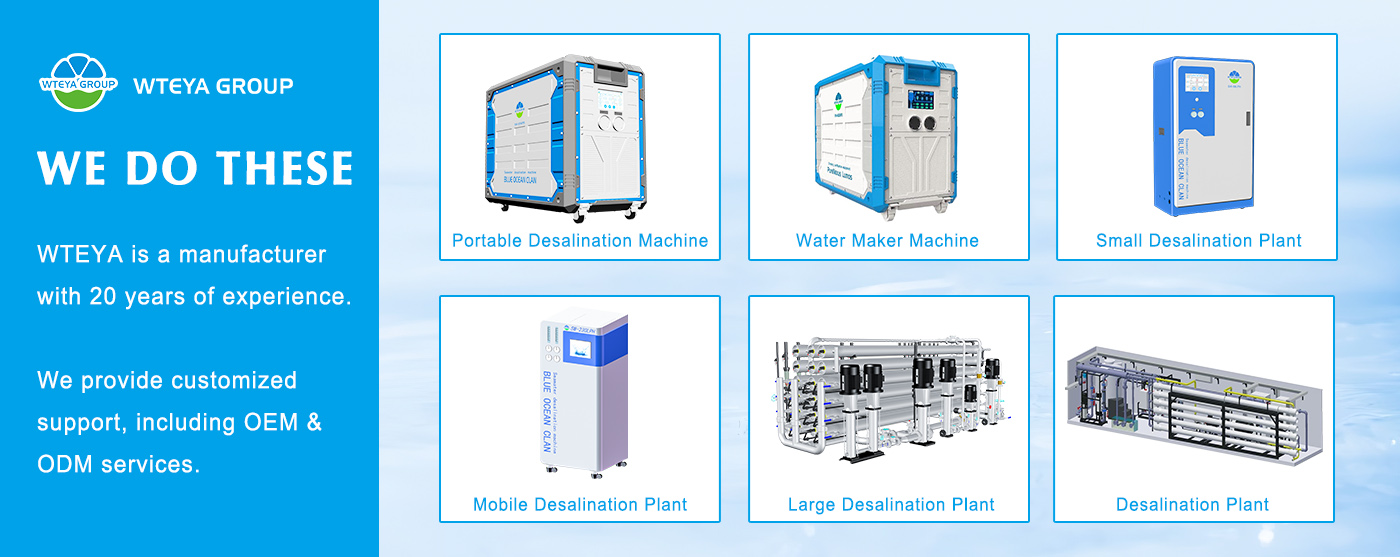
Compact footprint. Skid-mounted brackish RO units from WTEYA fit into standard plant layouts without major civil works, allowing fast deployment at remote industrial sites, agricultural operations, and small community water stations. Explore the full product range at WTEYA product catalog.
Where Brackish RO Delivers Results
Agricultural irrigation. Farms drawing from brackish aquifers use RO-treated water to prevent soil salinization and protect crop yields across thousands of hectares.
Industrial process water. Manufacturing plants — from textiles to electronics — require low-TDS water for rinsing, cooling, and boiler feed that conventional softening cannot reliably deliver.
Community drinking water. Small towns and remote villages with no access to municipal supply install brackish RO systems to meet WHO drinking water standards consistently.
Hotel and resort supply. Coastal resorts that rely on brackish borehole water install compact RO units to guarantee guest-quality water without trucking in supplies.
Choosing the Right Brackish RO System
Selecting a brackish water desalination system starts with three data points: feed water TDS, daily volume demand, and available power supply. WTEYA offers systems from 500 L/day to 50,000 L/day, each sized and pre-tested to match specific site conditions. A properly configured brackish RO system from WTEYA delivers reliable water quality with minimal operator intervention — a practical, long-term answer for any operation struggling with variable-salinity water sources.
📲 WhatsApp: +86-1800 2840 855
📧 Email: sales@wteya.com
🌐 Website: www.wteyaa.com