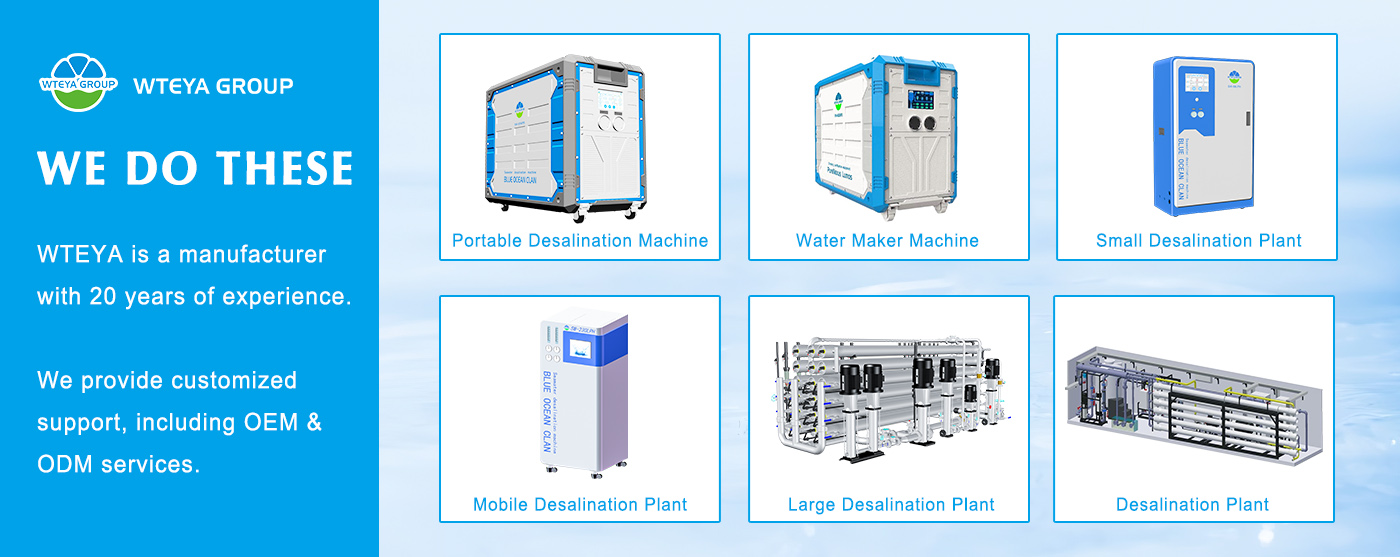







How Does a Portable Seawater Desalination Machine Work?
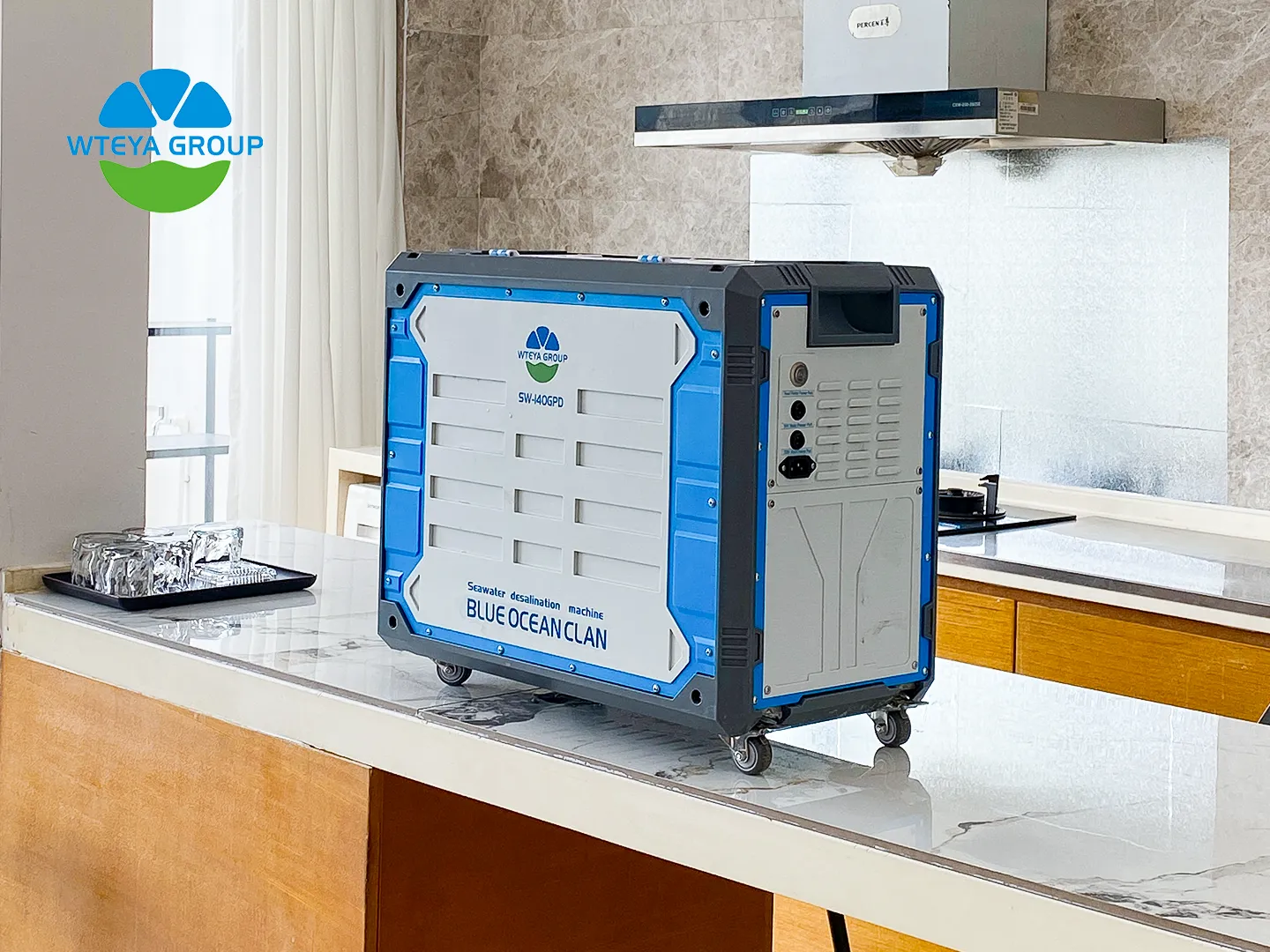
How Does a Portable Seawater Desalination Machine Work?
A portable seawater desalination machine uses reverse osmosis to turn seawater into fresh, drinkable water without shore infrastructure. The WTEYA SW-4021-300GPD unit packs the complete process into a compact 40 kg package: raw water intake, multi-stage pre-filtration, high-pressure pumping, RO membrane separation, and clean water output. It produces 300 GPD (1200 LPD / 50 LPH) of fresh water and runs on ordinary 200-240V single-phase power, which is why boats, islands, coastal camps, and emergency teams use it as an independent water source.
The Core Principle: Reverse Osmosis
Reverse osmosis uses pressure to force water molecules through a semi-permeable membrane while salt ions, heavy metals, and microorganisms are held back. The heart of the WTEYA portable unit is a 4021 RO membrane with 3.1 m² of effective area. The membrane rejects over 99% of dissolved salts: seawater with a TDS of up to 35,000 ppm comes out as fresh water with a TDS of below 500 mg/L, well within drinking water limits.
Because seawater needs high pressure to overcome natural osmotic pressure, the unit's plunger pump raises the feed to an operating pressure of 30-900 psi (up to 100 bar at the pump outlet). This pressure is the single most important factor in stable desalination performance.
Step by Step: From Seawater to Fresh Water
Step 1: Intake and pre-filtration. The raw water pump (2000 LPH) draws seawater and passes it through a 10μm primary filter and a 5μm secondary filter to remove sand, suspended solids, and algae. A 254nm UV lamp then inactivates microorganisms before the water reaches the membrane.
Step 2: High-pressure pumping. The plunger pump (360 LPH) compresses the pretreated water to the reverse osmosis working pressure. The high-pressure piping is rated at 1000 psi / 69 bar for safety.
Step 3: RO separation. Pressurized seawater enters the 4021 membrane. Water molecules pass through the membrane surface and become fresh water, while salts, heavy metals, and microbes are rejected and discharged with the brine stream.
Step 4: Fresh water output. Product water exits at a delivery head of 1.0-2.0 mH2O, ready for drinking and daily use. The system is protected by four alarms — low pressure, high inlet pressure, inverter fault, and oil change reminder.
Key Specifications at a Glance
The SW-4021-300GPD is designed for easy deployment. It measures 610×320×497 mm and weighs 40 kg, so it fits in a boat cabin, a vehicle, or a field camp. Installed power is 1.35 kW at 200-240V single phase (50/60 Hz, ≤8A/≤10A), with a 24V DC option for solar, battery, and marine electrical systems.
Feed water requirements are practical for real seawater conditions: TDS ≤ 35,000 ppm, turbidity ≤ 1 NTU, pH 4-9, and free chlorine below 0.1 ppm. Product water quality meets the drinking standard — total coliforms and E. coli not detectable, bacteria count ≤ 100 CFU/mL, turbidity ≤ 1 NTU, and pH 6.5-8.5.
Where Portable Desalination Is Used
Long-range vessels and yachts use it to reduce port calls for water; fishing boats rely on its 50 LPH output for crew drinking and daily use. Island explorers and coastal campers carry it for off-grid fresh water, while coastal resorts and dive bases use it to cut dependence on municipal supply. After tsunamis, typhoons, and other disasters, emergency teams deploy it to convert seawater or brackish water into drinking water for affected communities.
Maintenance That Keeps It Working
The maintenance schedule is straightforward: clean the primary filter every 5-60 operating hours, replace the secondary filter every 15-30 days, replace the RO membrane after more than 3600 hours (about 180-360 days), and change the plunger pump oil every 500 hours. The UV lamp is rated for over 3000 hours.
For long-term storage of more than 3 days, circulate a 1%-1.5% SMBS (sodium metabisulfite) preservative solution through the system for 10-15 minutes to protect the membrane from biological growth.
Frequently Asked Questions
How much fresh water does a portable desalination machine produce? The WTEYA SW-4021-300GPD produces 300 gallons per day, equal to 1200 liters per day or 50 liters per hour — enough for drinking and daily needs for a small crew, family, or camp.
What water quality does it deliver? Salt rejection exceeds 99%, bringing seawater from about 35,000 ppm TDS down to below 500 mg/L, and the membrane removes more than 99.99% of bacteria. The output meets drinking water standards for TDS, bacteria, and turbidity.
Can it run on a boat or off-grid? Yes. The unit runs on 200-240V single-phase ship or utility power, and a 24V DC option allows operation with batteries and solar panels. Its 40 kg weight and compact size make installation straightforward.
Become a WTEYA Authorized Dealer
Become a WTEYA authorized dealer for desalination equipment. Exclusive territories, competitive pricing, and full factory support. The global demand for portable desalination is growing fast — join our dealer network and bring reliable fresh water solutions to marine, island, and emergency markets in your region.
📲 WhatsApp: +86-1802 5185 143
📧 Email: sales@wteya.com
🌐 Website: www.wteyaa.com