







Water Purifier vs Desalination: What's the Difference?

Water Purifier vs Desalination: What's the Difference?
The two terms are often used interchangeably, and buyers then discover that the machine they ordered cannot handle the water they actually have. The difference is not marketing language: it is the feed water the system is designed for, and the treatment train that follows from that.
It Starts With Feed Water TDS
A water purifier is built for water that is already potable or close to it. Feed TDS is normally below 1,500 mg/L, and the job is to remove sediment, chlorine, residual organics, bacteria and a modest amount of dissolved salt. A desalination system is built for water that is not drinkable at all: brackish water from 1,500 to 10,000 mg/L, or seawater at 35,000 to 45,000 mg/L.
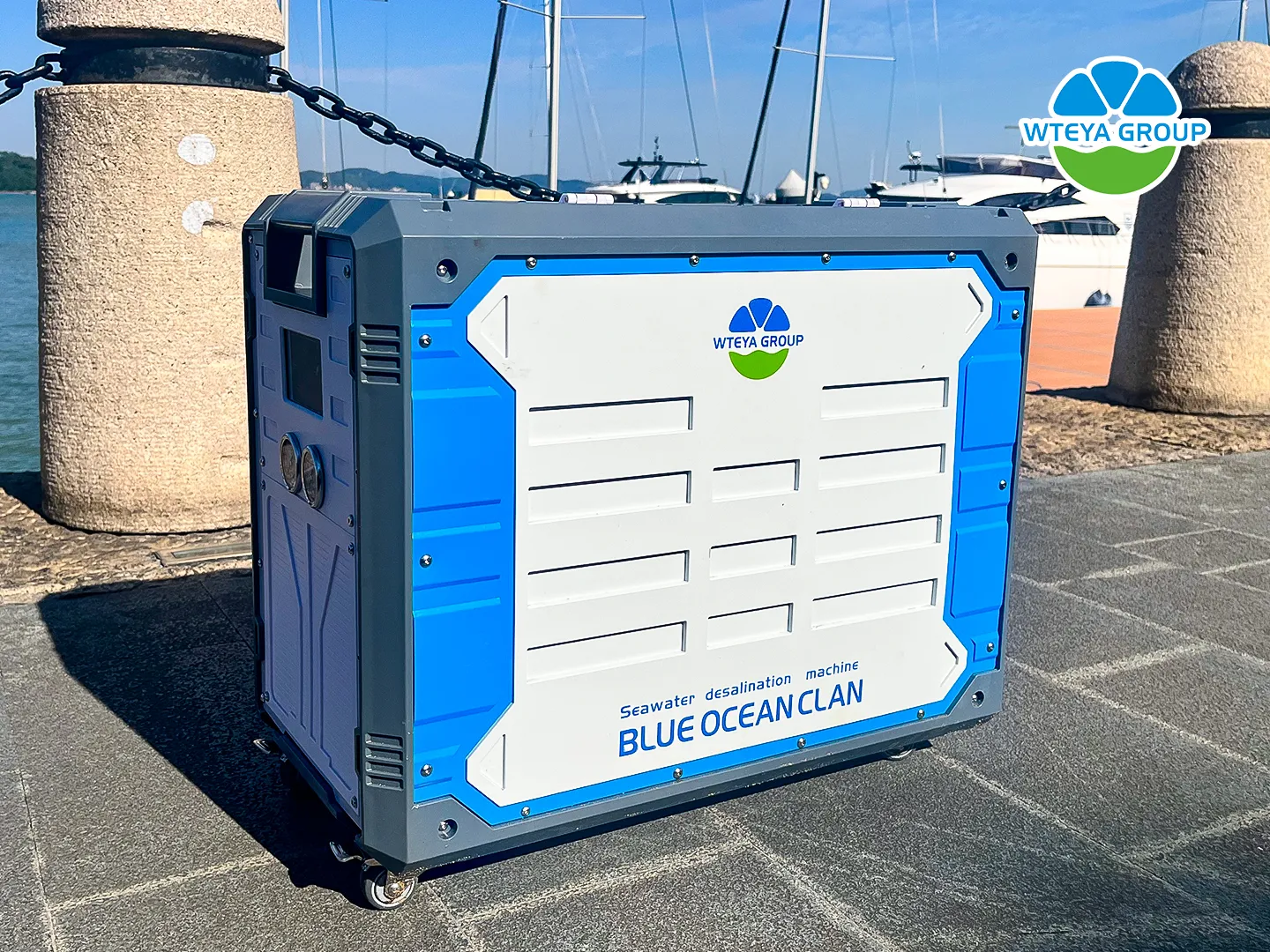
Feed TDS decides the category, not the shape of the machine. A compact unit that looks like a household purifier may be running a seawater membrane at 60 bar, and a large skid can be nothing more than a high-flow purifier for municipal water.
Salt is only part of the picture. Hardness, iron, silica, boron and turbidity determine the pre-treatment, and they matter far more on seawater than on tap water.
How the Treatment Trains Differ
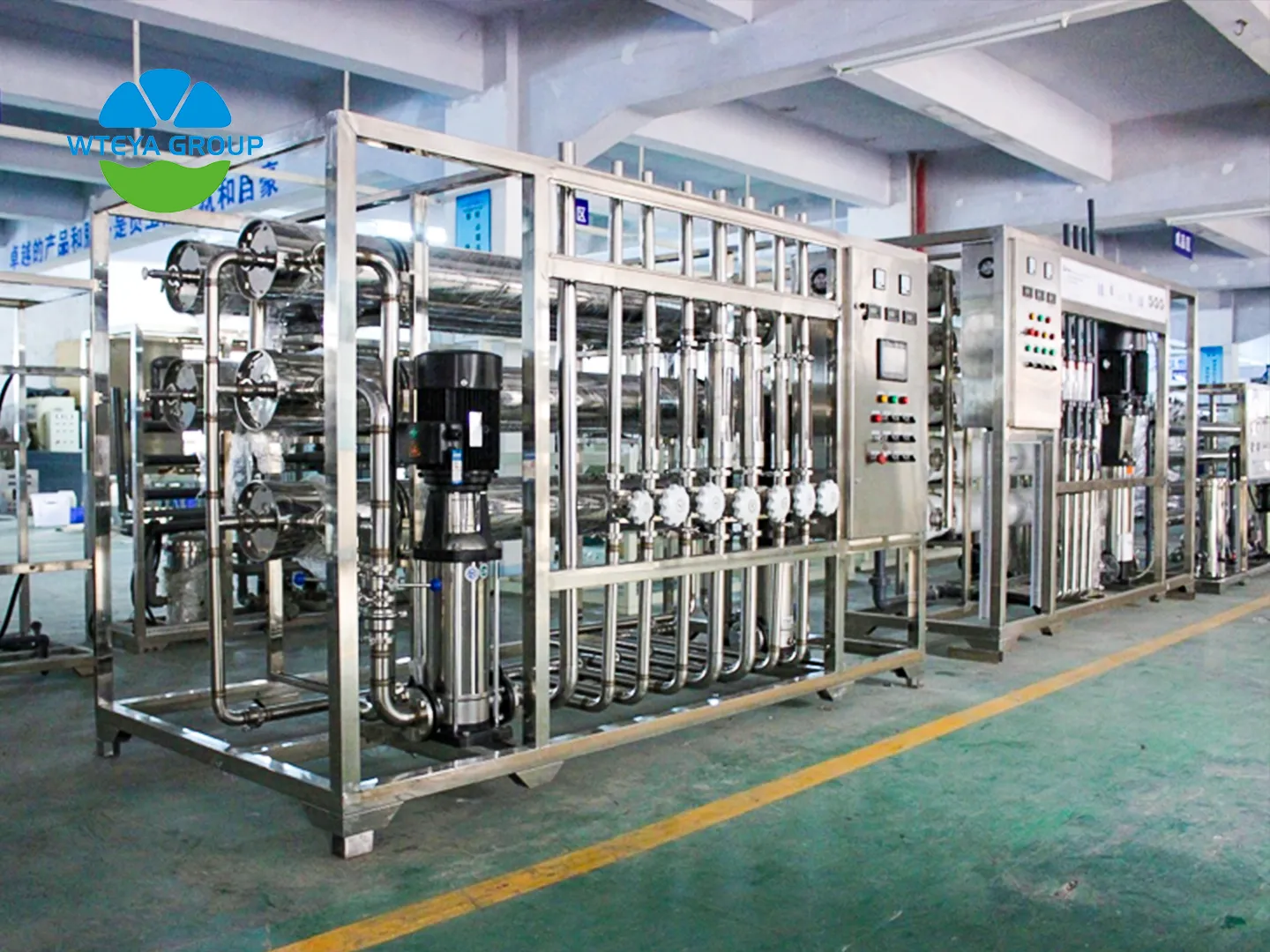
The purifier train is short: sediment filtration, carbon block or granular carbon, a low-pressure RO membrane, post-carbon and UV. The desalination train is longer, because the feed is more aggressive:
- Intake screening and coagulation or media filtration
- Cartridge filtration at 5 microns ahead of the high-pressure pump
- High-pressure pump at 55–70 bar for seawater, 15–25 bar for brackish water
- Energy recovery device on seawater systems
- Post-treatment: remineralization, pH correction and disinfection
- Brine or concentrate disposal plan
That last item has no equivalent in purifier design, and it is where many coastal projects fail to plan properly.
Energy and Recovery Numbers
Energy follows salinity. A low-pressure purifier uses roughly 0.5–2 kWh per cubic metre. Brackish RO sits between 1 and 2.5 kWh/m³. Seawater RO needs 3–5 kWh/m³ without energy recovery and 2.5–3.5 kWh/m³ with a pressure exchanger.
Recovery matters as much as energy. Brackish systems typically recover 70–80%, seawater systems 35–45%, and small purifiers often under 30%. Low recovery means more feed water and more concentrate, which matters wherever supply is limited.
Where Each System Fits
Purifiers suit municipal supply, rainwater and mildly brackish wells where the goal is safety and taste. Desalination is required on coasts, islands, vessels and any site where water is saline or high in TDS. Inland plants between 1,500 and 5,000 mg/L usually choose brackish RO, which is a desalination process even when it is sold as a purifier.
Can One Machine Do Both?
Only within limits. A brackish-capable skid with a wide pressure range and interchangeable membrane elements can treat well water and modest salinity, but a seawater system cannot be turned down to municipal water economically, and a purifier cannot be pushed to seawater pressure. Test the feed water before choosing the machine: a laboratory TDS and ion analysis costs far less than replacing a membrane stack specified for the wrong salinity.
What to Check Before You Buy
- Feed analysis: TDS, chloride, hardness, iron, silica and turbidity
- Daily and peak volume in m³/day, and hours of operation per day
- Power available: single-phase or three-phase, and generator compatibility
- Membrane type and pressure rating, and whether elements are standard sizes
- Pre-treatment included, and consumable replacement intervals
- Brine or concentrate handling plan
- Service access and spare parts lead time
Why Choose WTEYA
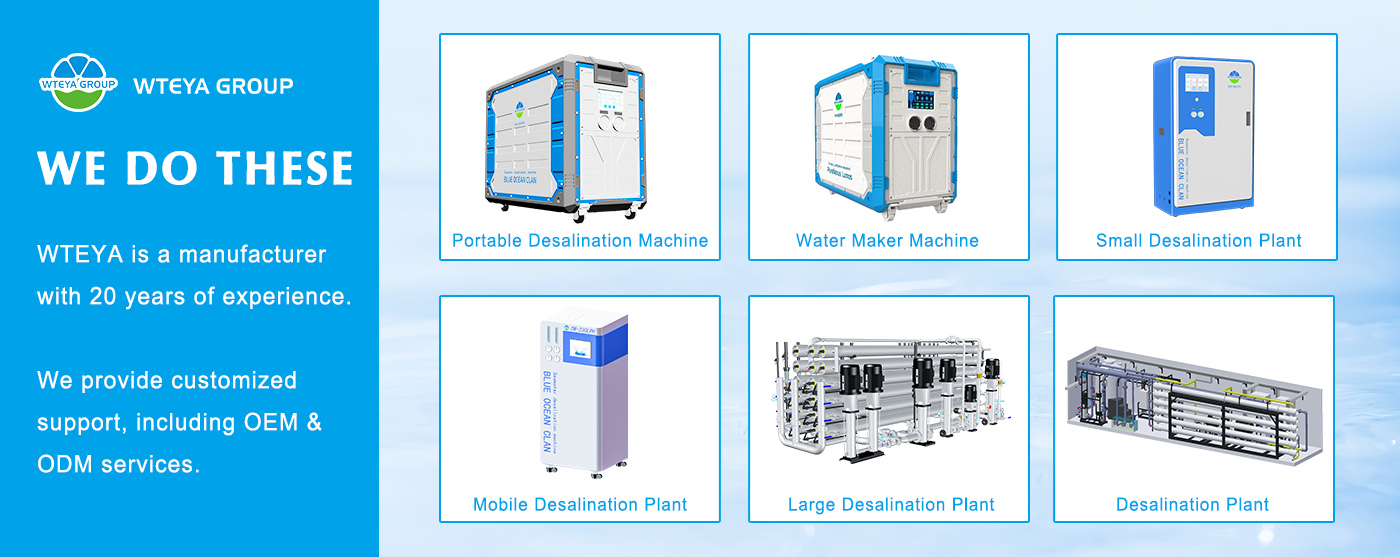
WTEYA manufactures both sides of this line: portable and containerized desalination systems from 1 to 5,000 m³/day, and RO purification skids for low-salinity feed. Every seawater unit is tested with its actual membrane set before shipment, and brackish systems share the same platform, so spare parts stay common across a fleet.
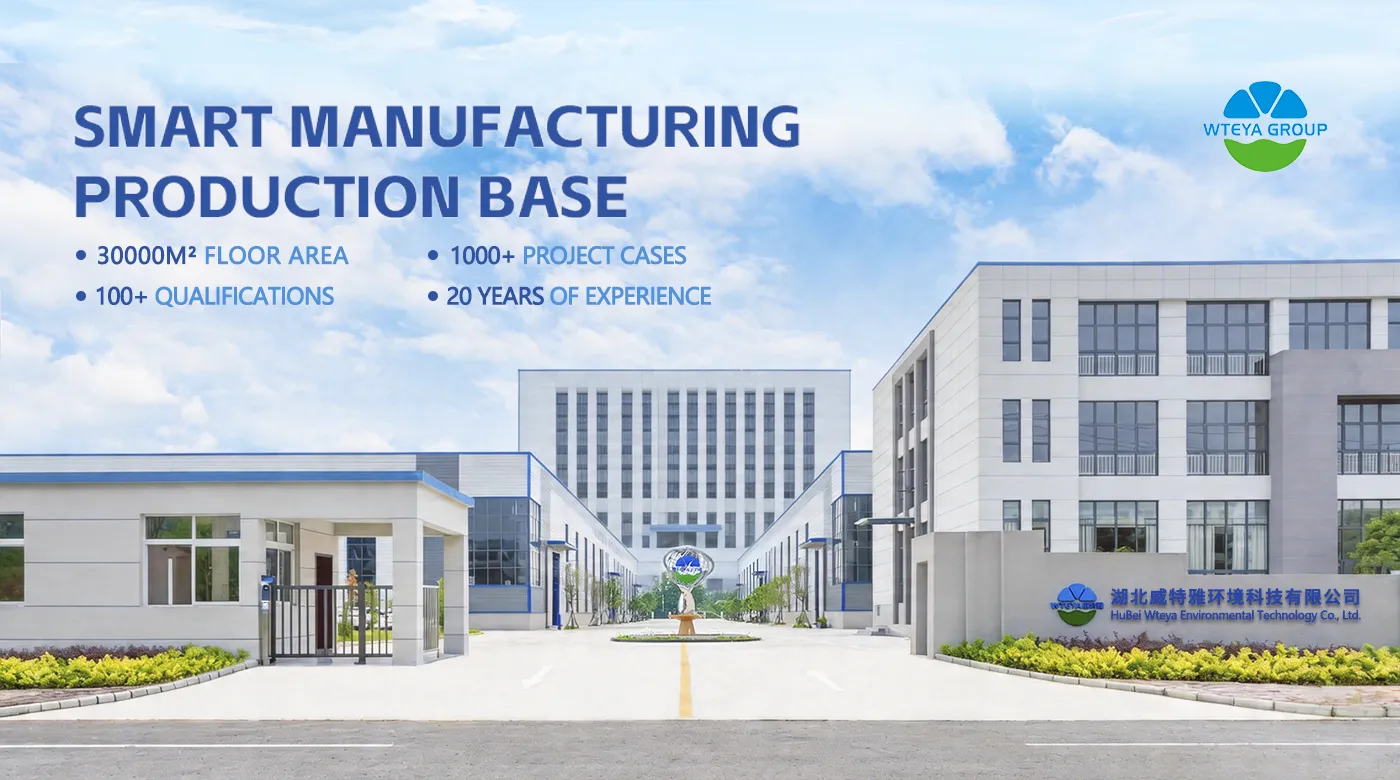
With nearly 20 years of experience, a 30,000 m² manufacturing base and more than 2,000 customers, WTEYA supplies standard units from stock and custom configurations on a 30–60 day lead time.
Frequently Asked Questions
Can a water purifier treat seawater?
No. A purifier membrane and pump are rated for low pressure and low salinity. Seawater at 35,000 mg/L requires 55–70 bar and a seawater element; running a purifier on seawater will damage the membrane and may exceed the pressure rating of the housing.
Is desalinated water safe to drink?
Yes, after post-treatment. RO removes more than 99% of dissolved salts and microorganisms, but the product is low in minerals and slightly acidic, so remineralization and pH correction are standard before distribution.
Which one costs less to run?
Per cubic metre, a purifier costs less because it pumps against low pressure and low salinity. At a seawater location there is no alternative to desalination, so the comparison only makes sense at the same feed water.
Become a WTEYA Authorized Dealer
Become a WTEYA authorized dealer for desalination and purification equipment. Exclusive territories, competitive pricing, and full factory support.
Dealers receive product training, application engineering support and access to the full portable, containerized and RO range. Join our dealer network to serve coastal, island and inland water projects with a single supplier.
📲 WhatsApp: +86-1802 5185 143
📧 Email: sales@wteya.com
🌐 Website: www.wteyaa.com
Previous: RO Membrane Selection for Seawater Desalination
Next: No More