







Water Maker Maintenance: Extending RO Membrane Life
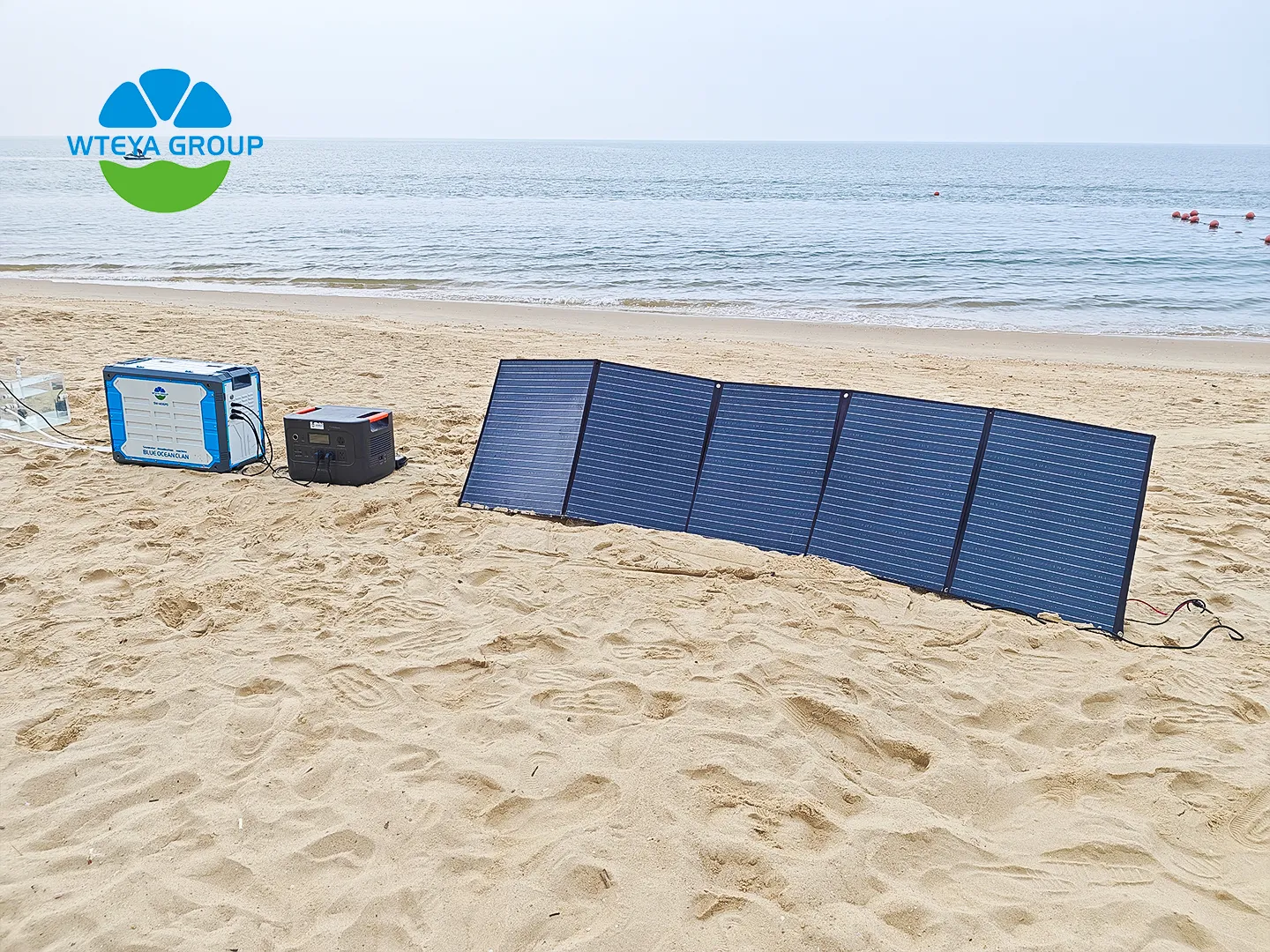
Water Maker Maintenance: Extending RO Membrane Life
An RO membrane is the most expensive consumable on any water maker, and the one whose life is most easily cut short by neglect. On a WTEYA portable seawater desalination machine the membrane is rated for more than 3,600 running hours — roughly six to twelve months of normal use — but that figure holds only when the filters, the storage routine and the inlet water quality are kept in line.
Here is the maintenance schedule, and the practical habits that get the full service life out of a seawater RO membrane.
💧 What Actually Shortens Membrane Life
Four failure modes account for nearly all premature membrane replacement:
- Fouling — particles and colloids passing a worn pre-filter and blocking the membrane surface.
- Scaling — calcium, magnesium and sulphate salts precipitating on the membrane when recovery or hardness limits are exceeded.
- Oxidation — free chlorine attacking the polyamide layer. Even brief exposure above 0.1 ppm causes permanent loss of salt rejection.
- Biological growth — bacteria colonising the element during idle periods, especially in warm climates.
🧰 The Four Consumables to Track
The maintenance plan on a WTEYA machine covers four items, each with its own interval:
- First-stage 10 µm filter: cleaned every 5 to 60 hours depending on how clean the seawater is, and replaced once it is damaged or the pressure differential stays high after cleaning.
- Second-stage 5 µm filter: replaced every 15 to 30 days so that the membrane always sees turbidity of 1 NTU or less and SDI of 5 or less.
- RO membrane (4021 element): replaced after 3,600 running hours, or about 180 to 360 days, whichever comes first.
- UV lamp and plunger-pump oil: the 254 nm UV lamp at 3,000 hours, and the high-pressure plunger pump oil every 500 hours — about 130 ml of CKD220 or GL-5 SAE 85W-90.
Every one of these intervals assumes the inlet conditions are respected: TDS below 35,000 ppm, SDI of 5 or less, turbidity of 1 NTU or less, free chlorine below 0.1 ppm, LSI under 2.5, pH between 4 and 9, and a feed temperature between 5 °C and 45 °C.
🔍 When to Clean, When to Replace
Running hours alone are only a rough guide. The membrane tells you when it needs attention through three measurable symptoms, and it should be cleaned as soon as any one of them appears:
- Normalised permeate flow drops by more than 15%.
- Normalised pressure differential between feed and concentrate rises by 15%.
- Normalised salt passage increases by 5%, or the product water quality visibly deteriorates.
A convenient field rule is to clean once for every tonne of fresh water produced. Cleaning is far cheaper than replacing: a 4021 element cleaned on time will comfortably reach its full 3,600-hour rating.
⚗️ Cleaning a Seawater RO Membrane
The cleaning chemistry depends on what is fouling the membrane. Organic and microbiological deposits are removed with an alkaline wash — 0.5 to 1% sodium hydroxide, at pH 10 to 11. Inorganic calcium, magnesium and iron scale is removed with an acid wash — 1 to 2% citric acid at pH 2 to 3.
Match the order to the fouling: alkali first, then acid, for organic and biological contamination; acid first, then alkali, when scale dominates. Soak a lightly fouled element for 1 to 2 hours and a heavily fouled one for 2 to 4 hours, never more than six, keeping the solution between 25 °C and 30 °C. Rinse with permeate until the runoff approaches neutral, then reinstate the element before the membrane can dry out.
🛑 Storage: The Step Most Operators Miss
If a water maker will be idle for more than three days, the membrane must be protected. Flush the system with a 1 to 1.5% sodium metabisulphite (SMBS) solution for 10 to 15 minutes so that the elements and housings are completely filled, then seal the unit. Replace the preservative solution every 30 days while the machine is stored, drain it before restarting, and rinse before returning to normal production. Skipping this step is the single most common cause of a membrane failing long before its hours are up.
🏆 Built for Straightforward Maintenance
WTEYA's portable seawater desalination machines use a single easily accessible 4021 element, standard 10 µm and 5 µm pre-filters, and a plunger pump with a service reminder — all of which makes routine maintenance a workshop task rather than a specialist one. Every unit ships with the full maintenance schedule and spare-parts list, and our engineers support owners and dealers worldwide.
🤝 Become a WTEYA Authorized Dealer
Demand for reliable off-grid fresh water keeps growing, and WTEYA is expanding its dealer network in coastal and island markets. Dealers receive exclusive territories, competitive factory pricing, product and service training, marketing material and spare-parts support — no prior desalination experience required.
Contact us today to discuss your region and request the dealer application pack.
📲 WhatsApp: +86-1802 5185 143
📧 Email: sales@wteya.com
🌐 Website: www.wteyaa.com

Previous: How Much Does a Seawater Desalination Plant Cost?
Next: No More