






Mobile Water Treatment: On-Demand Clean Water for Remote Oil and Gas Camps
Mobile Water Treatment: On-Demand Clean Water for Remote Oil and Gas Camps
Remote oil and gas operations face a constant logistical headache: keeping workers supplied with clean water. Camps in deserts, arctic tundra, or dense jungle are hundreds of kilometers from the nearest municipal water grid. Trucking water is expensive, unreliable, and vulnerable to supply chain disruptions. A single camp of 200 workers needs 20,000–30,000 liters of potable water per day — and when trucks can't reach the site, operations grind to a halt.
The Real Cost of Water Logistics at Remote Sites
Water delivery to a remote oil field can cost 5 to 10 times more than the water itself. Fuel costs, driver wages, vehicle maintenance, and road access risks add up fast. During rainy seasons or winter storms, supply roads become impassable for days. Stockpiling water in tanks introduces bacterial growth risks and requires chemical treatment. For exploration teams and temporary camps, building permanent water infrastructure makes zero economic sense — the camp moves before the pipeline pays off.
Mobile Water Treatment: Your Camp, Your Water Source
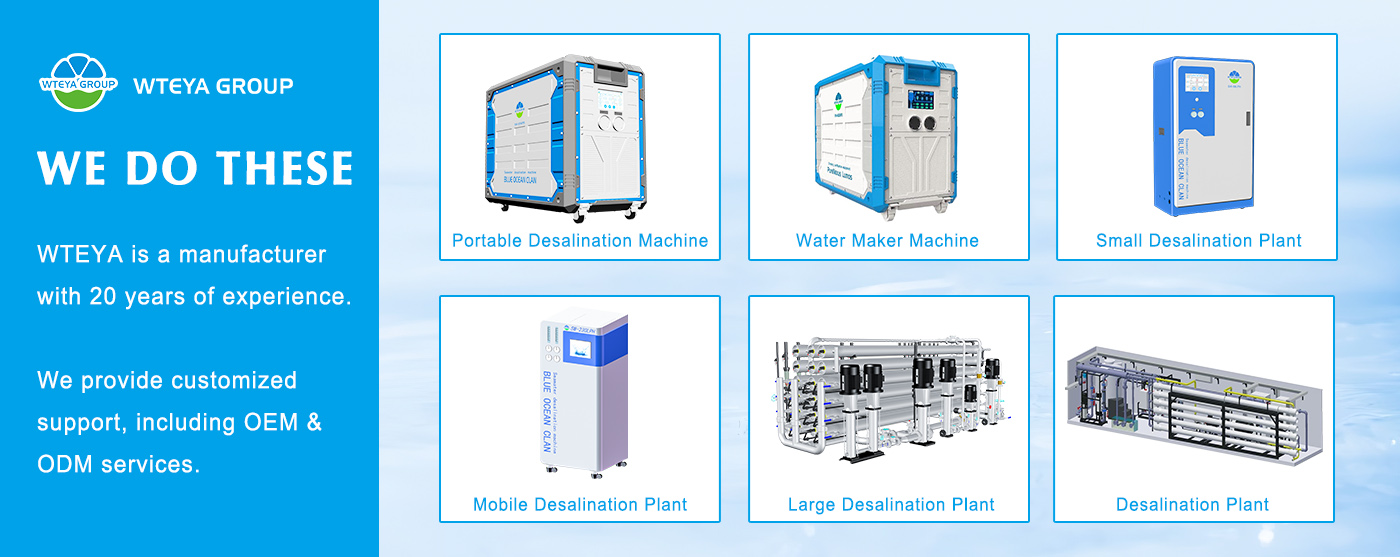
WTEYA mobile water treatment systems solve this by bringing the treatment plant to the site. These self-contained units mount on trailers or skids and can be deployed within hours of arrival. Unlike traditional fixed-plant desalination or purification setups, mobile systems draw from any available source — seawater, brackish groundwater, river water, or even produced water from drilling operations — and turn it into drinking-quality output.
The key difference from bottled water or truck delivery is autonomy. Once a mobile unit is positioned and connected to a raw water source, it produces fresh water continuously without external supply lines. That means zero delivery delays, zero tanker scheduling conflicts, and zero risk of running out because a road washed out.
How Mobile RO Water Treatment Works
A WTEYA mobile system uses multi-stage reverse osmosis (RO) filtration packed into a compact footprint. Raw water passes through pre-filters that remove sediment and suspended solids, then enters high-pressure RO membranes that reject dissolved salts, heavy metals, and organic contaminants. Post-treatment polishing — typically UV sterilization and activated carbon — ensures the output meets WHO drinking water standards.
The entire process is automated. Operators set the desired output volume and water quality parameters, and the system runs unattended. Remote monitoring via satellite or cellular connection lets camp managers check water production, membrane health, and tank levels from a smartphone anywhere in the world.
Why WTEYA Mobile Systems Outperform Alternatives
Rapid Deployment. A complete mobile water treatment unit ships in a standard container or flatbed trailer. Setup requires only level ground, a raw water intake, and a power connection. Most units produce first water within 4–6 hours of arrival — no concrete pad, no building permit, no permanent installation.
Fuel Flexibility. WTEYA mobile systems can run on grid power, diesel generators, or hybrid solar-diesel setups. For camps that already operate generators for drilling equipment, the water treatment unit simply taps into existing power. In sunny regions, optional solar panels reduce fuel consumption by 40–60% during daylight hours.
Scalable Output. Single units produce from 5,000 to 50,000 liters per day. Need more? Connect multiple units in parallel. When the camp expands from exploration to full production, the water treatment capacity scales without redesign or civil works. When the project ends, the entire system hitches to a truck and moves to the next site.
Low Manpower Requirements. Unlike fixed desalination plants that need certified operators on site, WTEYA mobile systems are designed for non-specialist camp staff. The control interface uses plain-language status indicators. Routine maintenance — filter changes, membrane cleaning — takes under an hour per week and follows step-by-step prompts on the control panel.
Field Applications Beyond Oil and Gas
While oil and gas camps are a primary use case, WTEYA mobile water treatment serves multiple remote-site scenarios:
Mining exploration camps in water-scarce regions where every liter must be flown or trucked in. Construction camps for pipeline, road, and dam projects far from urban infrastructure. Geological survey teams working in coastal or arid environments for weeks at a time. Disaster response staging areas where relief workers need reliable water independent of damaged local utilities. Temporary military forward operating bases requiring self-sufficient water supply.
Each scenario shares the same core requirement: clean water, on site, without depending on external logistics.
Equipment That Moves When Your Operation Moves
Mobile water treatment equipment from WTEYA eliminates the single biggest vulnerability in remote camp logistics — water supply uncertainty. Instead of managing a fleet of tanker trucks and worrying about road conditions, camp operators manage a self-contained system that turns any raw water source into drinking water on demand. Lower cost per liter, zero delivery delays, and the freedom to set up camp wherever the resource is — not wherever the nearest water main happens to end.
📲 WhatsApp: +86-1800 2840 855
📧 Email: sales@wteya.com
🌐 Website: www.wteyaa.com