







Puerto Rico Client Orders 10 Portable Desalination Units
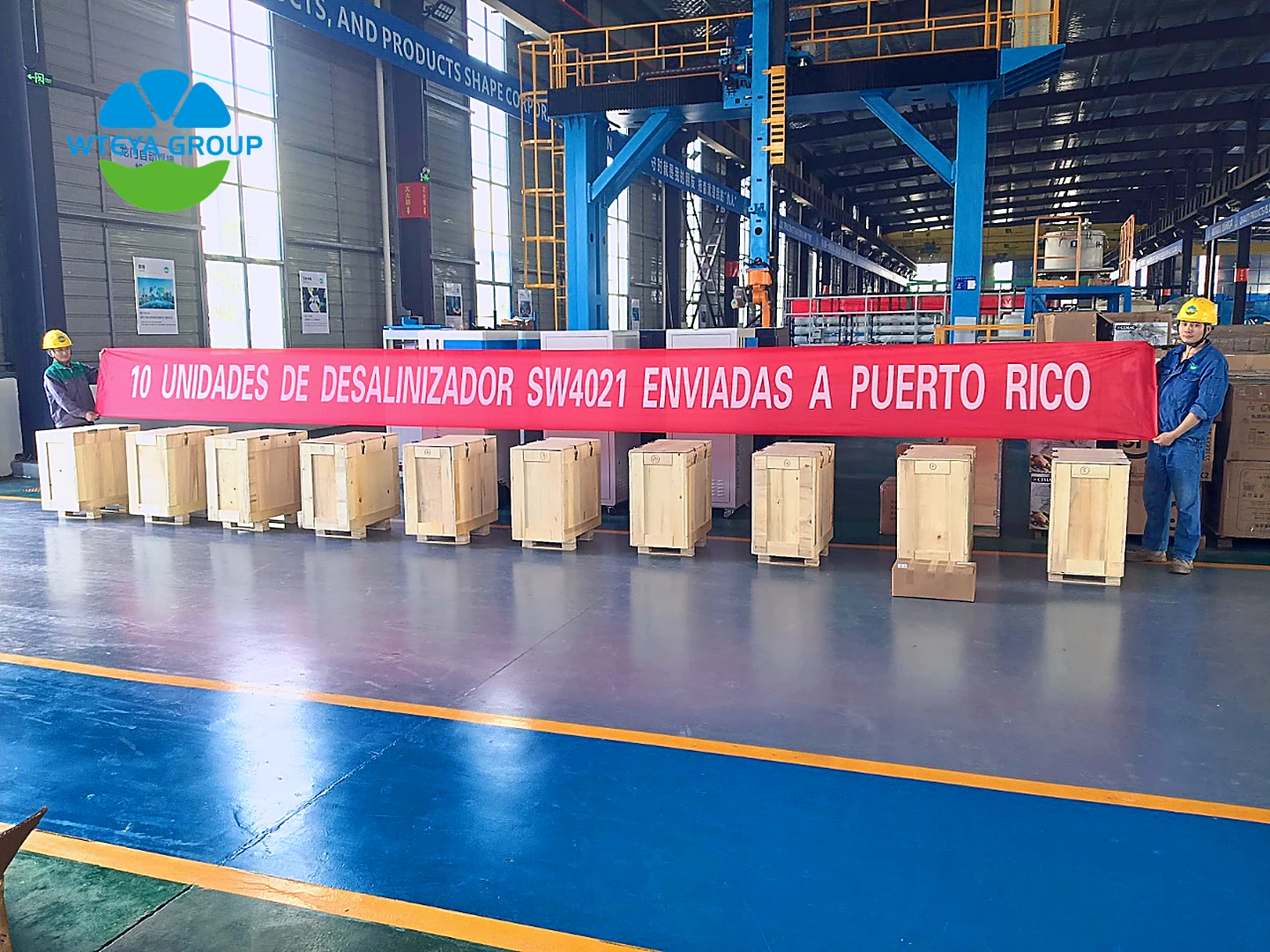
A water service provider in Puerto Rico has ordered ten SWRRO4021 portable desalination units from WTEYA, closing a selection process that began with a single question: how do you keep drinking water flowing to coastal communities that can lose road access, grid power and well quality inside the same week? The answer was not a larger treatment plant. It was a fleet of ten machines that can be split across sites, started by local staff and moved when conditions change.
The order was completed and crated at the WTEYA factory in November 2026. This case study follows the project from the customer's brief through specification, factory acceptance testing and the deployment plan now in place.
The Requirement: Water That Keeps Flowing After a Storm
Puerto Rico's coastal water supply carries two burdens at once. Wells in the south and east have been drawing increasingly brackish water as salt intrusion moves inland, and the distribution network depends on pumping stations, substations and bridges that a hurricane can put out of service for weeks. In previous seasons the fallback was trucked water — slow, expensive and limited by how many tankers can reach a site once roads are cleared.
The client's operating team translated that experience into three requirements. Equipment had to arrive complete, because a site without power and without a workshop cannot host an installation crew. Capacity had to be divisible, so that one machine could serve one community instead of a single plant serving all of them through a network that might not exist. And the machines had to be operable by local staff with limited training, since specialist engineers would not be able to fly in during a response.
Those three requirements eliminate most of the conventional catalogue. A containerised high-capacity plant satisfies the first but not the second. A trailer-mounted unit satisfies the second but often needs a generator and a trained operator to satisfy the third.
Specifying a Portable Seawater Desalination Unit for Island Conditions
The evaluation scored four suppliers on footprint, start-up time, feed water flexibility, spare parts availability, diagnostics and the ability to run from solar. Footprint decided the shortlist quickly: anything requiring a crane at destination was removed, because crane availability after a storm is the most contested resource on the island.
The SWRRO4021 scored on start-up time and on feed flexibility. The same machine accepts seawater and brackish well water, so a unit can move from an inland well to a coastal intake without a membrane change or a return to the workshop. The SWRRO4021 specification page lists the full envelope; for the client, the decisive detail was that the LCD panel and fault-code log expose pressure, flow and product quality directly, rather than hiding them behind a service password.
Serviceability was treated as pass-or-fail rather than desirable. A distributed fleet of ten machines only works if a failed pump or a fouled membrane can be handled on site, so standard cartridges, standard seals and a documented cleaning procedure were agreed before the purchase order was signed.
What the Client Reviewed Before the Crates Were Sealed
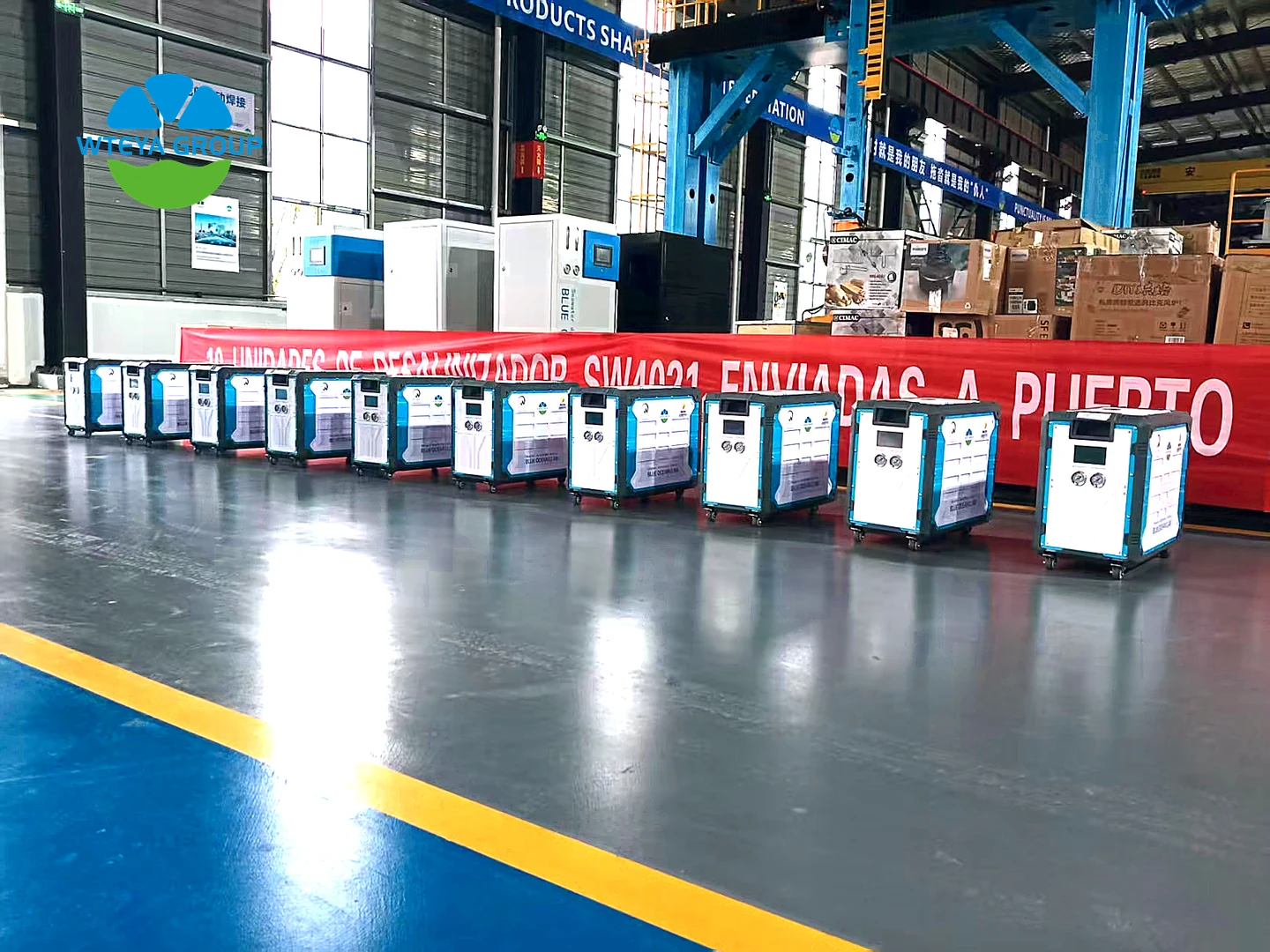
The order was built as one batch so that all ten units share an identical configuration. Before crating, the client's technical representative reviewed factory acceptance records for each machine: pressure holding on the membrane housings, low-pressure leak checks on the piping, pump performance and product water conductivity. Every unit was run-tested on feed water at the factory and shipped with its individual record, which meant the receiving team could compare the machine in front of them against the numbers it produced in China.
The factory also produced Spanish-language labels and a startup checklist for the fleet, and packed one complete machine per wooden export crate with bracing for ocean freight. The dispatch photo shows the ten crates lined up in the workshop behind a red banner printed on site, reading "10 UNIDADES DE DESALINIZADOR SW4021 ENVIADAS A PUERTO RICO".
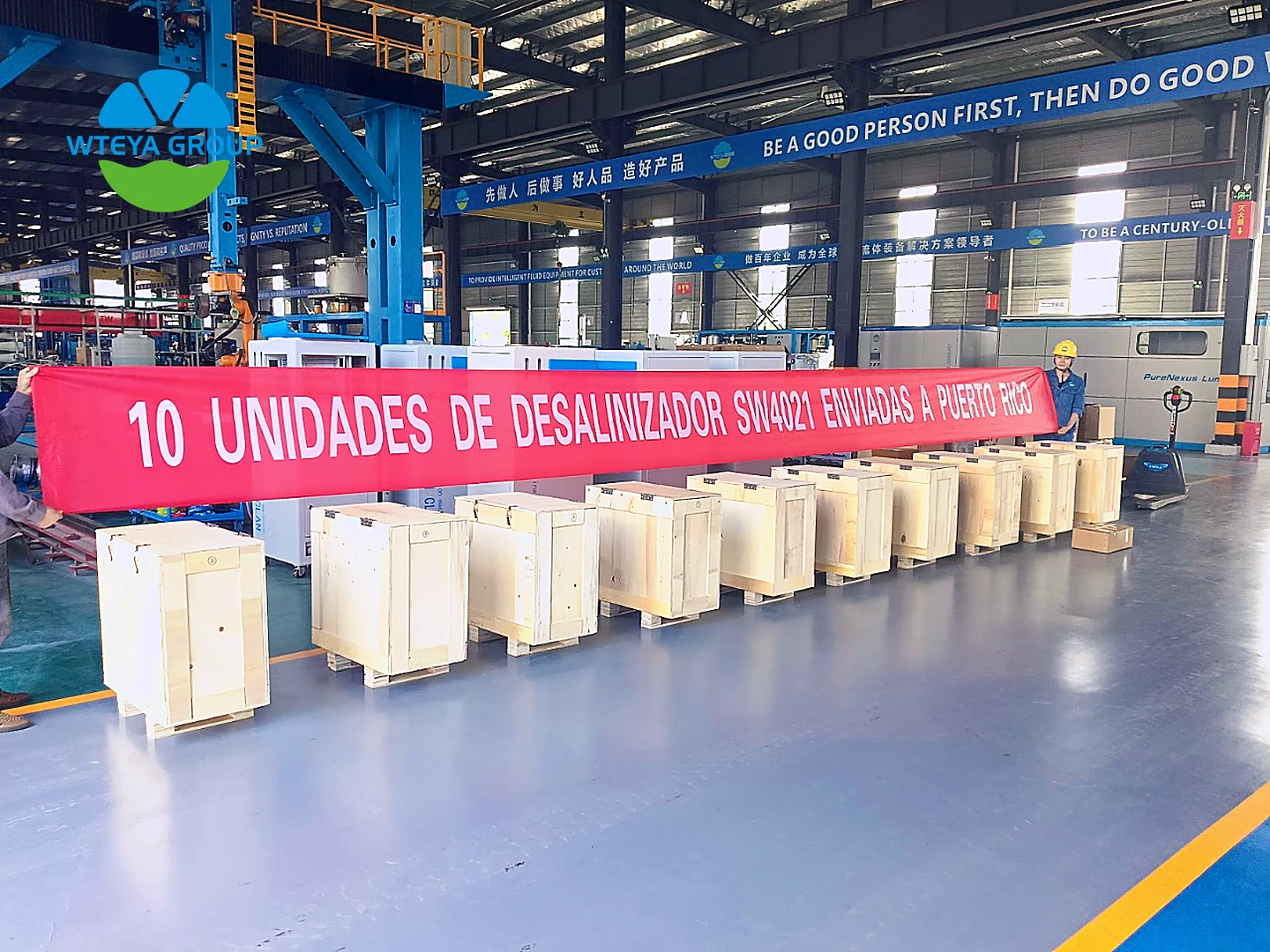
Deployment Plan: Staging, Siting and Local Operators
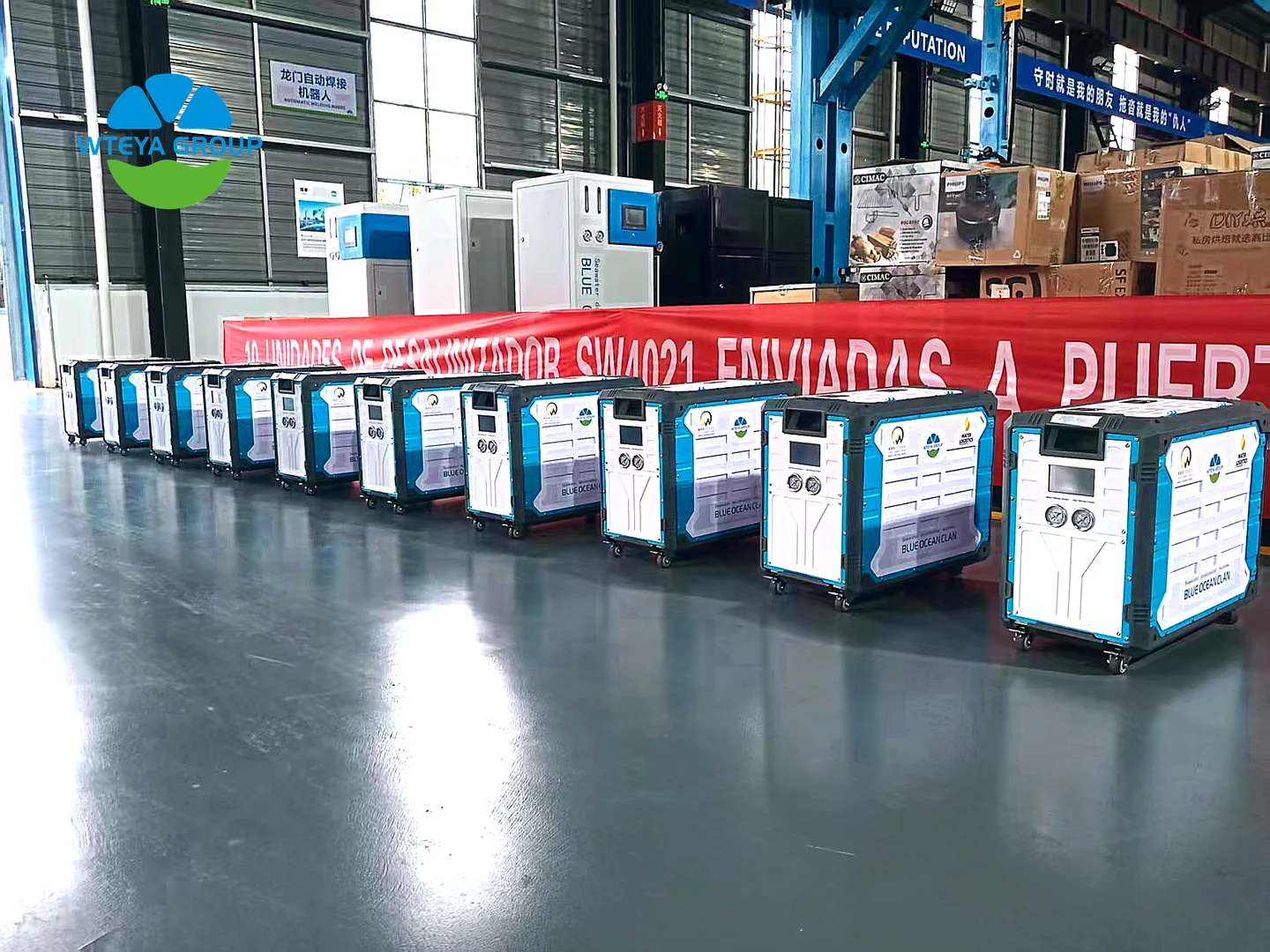
The deployment model the client chose is staging rather than permanent installation. Units are held at municipal depots before hurricane season, then trucked to coastal sites once conditions allow. Because each machine fits a pallet footprint and rolls on casters, positioning requires a forklift and two people, not a rigging crew. Connections are limited to feed, brine, product and power, and the membranes are flushed and started from the checklist supplied with each unit.
That plan only works if the people at the depot can operate the equipment. Training therefore covered the four readings that matter — feed pressure, permeate flow, recovery and product conductivity — plus the two failure modes most likely in the field: a tripped high-pressure pump and a fouled membrane. For sites where the grid is absent, the same platform can be paired with a photovoltaic array and battery bank, and WTEYA supplies dedicated rapid-response water units for operations that need a narrower, emergency-only configuration.
Why This Order Matters for Island Water Supply
The Puerto Rico order is a useful reference for any coastal operator weighing centralised against distributed capacity. A single plant typically wins on capital cost per cubic metre and loses on resilience: one intake blockage, one transformer failure or one washed-out access road removes all production at once. Ten machines cost more per unit of capacity installed and less per day of guaranteed supply, because the failure of any one unit removes a tenth of the fleet rather than all of it.
For islands with scattered communities, that trade is usually worth making. The same logic applies to resort clusters, fishing fleets, construction camps and remote military posts — anywhere the water demand is spread across sites and the logistics are the weak link. WTEYA manufactures both the fleet-scale smaller-scale desalination plants used in this project and the larger seawater RO trains used where a single high-capacity plant is the right answer.
Project summary: ten SWRRO4021 portable seawater desalination units, ordered by a Puerto Rico water service provider, factory-tested and crated one unit per box, dispatched November 2026 for staged deployment across coastal communities.
📲 WhatsApp: +86-1802 5185 143
📧 Email: sales@wteya.com
🌐 Website: www.wteyaa.com


Previous: Three 4040 Seawater Desalination Units Shipped to Mexico
Next: No More