







Mobile Desalination Units for Temporary Water Supply
Mobile Desalination Units for Temporary Water Supply
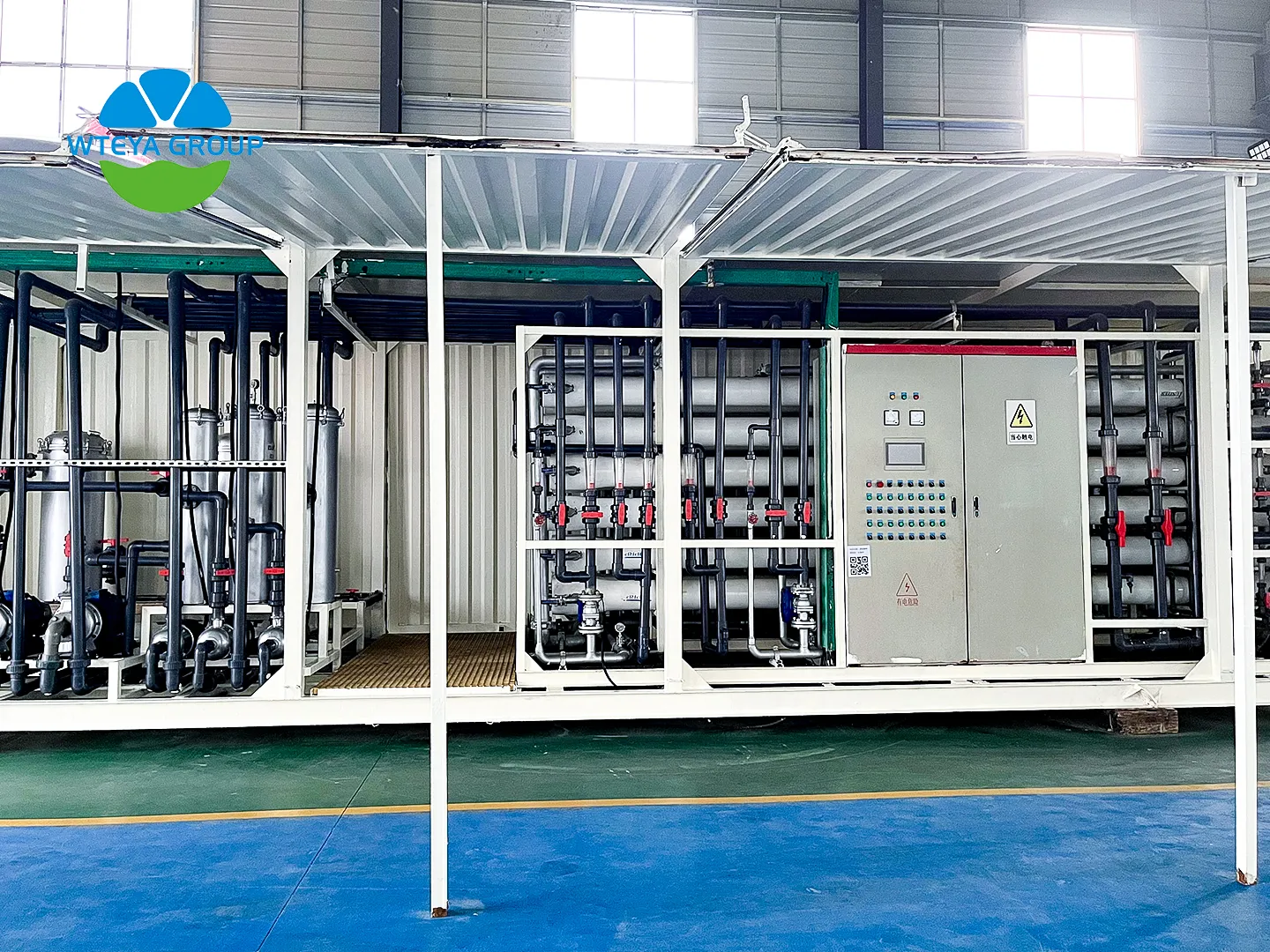
Somewhere right now a construction camp, a disaster-relief operation or a seasonal resort is paying to truck in water it could make on site. A mobile desalination unit changes that equation. Mounted on a skid or built into a container, it arrives ready to run, turns seawater or brackish water into drinking water within days, and can be moved on when the job is done — no permanent plant, no long civil works programme, no stranded asset.
Why Temporary Water Supply Is a Growing Market
Water demand is increasingly temporary. Mining and construction projects run for a defined number of years and then move. Refugee and disaster-relief camps need safe water immediately, not in eighteen months. Coastal resorts and events double their population for a season and halve it again. In each case a permanent desalination plant is the wrong instrument: too slow to build, too costly to leave behind.
A mobile unit matches the timescale of the need. Because the whole process train is factory-assembled and function-tested before shipping, commissioning on site is measured in days, and the equipment can be relocated to the next project when the first one closes.
What "Mobile" Actually Means
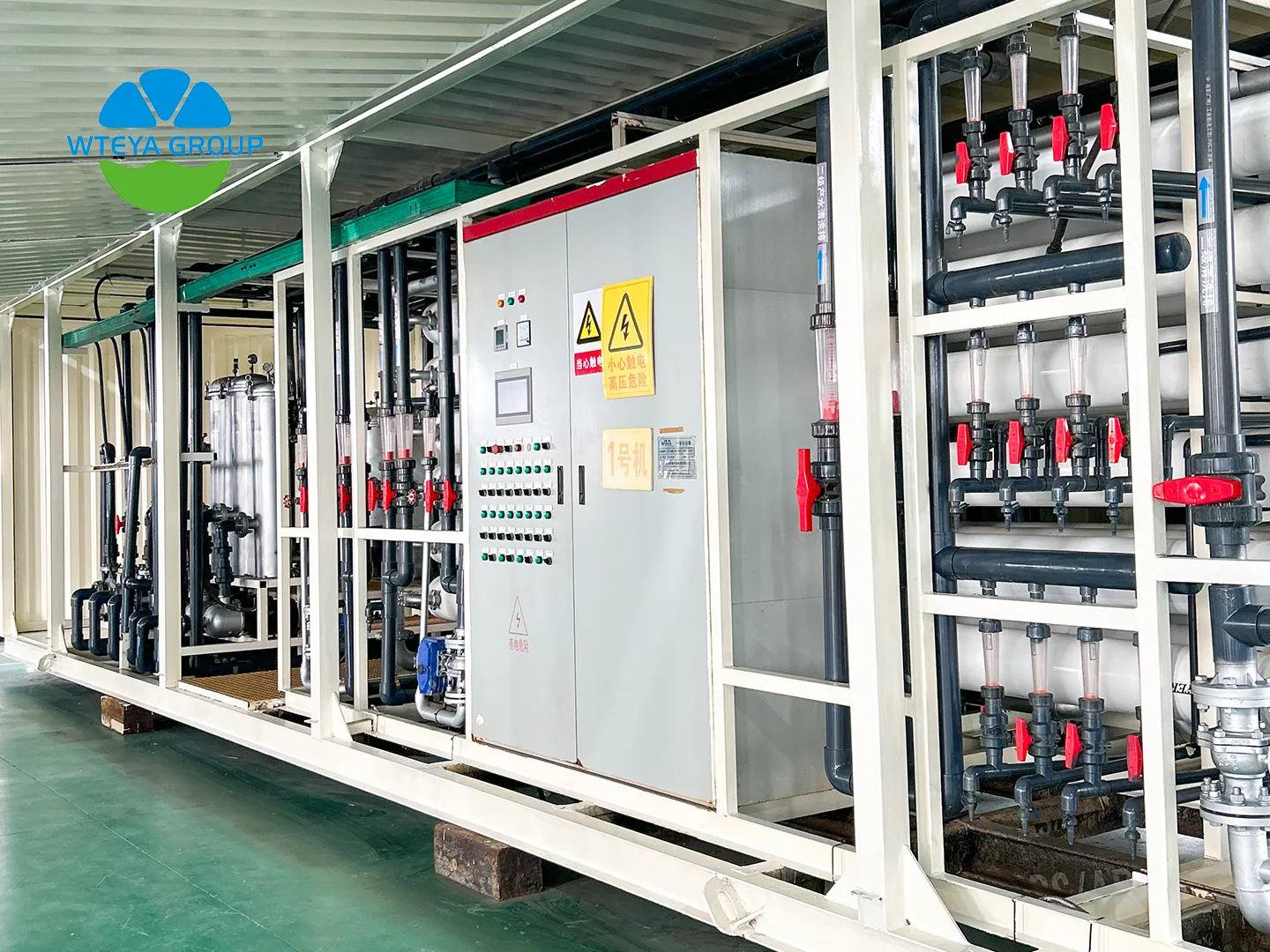
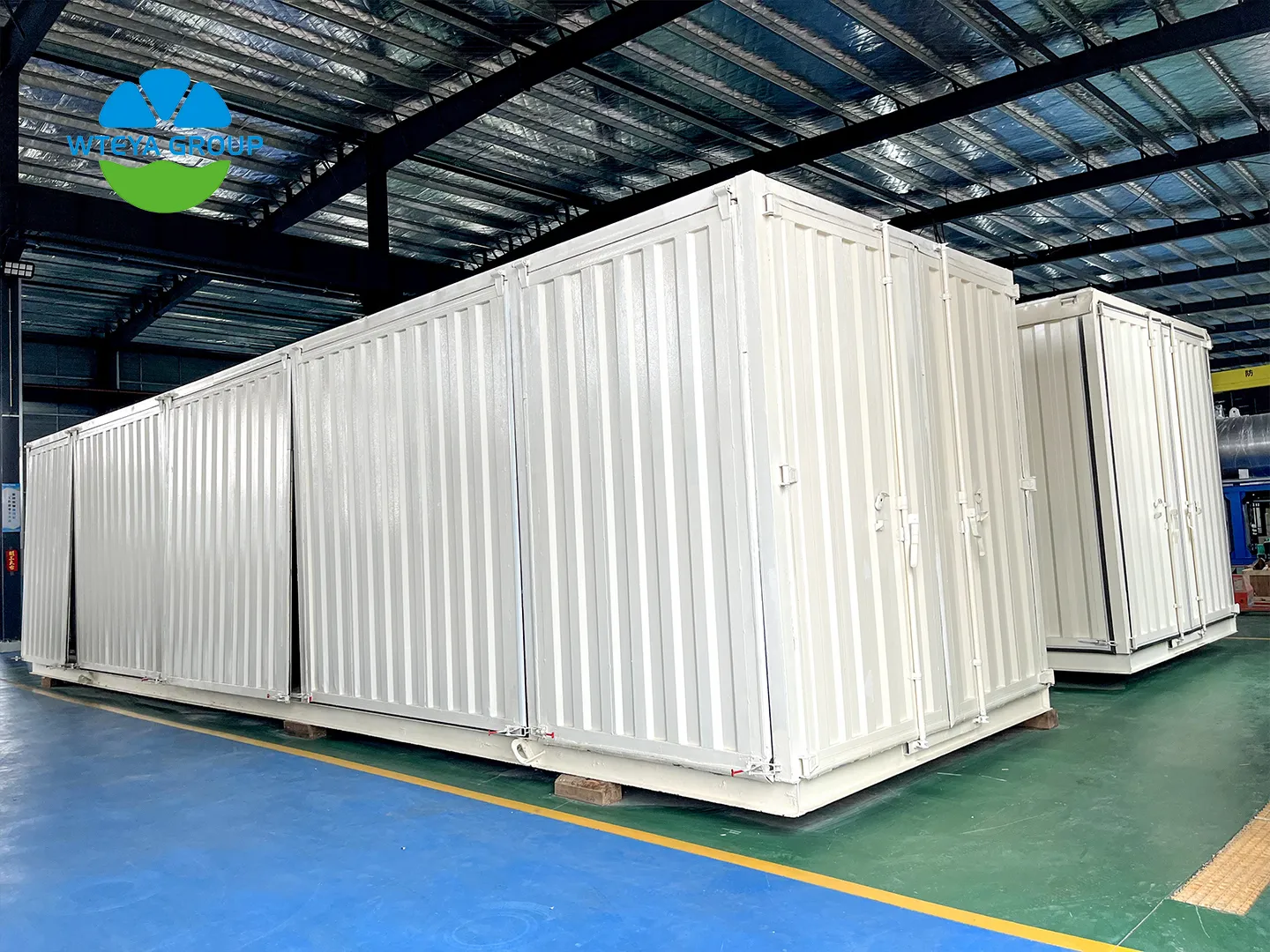
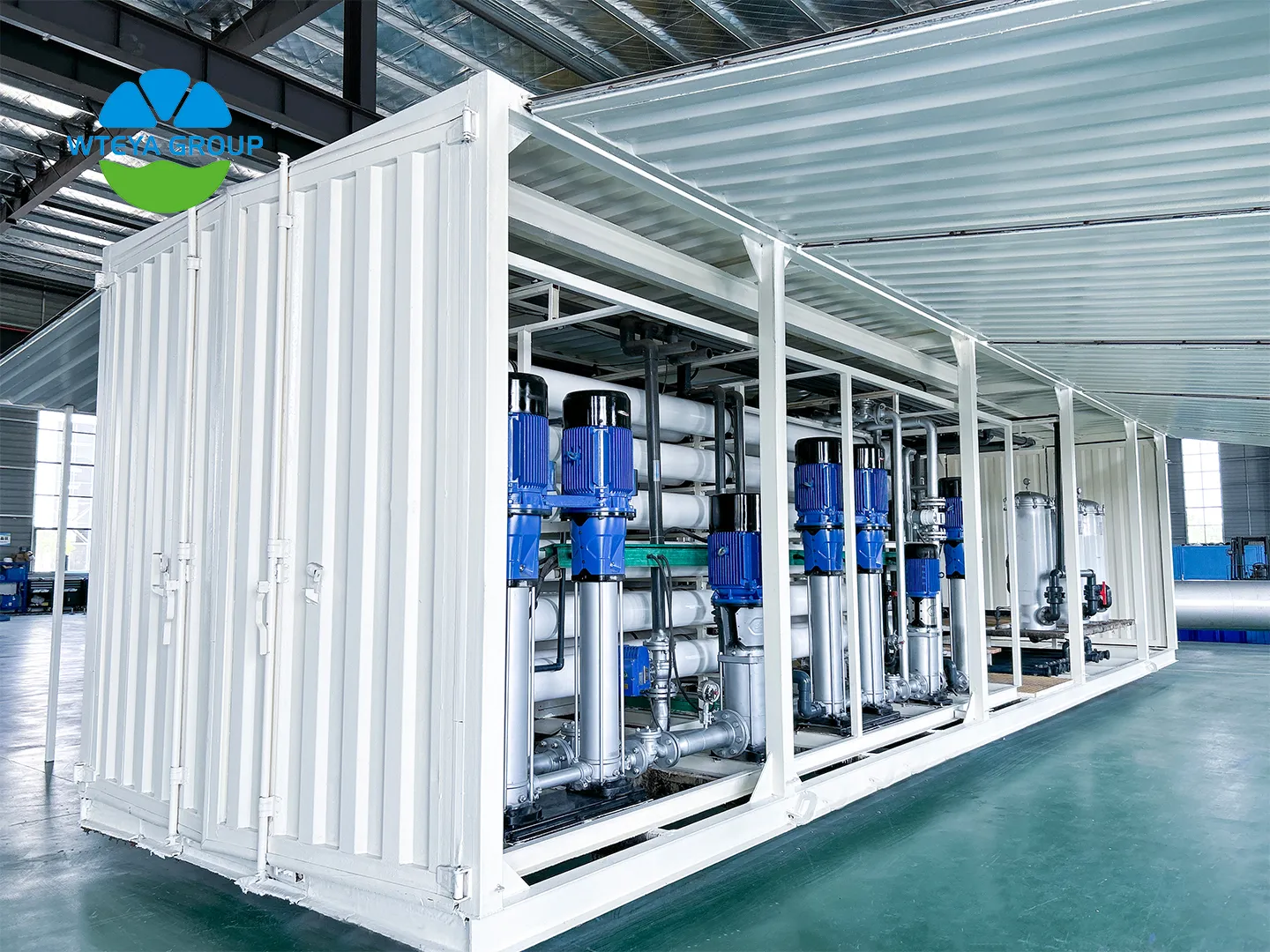
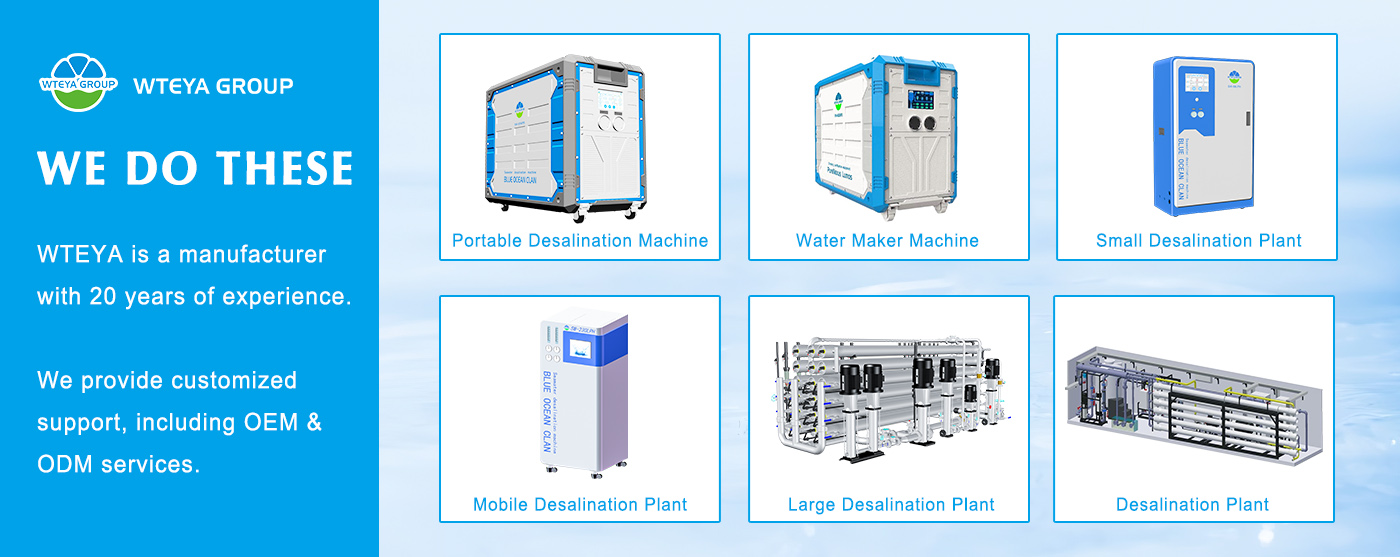
Mobile desalination equipment comes in two practical formats. Skid-mounted units are compact enough to be lifted by truck or crane and are typically used for small camps and marine applications. Containerised plants pack the complete system — intake, pretreatment, high-pressure pumping, reverse osmosis membranes, energy recovery and post-treatment — into a standard 20 or 40 foot container that doubles as the equipment room, with a footprint of only about 15 to 30 square metres.
The container format is usually the better choice when water demand is in the hundreds of tonnes per day. It needs almost no civil works, tolerates rough handling in transit, and can be stacked or moved as a single sealed package. Site work is limited to connecting the intake, the power supply and the outlet piping, normally 3 to 7 days including commissioning.
Sizing a Unit to the Temporary Demand
Sizing starts from the population being served, not from the largest available model. At 100 to 200 litres per person per day, a 5 cubic metre per hour unit produces about 120 tonnes per day and a 10 cubic metre per hour unit about 240 tonnes per day — enough for a work camp, a relief operation or a resort of several hundred to well over a thousand people. Divide the daily requirement by the planned running hours, normally 20 to 24, to reach the required hourly output, and add a 10% to 20% margin for peaks and service intervals.
Where demand grows — a second construction phase, a larger relief zone — additional units are simply run in parallel. That modularity is one of the strongest arguments for mobile equipment: capacity is added in steps, and nothing is over-built at the outset.
Power Options on a Remote Site
Energy is the main operating cost and, on a temporary site, often the main constraint. Seawater reverse osmosis with an energy-recovery device consumes roughly 3 to 4 kWh per cubic metre, with the recovery device cutting consumption by about 30%; brackish-water systems need only 1 to 2 kWh per cubic metre.
Where a grid connection is available, it is the simplest answer. Where it is not, a diesel generator set sized to the plant load is the conventional choice, and a photovoltaic array with battery storage is increasingly practical for longer deployments. A hybrid photovoltaic-and-diesel arrangement covers cloudy spells without oversizing the battery bank, and the high-pressure pump's heavy starting current is managed with a variable-frequency drive and a small amount of storage buffering.
Cost and Payback for a Mobile Plant
The economics are straightforward. A 5 T/H mobile plant is typically delivered for around RMB 400,000 to 800,000 and a 10 T/H plant for RMB 700,000 to 1,300,000, giving a total water cost of roughly RMB 4 to 8 per ton. For a site currently buying trucked water, the payback is often measured in months rather than years, before counting the reliability benefit of a supply that does not depend on a delivery schedule.
Delivery is quick: a containerised standard unit can be producing water within two to four weeks, and most projects reach commissioning within one to three months depending on site conditions and power arrangements.
Water Quality and Reliability
Mobile plants are not a compromise on quality. Reverse osmosis rejects about 99.5% of dissolved salts, so seawater at 35,000 to 45,000 mg/L TDS leaves as product water below 200 ppm TDS, in line with WHO drinking-water guidelines, with mineralisation and pH adjustment for taste and pipeline compatibility. Control is automatic, so a unit can run largely unattended with online monitoring of conductivity, flow and pressure, and membranes are cleaned and replaced on a two-to-five-year cycle.
Seawater recovery typically runs at 40–50% and brackish-water recovery at 50–75%, so brine volumes are modest and are managed by dilution or diffused discharge — a routine part of the design rather than an afterthought.
Why Choose WTEYA
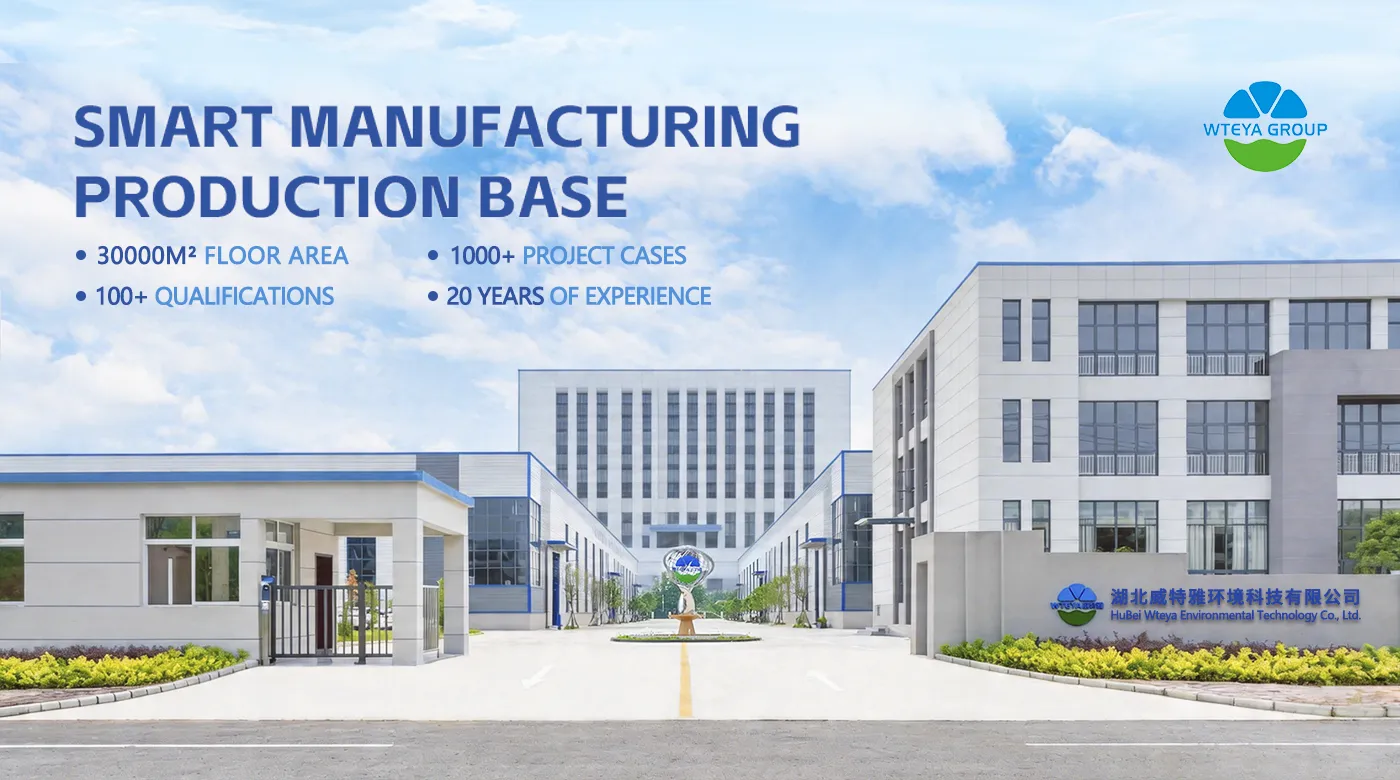
WTEYA has nearly 20 years of experience in water treatment and more than 2,000 customers across 30-plus provinces. Our mobile and containerised desalination systems are engineered around a real water analysis — salinity, turbidity, temperature and silt loading — because those figures decide the pretreatment train, the membrane count and the operating pressure. Skid, containerised and integrated formats are all available, with a stated 99.5% salt rejection rate and factory support covering sizing, commissioning, operator training and long-term service.
Frequently Asked Questions
Q: How quickly can a mobile desalination unit be deployed?
A: A containerised unit arrives factory-tested, so on-site work is normally 3 to 7 days for connection and commissioning. Standard units can be producing water within two to four weeks of order, with most projects commissioning within one to three months.
Q: How much water can a mobile unit produce?
A: A 5 m³/h unit delivers about 120 tonnes per day and a 10 m³/h unit about 240 tonnes per day, which covers a work camp, a relief operation or a resort. Demand growth is met by running additional units in parallel.
Q: Can a mobile plant run without a grid connection?
A: Yes. Diesel generation is the conventional remote-site option, and a photovoltaic array with battery storage — or a photovoltaic-diesel hybrid — is increasingly practical for longer deployments, with energy use of only 3 to 4 kWh per cubic metre for seawater.
Join the WTEYA Dealer Network
Become a WTEYA authorized dealer and bring mobile water supply to the projects that need it. We offer exclusive territories, competitive factory pricing and full factory support — product and application training, sizing assistance, technical documentation, marketing material and after-sales backup.
Whether you already serve the water, construction or emergency-response sectors or want to enter them, our team will help you size projects, prepare quotations and close the deal. Contact us to discuss territory availability and partnership terms.
📲 WhatsApp: +86-1802 5185 143
📧 Email: sales@wteya.com
🌐 Website: www.wteyaa.com
Previous: Desalination for Coastal Communities
Next: No More