






Is the Water Quality of Portable Seawater Desalination Good?
Is the Water Quality of Portable Seawater Desalination Good?
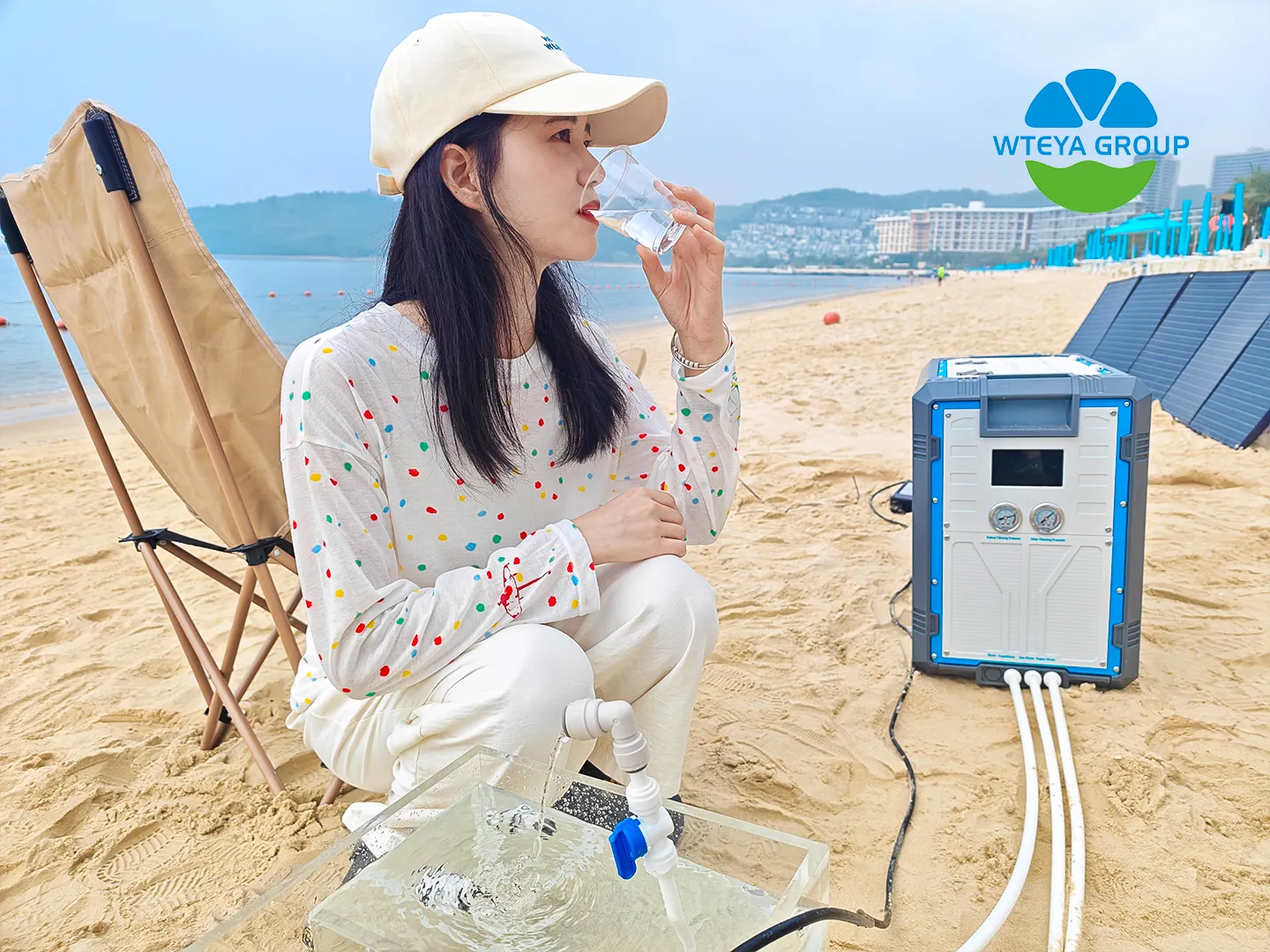
Yes. Portable seawater desalination machines produce water that meets drinking water standards. With a 4021 RO membrane, the salt rejection rate exceeds 99%: seawater feed with a TDS of about 35,000 mg/L comes out at below 500 mg/L (typically 100–300 mg/L in most operating conditions), well under the 1,000 mg/L TDS limit of the GB 5749 drinking water standard. The reverse osmosis membrane also blocks bacteria, viruses, heavy metals, and colloids, with a bacteria removal rate above 99.99%.
Key Water Quality Indicators
Three indicators matter most when judging desalinated water quality: TDS (total dissolved solids), chloride content, and microbiological safety. TDS is the easiest to measure with a handheld meter and is the first thing to check after installation or maintenance.
The chloride level drops from roughly 19,000 mg/L in seawater to below 250 mg/L in the product water, which matches the chloride limit of the drinking water standard. Heavy metals such as lead and arsenic are mostly rejected by the RO membrane, and the product water is free of pathogenic bacteria thanks to the membrane barrier.
Typical Water Quality Comparison
For reference, here are typical values for seawater feed, portable desalination product water, and the drinking water standard:
TDS: about 35,000 mg/L in seawater, under 500 mg/L in product water, compared with a 1,000 mg/L standard limit.
Chloride: about 19,000 mg/L in seawater, under 250 mg/L in product water, compared with a 250 mg/L standard limit.
Bacteria: abundant in seawater, over 99.99% removed in product water, and no pathogenic bacteria allowed by the standard.
Heavy metals: varies by sea area in the feed, mostly rejected in product water, and within national standard limits.
Factors That Affect Output Water Quality
Seal condition is the most common culprit. If the brine seal ring or O-rings age or shift, raw water bypasses the membrane and the TDS rises suddenly. When the TDS reading jumps, check the seals first.
Chlorine in the feed water oxidizes and permanently damages the membrane surface, so the feed must be dechlorinated with activated carbon or a reducing agent. Membrane performance also decays naturally after 2–3 years of operation, so replace the membrane near the end of its life. Recovery rate matters too: too high a recovery concentrates the brine side and lowers rejection, so keep it around 30–50%.
Some models add a post activated carbon filter for better taste, and for stricter requirements you can add UV or mineralization cartridges.
How to Keep Your Water Quality Safe
Check the product water with a TDS pen every day. If the TDS suddenly rises, stop drinking and inspect the seals and membrane. After long-term storage, flush the system to drain the preservative solution and test the water before drinking.
With nearly 20 years of water treatment experience, WTEYA provides water quality testing and compliance assurance for portable desalination systems.
Related FAQs
How Much Water Does a Portable Seawater Desalination Machine Produce Per Day?
📲 WhatsApp: +86-1802 5185 143
📧 Email: sales@wteya.com
🌐 Website: www.wteyaa.com