






Containerized Seawater Desalination: Turnkey Island Water Supply Without Infrastructure
Containerized Seawater Desalination: Turnkey Island Water Supply Without Infrastructure
Islands face a unique water challenge. Unlike mainland communities that can tap into municipal grids or groundwater, island water supply depends almost entirely on what you can bring in — or what you can make on site. When the nearest freshwater source sits across the ocean and water trucks cost a fortune per delivery, the math stops working fast.
The Real Cost of Island Water Logistics
Every liter of water shipped to an island carries a hidden logistics tax. Fuel for the vessel, crew wages, port fees, storage tanks, and distribution trucks all stack up. A single water truck delivery can run hundreds of dollars — and that is before factoring in weather delays that can strand a resort or community without water for days.
For island hotels, the numbers get brutal. A 50-room resort consuming 15,000 liters daily needs roughly 450,000 liters per month. At typical delivery rates, that monthly water bill can exceed what the property spends on electricity. And when monsoon season hits, those deliveries stop entirely.
Beyond cost, there is the quality question. Stored water grows stagnant. Tank contamination introduces bacteria. You end up treating delivered water anyway — paying twice for the same resource.
Containerized Desalination: Water Infrastructure in a Box
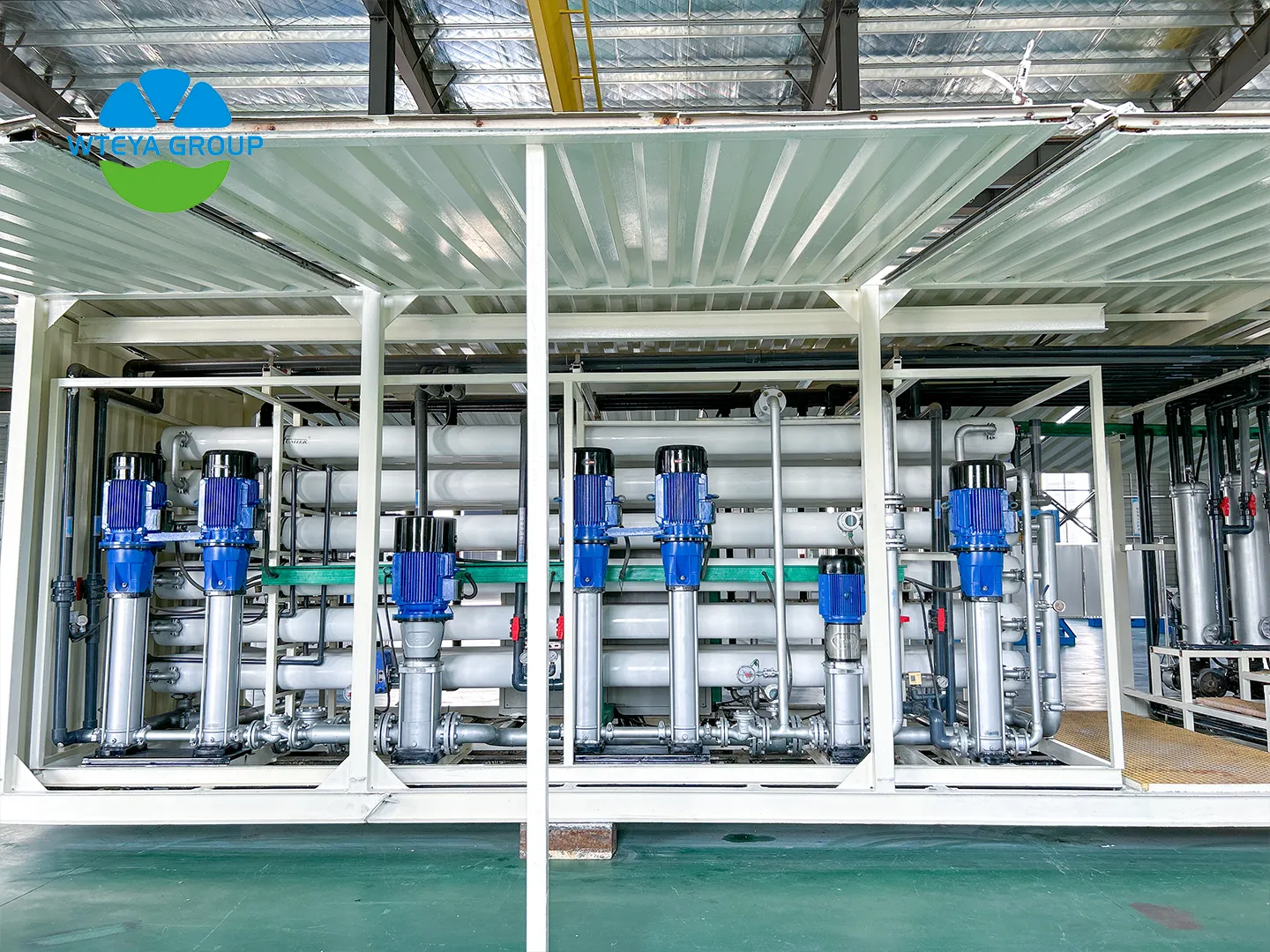
Containerized seawater desalination changes the equation completely. Instead of importing water, you import the ability to make it. A single 20-foot or 40-foot container houses a complete reverse osmosis desalination plant — pre-assembled, pre-tested, and ready to produce fresh water the day it arrives.
Unlike traditional desalination plants that require concrete foundations, dedicated buildings, and months of on-site construction, a containerized system ships as one integrated unit. Drop it on a level surface, connect the seawater intake and power, and start producing. That is the difference between building a factory and plugging in an appliance.
WTEYA containerized desalination systems handle capacities from 5,000 to 50,000 liters per day, covering everything from a boutique eco-resort to a mid-size island community. The container itself serves as the equipment room — weatherproof, corrosion-resistant, and purpose-built for marine environments.
How the System Works
Seawater enters through a screened intake. Pre-filtration removes sediment and particles that would foul the membranes. High-pressure pumps force the filtered seawater through reverse osmosis membranes — semi-permeable barriers that allow water molecules to pass while rejecting dissolved salts, minerals, and contaminants.
The result is two streams: roughly 35-45% of the incoming seawater becomes fresh drinking-quality water, and the remaining brine returns to the sea through a properly diffused discharge. Energy recovery devices capture pressure from the brine stream and feed it back into the system, cutting power consumption by up to 40% compared to systems without recovery.
Everything — pumps, membranes, pre-filters, controls, and monitoring — lives inside the container. A single touchscreen interface shows system status, water quality, and production rate in real time.
Core Advantages
Zero civil works required. No need to pour foundations, erect buildings, or run miles of pipe. The container arrives complete. A forklift or crane sets it in place. Connection to seawater and power takes hours, not weeks.
Scalable by stacking containers. Need more capacity later? Add a second container unit in parallel. Each unit operates independently, so you scale water production without shutting down existing supply. A two-unit system delivers twice the output with built-in redundancy.
Remote monitoring and minimal staffing. Modern containerized plants run largely unattended. Sensors track pressure, flow, conductivity, and membrane condition. Alerts go to a smartphone when parameters drift. Routine maintenance — filter changes, membrane cleaning — follows a predictable schedule that local staff can handle with basic training.
Where Containerized Desalination Makes Sense
Island resorts and hotels — replacing water delivery trucks with on-demand production. Guests never notice a difference in water quality, and the property stops worrying about supply disruptions during peak season.
Coastal communities — providing baseline water security where groundwater is saline or depleted. A containerized plant sized for 500-2,000 people delivers reliable supply without the multi-year timeline of municipal infrastructure projects.
Offshore platforms and work camps — eliminating the logistical headache of water resupply vessels. Crews get continuous fresh water for drinking, showers, and equipment cooling without depending on supply boat schedules.
Private islands and remote developments — enabling construction and habitation where no water grid exists. The desalination plant becomes the first permanent infrastructure, not the last piece of a puzzle.
Backup water supply — serving as emergency redundancy for communities that rely on rainfall or limited groundwater. When the dry season stretches longer than expected, the containerized plant picks up the slack.
Containerized seawater desalination turns the island water problem inside out. Instead of fighting geography with logistics, you work with it — pulling fresh water from the ocean that surrounds you, at a predictable cost, on your own schedule.
📲 WhatsApp: +86-1800 2840 855
📧 Email: sales@wteya.com
🌐 Website: www.wteyaa.com