







RO Fouling and CIP in Desalination Plants: A Field Guide
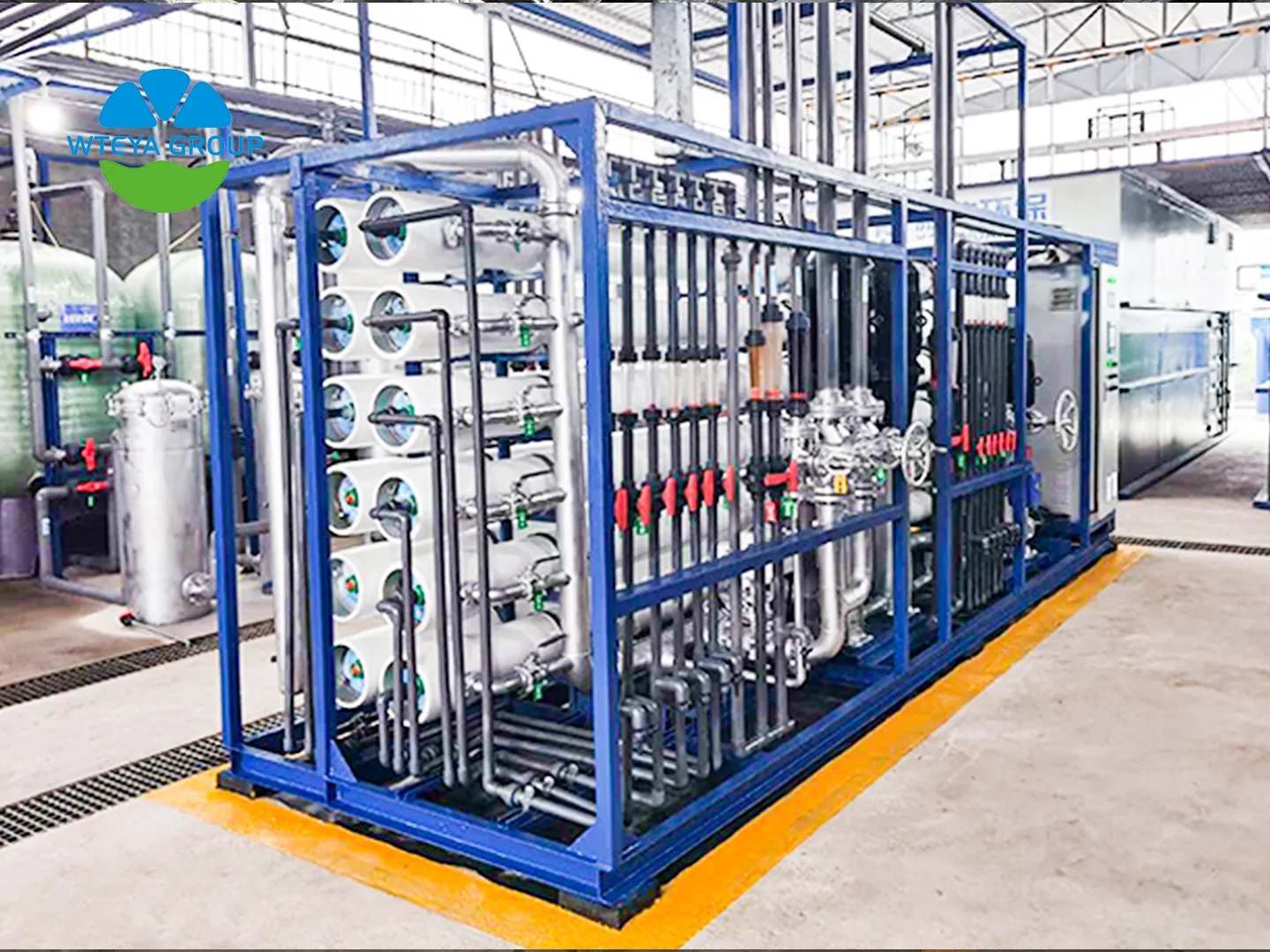
RO Fouling and CIP in Desalination Plants: A Field Guide
Every desalination plant loses membrane performance eventually. The interesting question is why, because the four fouling families — particulate, organic, scaling and biological — each demand a different response, and treating one as another is how plants end up cleaning membranes every month and replacing them every two years.
This guide is written for the operator who has a conductivity meter, a flow totaliser and a differential pressure reading, and wants to know what the numbers are saying before production drops.
The Four Fouling Families
Particulate and colloidal fouling arrives from the intake: silt, clay, iron floc and algae that pass pretreatment and deposit on the feed spacer. It shows up first as a rising feed-to-concentrate differential pressure, because the channel narrows before the membrane surface itself is covered.
Organic fouling comes from oil, humic substances and the surfactants that accompany them. It tends to be worse after algal blooms and in plants treating mixed sources, and it is the fouling that responds to alkaline cleaning rather than acid.
Scaling is precipitation of sparingly soluble salts — calcium carbonate, calcium sulphate, barium sulphate and silica — where the concentration at the membrane surface exceeds saturation. It is driven by recovery: the higher the recovery, the harder the concentration polarisation at the surface, and the sooner a marginally protected plant starts to scale.
Biofouling is the quiet one. A biofilm grows on the feed side, feeds on biodegradable organics, and produces extracellular polymer that no acid will dissolve. Plants that chlorinate intermittently and dechlorinate imperfectly tend to find it first.
Early Warning Signs Before Output Collapses
Normalise everything to a reference condition, then watch three numbers. Normalised permeate flow falling by 10–15% against the commissioning baseline means resistance has increased. Differential pressure across the first stage rising by 10–15% points specifically at particulate or biological deposition in the feed channels. Salt passage rising by 5–10% suggests the membrane surface itself has been attacked or fouled in a way cleaning can no longer reverse.
Alongside those, keep a feed water log. Silt density index above 3 on a seawater RO feed is a pretreatment problem waiting to become a membrane problem, and a rising turbidity or chlorine residual tells you which stage upstream has drifted.
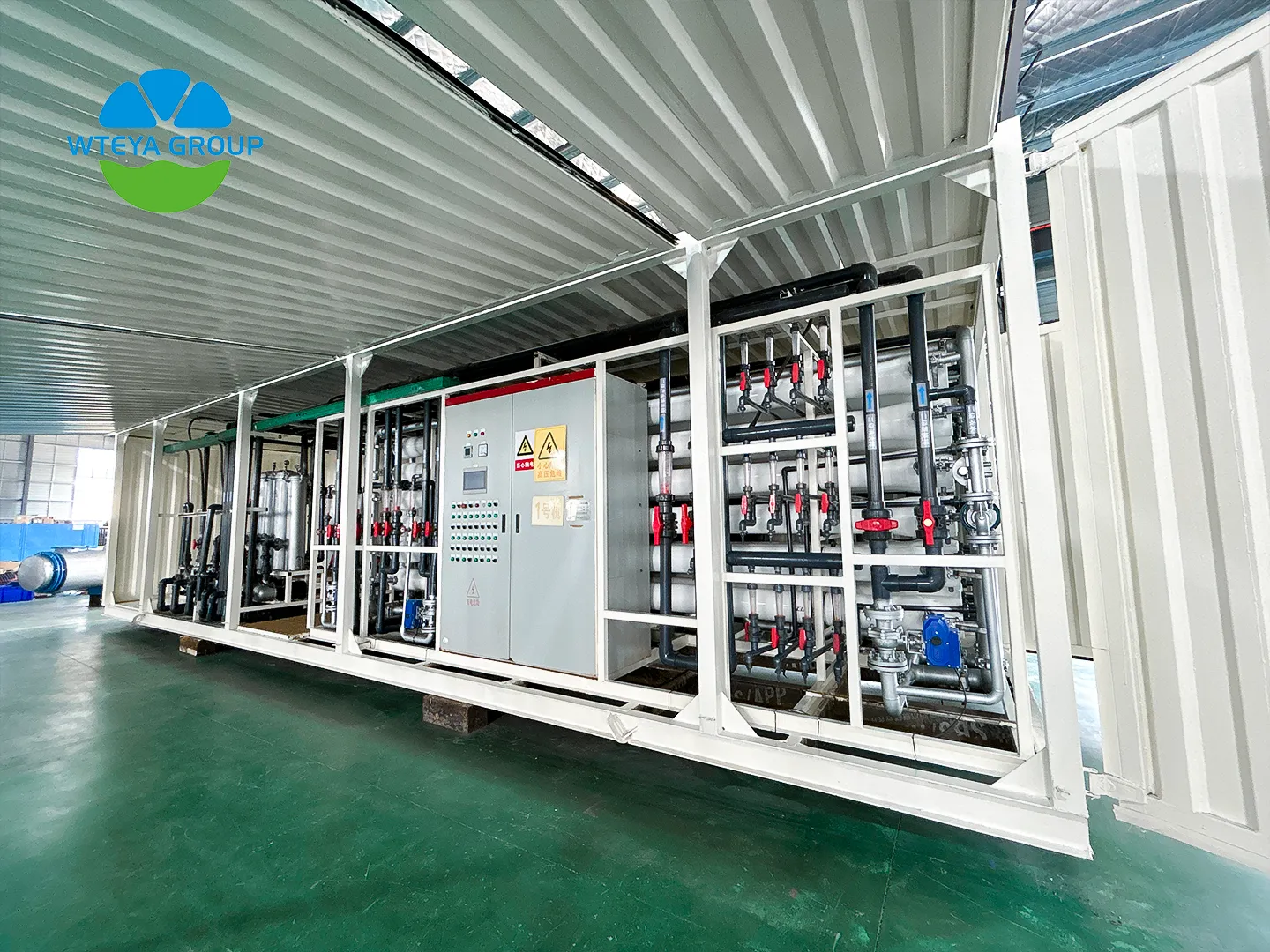
Pretreatment: The Cheaper Half of the Solution
Most cleaning cost is decided before the water reaches the membrane. Screening and media filtration remove the coarse fraction; coagulation with ferric salts improves removal of colloids; ultrafiltration, where it is installed, holds filtrate turbidity low enough that cartridge filters last months rather than weeks.
Chemical conditioning then has to be matched to the analysis, not to a catalogue. Antiscalant dose is set from the saturation indices of the salts actually present, and it is wasted if the dosing point is downstream of a place where the concentrate can stagnate. Where chlorine is used to control biology, dechlorination with sodium metabisulphite must be reliable — polyamide elements tolerate only a trace, and intermittent exposure is worse than none because it selects for resistant biofilm.
Configurations that combine these stages with the membrane train are described on our sea water treatment plant page; the point to hold on to is that pretreatment is where fouling is prevented, and CIP is where prevention failures are paid for.
CIP: What to Use, and in What Order
Clean-in-place works by chemistry plus flow. The sequence matters more than the chemical brand.
Step one: alkaline. Sodium hydroxide at pH 10–11, with a surfactant or EDTA where organic load is heavy, removes biofilm, oil and humic material. Temperature is capped by the element datasheet — commonly 35–40°C for polyamide seawater elements, never above the stated maximum.
Step two: acid. Citric acid at pH 2–3, or hydrochloric acid at pH 2 where the element tolerates it, dissolves carbonate and metal oxide scale. Acid first on a biofilm fouls the membrane with the products of its own dissolution, which is why the order is not a matter of preference.
Step three: flush. Low-pressure flush to neutral pH and to the feed water quality, then a performance test against the baseline. Flow per pressure vessel during cleaning is set by the element maker, typically 2.5–4 m³/h for standard seawater elements, and soak times of 15–30 minutes with recirculation do more for stubborn deposits than raising the chemical strength.
Two practical rules: never let a cleaning solution sit in the element overnight without circulation, and neutralise the spent solution before it reaches the drain or the concentrate line.
How Often, and When to Stop Cleaning
Clean on condition, not on the calendar. The trigger is a normalised flow loss of 10–15% or a differential pressure rise of the same order, with the plant at its reference temperature and recovery. A plant that needs cleaning more often than every four to six weeks does not have a cleaning problem; it has a pretreatment problem, and the cleaning chemicals are simply buying time.
Replacement is a separate decision. When cleaning no longer restores flow within a few percent of baseline, or when salt passage stays at twice its commissioning value after a correct CIP, the element has lost its integrity rather than its cleanliness. Typical service life is three to five years, shortened by aggressive cleaning and extended by good pretreatment.
Field Notes from Containerised and Small Plants
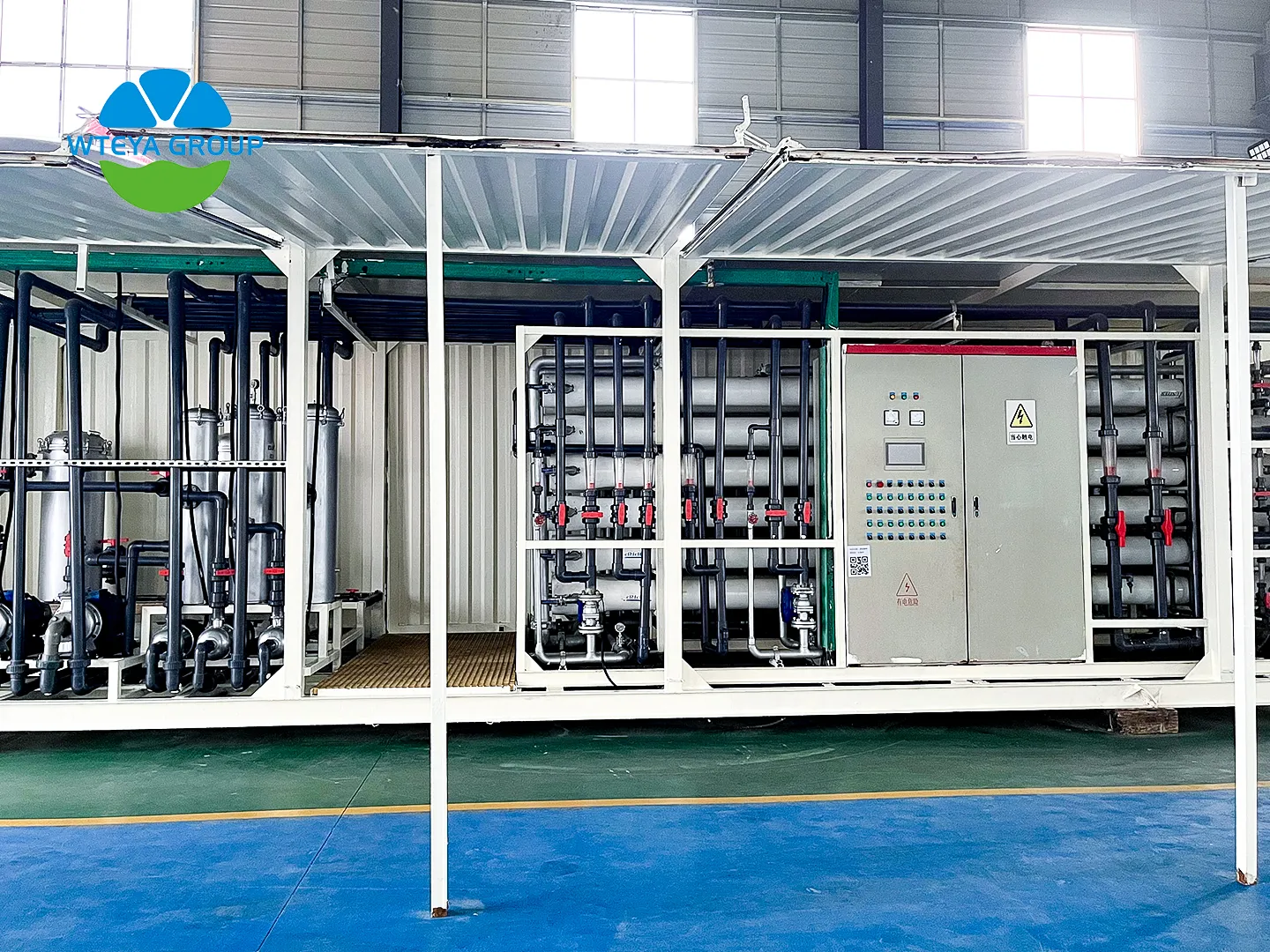
Compact plants concentrate all of this into a small footprint, so a few details deserve attention at the design stage. A CIP skid needs a tank, a heater and a pump sized for one pressure vessel at a time; on a containerised unit the same pump is often shared with the flush line. Space for a spare element or two is worth more than an extra instrument.
For plants serving resorts, islands and remote communities, the small desalination plant configuration is usually the right scale for condition-based cleaning, because a single operator can watch the three numbers daily. Where the site also runs a borehole or brackish source, the same monitoring discipline applies, and our 4040 desalination equipment page covers the smaller platform.
❓ Frequently Asked Questions
How often should RO membranes be cleaned?
On condition: when normalised permeate flow has fallen 10–15% or differential pressure has risen by the same margin. In a well-pretreated seawater plant that lands somewhere between every three and twelve months.
Can I clean with acid first to save time?
No. If the foulant is biological or organic, acid first fixes the deposit onto the membrane and makes the alkaline step less effective. Alkaline first, acid second, flush last.
Does CIP restore the original performance?
Usually to within a few percent, if the fouling is removed before it compacts. Repeated aggressive cleaning thins the membrane and shortens life, which is why prevention through pretreatment pays twice.
🏆 Why Choose WTEYA
WTEYA builds seawater and brackish RO plants from skid-mounted portable units to containerised plants, and supplies the pretreatment, dosing and CIP support that decides how often the membranes have to be touched. Systems are tested under load before dispatch, and documentation includes the baseline readings an operator needs to run condition-based cleaning from day one.