







How to Size a Water Maker for Your Boat
How to Size a Water Maker for Your Boat
A water maker sized by guesswork is a problem waiting to happen. Choose one that is too small and it runs flat out every day, the membrane ages faster and the crew still queues for fresh water. Choose one that is far too large and the owner pays for capacity that is never used, then watches a big machine cycle on and off in a way that shortens its life. Sizing a water maker for a boat comes down to two honest numbers: how much fresh water the people on board really use in a day, and how many hours a day the machine can run.
Why Sizing Comes Before Shopping
The duty of a marine water maker is not the same as a household purifier. On a boat the machine is the whole water supply — drinking, cooking, washing and deck wash-down — and there is usually no mains back-up to fall back on. That makes the daily figure, not the machine’s peak rating, the number that matters. A unit quoted at 300 gallons per day is designed for exactly the sort of continuous, modest demand found on a fishing boat or yacht, and matching it to the real load is what keeps both the water flowing and the membrane healthy.
Step 1: Add Up the Real Daily Demand
Start with the people on board and how long they stay at sea. Drinking water alone is small — allow 2 to 4 litres per person per day — but once cooking, dishwashing, hand washing and a daily rinse on deck are counted, a realistic marine allowance is closer to 20 to 40 litres per person per day for a crew that watches its usage, and considerably more on a larger yacht.
Multiply that by the number of people and you have the daily requirement. A small crew of five on a modest allowance needs roughly 0.5 to 1.2 tonnes a day, which is precisely the band a portable machine such as the SW-4021, rated at about 300 gallons (roughly 1,135 litres) per day, is built to serve for five to eight people. Write the number down before you look at any data sheet.
Step 2: Convert Demand into Running Hours
A water maker does not have to be large if it can run long. Because the machine can work while the boat is under way or moored, capacity can be traded against hours of operation. A 300 GPD unit producing about 1,135 litres a day easily covers five people who use 150 to 200 litres between them, with headroom for hotter days or extra guests. What it must not do is run at 100% of its rating for every hour of a long voyage, because continuous full-load running is what wears a high-pressure pump and a membrane out early.
Step 3: Check Space, Power and Feed Water
Sizing is not finished until the machine physically fits and can be fed. Three practical checks catch most surprises:
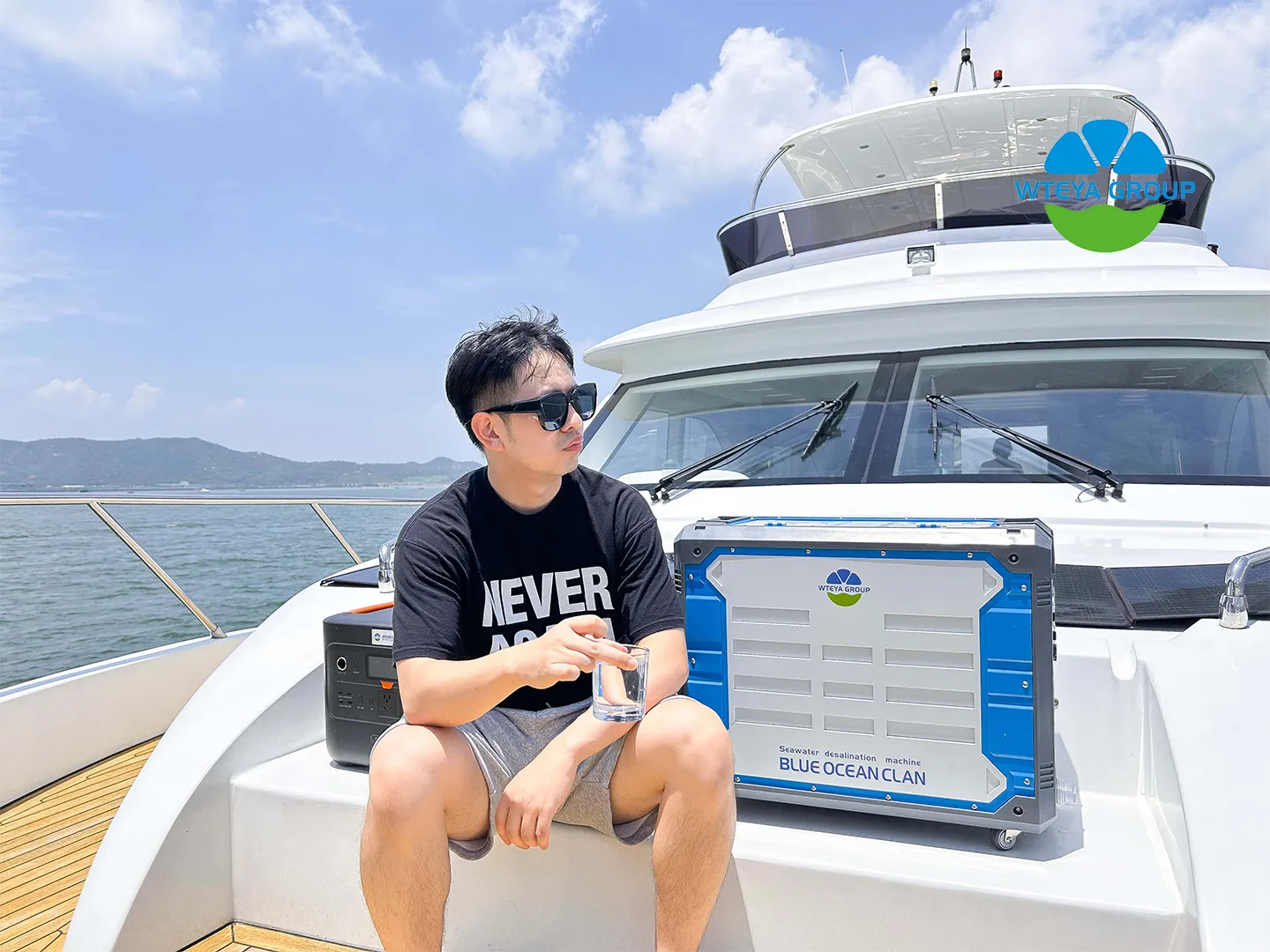
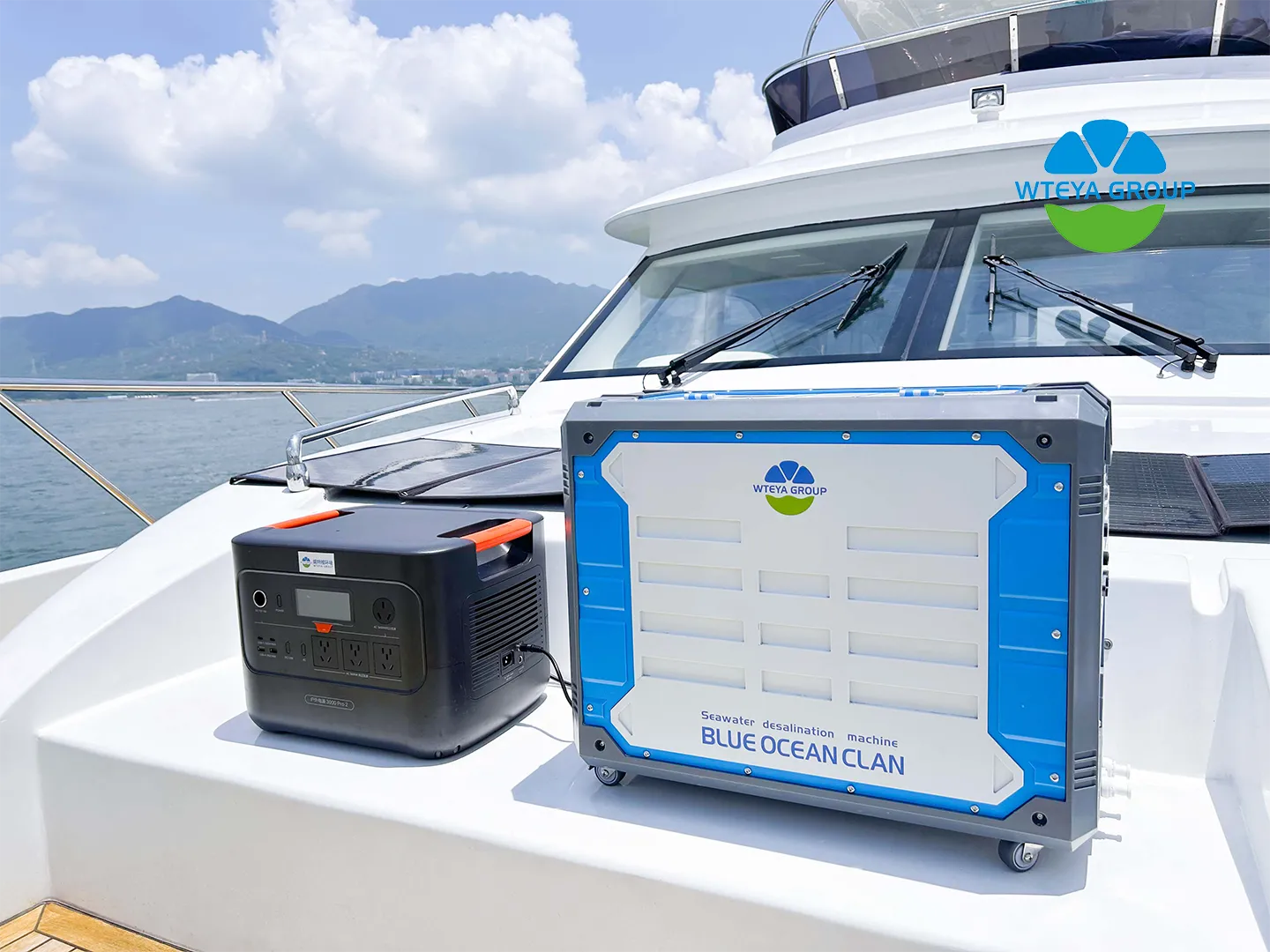
- Space and weight. A compact portable unit such as the SW-4021 measures about 610 × 320 × 497 mm and weighs around 40 kg, so it can be mounted in an engine room, a locker or even a vehicle. Leave clear access for filter, membrane and UV lamp replacement.
- Power supply. Fishing boats and yachts normally run a 24 V DC version straight from the vessel’s batteries; a boat with shore power can use the 220 V AC model; and a remote or off-grid installation is best served by a solar-powered set with a battery bank.
- Feed water quality. Standard seawater up to a TDS of about 35,000 ppm is the design point. Higher-salinity or unusually turbid water needs a different configuration, so confirm the feed before ordering, not after.
Step 4: Leave Room for Peaks and Maintenance
A well-sized system carries a little spare capacity — enough to refill a tank after a busy day, or to keep working while a filter is being serviced. Budget for that headroom in the tank as well as in the machine, because storage is what lets you run the water maker at its efficient load instead of chasing demand hour by hour. On the maintenance side, plan around the consumables: the RO membrane lasts three to five years or about 3,600 running hours, UV lamps are rated above 3,000 hours, and the high-pressure pump needs an oil change every 500 hours. A machine that is correctly sized spends less of its life on the edge, which is the simplest way to reach the design life of ten years or more.
Frequently Asked Questions
Q: What size water maker does a small boat need?
A: Estimate 20 to 40 litres of fresh water per person per day for drinking, cooking and washing, then total it across the crew. A 300 GPD portable unit, producing roughly 1,135 litres a day, comfortably covers five to eight people and is the usual choice for fishing boats and yachts.
Q: Can I use a smaller water maker and just run it longer?
A: Yes — capacity and run time can be traded. What you should avoid is running a machine at full load continuously, which shortens pump and membrane life. A modest amount of spare capacity lets the system run at its efficient point and refill the tank when demand allows.
Q: Does the water maker need a special power supply on board?
A: It depends on the boat. Fishing boats and yachts normally use a 24 V DC model fed from the vessel’s batteries, boats with shore power can use the 220 V AC version, and off-grid installations can run a solar-powered set with battery storage.
Join the WTEYA Dealer Network
Become a WTEYA authorized dealer and offer boat owners a water maker that is properly sized to their vessel. We provide exclusive territories, competitive factory pricing and full factory support — technical training, sizing assistance, documentation, marketing material and after-sales backup.
Whether you already serve the marine, hospitality or industrial sectors or want to enter them, our team will help you size projects, prepare quotations and close the sale. Contact us to discuss territory availability and partnership terms.
📲 WhatsApp: +86-1802 5185 143
📧 Email: sales@wteya.com
🌐 Website: www.wteyaa.com

Previous: Energy Recovery in Desalination: Cutting Costs
Next: No More