






Containerized Desalination: Modular Water Plants for Rapid Urban Expansion
Containerized Desalination: Modular Water Plants for Rapid Urban Expansion
Cities are growing faster than their water infrastructure. When urban populations surge, municipal water networks strain under demand — and building new treatment plants takes years of planning, permitting, and construction. For developers, municipal authorities, and construction firms facing tight timelines, waiting is not an option.
Containerized desalination changes the equation. Instead of pouring concrete and laying miles of pipe, a modular water plant arrives on a flatbed truck, connects to existing seawater intake and power, and begins producing fresh water within days.
The Infrastructure Bottleneck Nobody Talks About
Traditional water treatment facilities follow a predictable but painfully slow trajectory. Site selection, environmental impact assessments, civil works, equipment installation, commissioning — the process routinely stretches past 36 months. Meanwhile, construction projects stall, new residential developments sit empty, and industrial zones miss their launch windows.
Coastal cities face a sharper version of this problem. They have unlimited seawater at their doorstep but lack the treatment capacity to turn it into drinking water. Desalination offers an obvious answer, but conventional land-based desalination plants suffer from the same slow-build problem as any other large infrastructure project.
The real cost is not just the capital expenditure. Every month of delay means lost revenue, idle labor, and missed market opportunities. For a mid-sized development of 5,000 residential units, a 12-month water infrastructure delay can translate into millions in carrying costs.
How Containerized Systems Short-Circuit the Timeline
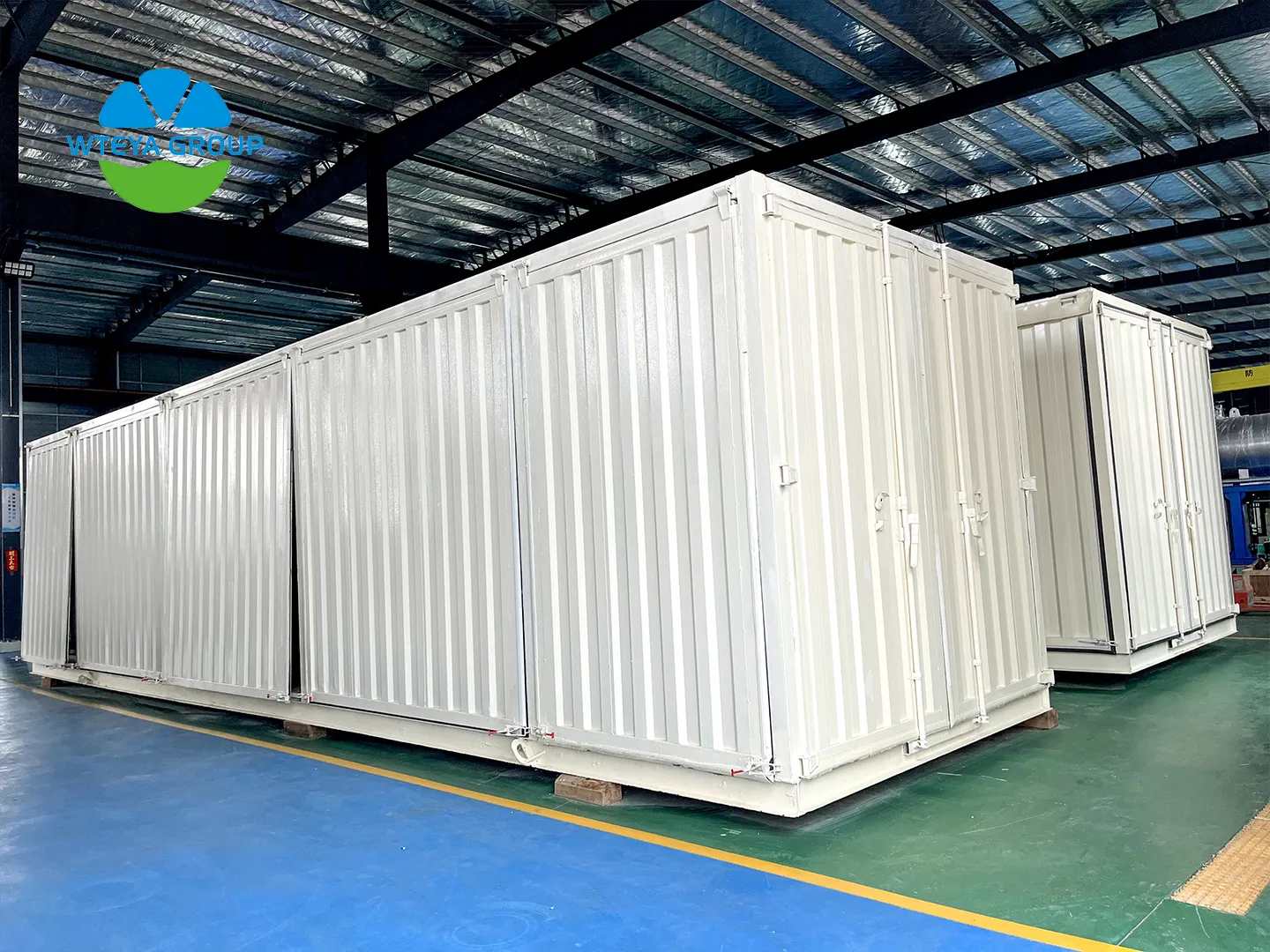
A containerized desalination system packages an entire seawater reverse osmosis plant inside standard ISO shipping containers. Pre-assembled, pre-tested, and factory-commissioned before shipping, each unit arrives ready to operate.
The difference is stark. Site preparation requires nothing more than a level concrete pad, a seawater intake line, and an electrical connection. Unlike traditional plants that demand custom-engineered buildings, specialized foundations, and on-site assembly by multiple trade crews, a containerized system eliminates most of the construction phase entirely.
WTEYA containerized seawater desalination systems deliver fresh water output ranging from small pilot units to multi-container configurations that match the output of permanent facilities. The modular architecture means you can start with one container and add capacity as demand grows — scaling horizontally instead of overbuilding upfront.
Why Modular Beats Monolithic
Three advantages set containerized desalination apart from conventional plants:
Speed of deployment. A containerized system can go from order to operational output in weeks, not years. Factory pre-commissioning means the unit is already producing water before it leaves the manufacturing floor, so on-site commissioning takes days instead of months.
Capital efficiency. Instead of committing to a 50,000 cubic meter per day facility before demand materializes, developers can deploy capacity in stages. Start with a 5,000 m³/d container, add a second when occupancy reaches 60%, and scale to full build-out organically. This pay-as-you-grow model dramatically improves project cash flow.
Relocatable asset. A containerized water plant is not a permanent structure bolted to a foundation. If demand shifts — a new industrial zone opens across town, a temporary construction camp moves to the next phase — the entire plant can be trucked to the new location and reconnected. No sunk cost, no stranded asset.
Where Containerized Desalination Fits
Coastal urban expansion zones. New residential and commercial districts on reclaimed land or greenfield coastal sites where municipal water has not yet reached. Containerized units bridge the gap between construction completion and permanent infrastructure delivery.
Industrial park water supply. Manufacturing zones, logistics hubs, and special economic zones along coastlines can secure independent water supply without waiting for regional water grid expansion.
Resort and hospitality developments. Beachfront hotels, villa complexes, and tourism zones need reliable fresh water before they open. A containerized system ensures water is ready when the first guest checks in.
Temporary construction water. Large-scale coastal construction projects — ports, LNG terminals, offshore wind support bases — consume enormous volumes of fresh water during the build phase. Containerized desalination eliminates the logistics cost of trucking water to site.
Emergency municipal backup. Even cities with established water networks benefit from containerized backup capacity during drought, infrastructure maintenance, or sudden population influx.
Containerized seawater desalination is not a temporary fix — it is a permanent shift in how water infrastructure gets built. By decoupling water treatment capacity from civil construction timelines, it gives growing coastal communities the one thing traditional infrastructure never could: speed.
📲 WhatsApp: +86-1800 2840 855
📧 Email: sales@wteya.com
🌐 Website: www.wteyaa.com